Perseid Meteor Shower Peak Offers Best View Wednesday
Perseid Meteor Shower to Reach Peak Viewing Conditions Wednesday Night
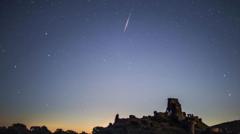
PERSEID METEOR SHOWER PEAKS
Illustration concept: A wide-angle long-exposure photograph of a dark mountain landscape under a star-filled night sky with brilliant light streaks from meteors.
AI summary
The annual Perseid meteor shower will reach its peak on Wednesday night, according to BBC Science. This event offers celestial observers their best opportunity to spot shooting stars across the night sky.
Why this matters
The Perseid shower is one of the most prominent astronomical displays of the calendar year, drawing interest from both professional scientists and casual skywatchers. High-activity celestial events provide accessible educational opportunities and encourage public engagement with space science without requiring expensive equipment.
Key takeaways
- The Perseid meteor shower hits its peak on Wednesday night.
- The event provides the optimal chance to observe shooting stars.
- Viewing requires no optical equipment, relying only on clear, dark skies.
- BBC Science indicates that meteor frequency will be at its highest overnight.
Skywatchers are in for an astronomical display as the annual Perseid meteor shower reaches its maximum activity level on Wednesday night. According to reports from BBC Science, this overnight peak represents the prime window for observers attempting to spot shooting stars in the night sky.
The Perseids are widely regarded by astronomers as one of the most reliable celestial events of the year. During the height of the shower, observers situated in regions with clear skies and limited light pollution can expect a notable surge in visible meteors streaking across the upper atmosphere.
To maximize viewing chances, experts advise finding an open location far from artificial urban lighting and giving eyes sufficient time to adapt to the dark. Special astronomical equipment, such as telescopes or binoculars, is unnecessary because the naked eye provides the wide field of view needed to spot fast-moving meteors.
Although meteors remain visible in smaller numbers throughout the surrounding days, Wednesday night's peak brings the highest hourly frequency, giving stargazers their optimum opportunity to witness the spectacle.
Frequently asked questions
- When does the Perseid meteor shower reach its peak?
- The Perseid meteor shower reaches its maximum viewing activity on Wednesday night.
- Do I need special equipment to watch the meteor shower?
- No special equipment like telescopes or binoculars is needed; viewing with the naked eye provides the widest field of view.
- What are the best conditions for viewing shooting stars?
- Optimal conditions include clear dark skies, minimal cloud cover, and locations situated well away from city lights.
Source & transparency
- By:
- The Reviser Desk
- Source:
- BBC Science
- Original publication:
- Aug 11, 2026, 1:59 AM
- The Reviser publication:
- Aug 11, 2026, 1:59 AM
- Updated:
- Aug 11, 2026, 2:01 AM
This report was independently written by The Reviser editorial desk from verified source material. It is not original on-the-ground reporting by The Reviser.
Related stories
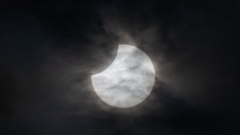
DOUBLE SKY SHOW NEXT WEEK
Solar Eclipse and Perseid Meteor Shower Due Next Week
AI summaryAstronomy enthusiasts are preparing for a rare double celestial spectacle scheduled for next week. A significant partial solar eclipse will obscure much of the sun before the annual Perseid meteor shower reaches its maximum activity.
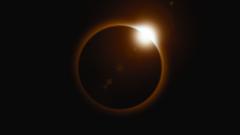
STARGAZING NIGHT AUGUST 12
August 12 Marked as Top Stargazing Date of the Year
AI summaryAugust 12 has been highlighted as one of the premier dates for celestial viewing this year. According to reports from BBC Science, skywatchers can expect some of the year's top astronomical highlights on this night.
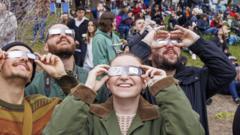
96% ECLIPSE OVER ENGLAND
Partial Solar Eclipse to Obscure Up to 96% of Sun in August
AI summaryParts of England are expected to experience a major celestial event on August 12 as a partial solar eclipse sweeps across the region. At its peak, the moon could block out up to 96 percent of the sun in certain locations, according to reports from BBC Science.

AUSTRALIA WILDLIFE EXTINCTION CRISIS
Australia Faces Biodiversity Crisis Amid Extinction Threat
AI summaryAustralia is experiencing a severe loss of its distinct native wildlife, cementing its position as a global hotspot for species extinction. Despite the accelerating decline, ongoing conservation efforts surrounding key native animals offer a path toward ecological recovery, according to reports from BBC Science.