Partial Solar Eclipse to Obscure Up to 96% of Sun in August
England Braces for Near-Total Partial Solar Eclipse on August 12
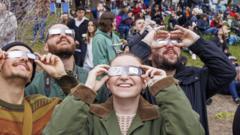
96% ECLIPSE OVER ENGLAND
Illustration concept: A dramatic wide-angle view of the sun almost completely obscured by the moon in a deep twilight blue sky over the English countryside, photorealistic style.
AI summary
Parts of England are expected to experience a major celestial event on August 12 as a partial solar eclipse sweeps across the region. At its peak, the moon could block out up to 96 percent of the sun in certain locations, according to reports from BBC Science.
Why this matters
A high-percentage partial solar eclipse offers skygazers a rare visual spectacle without needing to travel abroad. Experiencing 96 percent solar coverage creates a noticeable dimming of daylight and unique atmospheric conditions, making it an extraordinary event for both casual observers and astronomy enthusiasts.
Key takeaways
- A partial solar eclipse will occur on August 12, visible from parts of England.
- At its peak, the moon could obscure up to 96 percent of the sun in specific locations.
- Reports from BBC Science highlight the event as a major skywatching opportunity.
- Proper eye safety precautions, such as using ISO-certified eclipse glasses, are necessary for observers.
Skygazers in England are in for a rare astronomical spectacle on August 12, when a high-coverage partial solar eclipse will be visible from several regions across the country.
During the event, the moon will pass directly between Earth and the sun, casting a shadow that will obscure much of the solar disk. In certain parts of England, observers could see up to 96 percent of the sun covered at the height of the alignment.
According to information published by BBC Science, the extreme level of coverage will create a dramatic visual effect, significantly darkening the sky during peak hours. Unlike minor partial eclipses, an obscuration level nearing total coverage dramatically alters ambient sunlight.
Astronomy enthusiasts and members of the general public looking to view the event are advised to prepare safe viewing equipment in advance. Directly looking at the sun without specialized eclipse glasses or projection methods can cause permanent eye damage, even when 96 percent of the solar surface is hidden.
Further details regarding local timings and optimal viewing spots across England are expected to draw significant public interest as the date approaches.
Frequently asked questions
- When is the partial solar eclipse taking place in England?
- The partial solar eclipse is scheduled to occur on August 12.
- How much of the sun will be covered during the eclipse?
- In some parts of England, up to 96 percent of the sun's surface will be obscured by the moon.
- Is it safe to look directly at a partial solar eclipse?
- No, viewing any stage of a partial solar eclipse without certified eclipse glasses or safe solar viewers can cause severe eye injury.
Source & transparency
- By:
- The Reviser Desk
- Source:
- BBC Science
- Original publication:
- Aug 10, 2026, 3:21 PM
- The Reviser publication:
- Aug 10, 2026, 3:21 PM
- Updated:
- Aug 10, 2026, 3:32 PM
This report was independently written by The Reviser editorial desk from verified source material. It is not original on-the-ground reporting by The Reviser.
Related stories
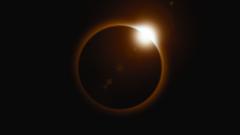
STARGAZING NIGHT AUGUST 12
August 12 Marked as Top Stargazing Date of the Year
AI summaryAugust 12 has been highlighted as one of the premier dates for celestial viewing this year. According to reports from BBC Science, skywatchers can expect some of the year's top astronomical highlights on this night.
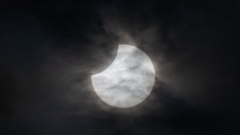
DOUBLE SKY SHOW NEXT WEEK
Solar Eclipse and Perseid Meteor Shower Due Next Week
AI summaryAstronomy enthusiasts are preparing for a rare double celestial spectacle scheduled for next week. A significant partial solar eclipse will obscure much of the sun before the annual Perseid meteor shower reaches its maximum activity.
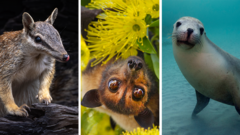
AUSTRALIA WILDLIFE EXTINCTION CRISIS
Australia Faces Biodiversity Crisis Amid Extinction Threat
AI summaryAustralia is experiencing a severe loss of its distinct native wildlife, cementing its position as a global hotspot for species extinction. Despite the accelerating decline, ongoing conservation efforts surrounding key native animals offer a path toward ecological recovery, according to reports from BBC Science.

HOW DOGS READ SMILES
How Canine Brains Process Human Smiles and Scowls
AI summaryA recent scientific study reported by BBC Science has uncovered the neural activity inside a dog's brain when observing human facial expressions. Researchers observed distinct brain responses when dogs were exposed to human smiles compared to scowls.