How Canine Brains Process Human Smiles and Scowls
Study Reveals What Happens in a Dog's Brain When You Smile
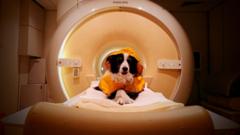
HOW DOGS READ SMILES
Illustration concept: A close-up photograph of an attentive Golden Retriever looking warmly towards a person smiling, warm natural lighting, professional scientific focus, clean background.
AI summary
A recent scientific study reported by BBC Science has uncovered the neural activity inside a dog's brain when observing human facial expressions. Researchers observed distinct brain responses when dogs were exposed to human smiles compared to scowls.
Why this matters
Understanding how dogs interpret human emotions at a neurological level deepens our knowledge of canine cognition and domestic animal behavior. It sheds light on how thousands of years of cohabitation may have shaped the way dogs process human social visual signals. These insights can help pet owners and trainers improve communication and bonding with their animals.
Key takeaways
- Scientists monitored neural activity in dogs responding to human emotional expressions.
- The study mapped how canine brains differentiate between smiling and scowling human faces.
- Findings offer scientific insight into how domestic dogs interpret visual human social cues.
- The research underscores the deep cognitive connection between humans and dogs.
New scientific research has illuminated how canine minds process human emotional displays, according to reports from BBC Science. Researchers investigated neurological responses in dogs exposed to smiling and scowling human faces.
The study observed internal brain activity as dogs viewed different expressions. By tracking these neural signals, scientists mapped how canine brains distinguish positive human facial expressions from negative ones.
Understanding these neurological mechanisms provides deeper scientific insight into the bond between humans and dogs. The findings suggest that domestic dogs actively process human emotional cues on a cognitive level rather than merely reacting out of habit.
According to BBC Science, the research highlights how sensitive dogs are to visual signals from people. Further study continues to explore the specific neurological pathways involved in human-animal communication.
Frequently asked questions
- What did the recent scientific study examine?
- The study investigated the brain activity inside dogs when they observe human facial expressions, specifically smiling and scowling.
- How do dogs react to different human expressions?
- Researchers mapped neurological responses showing that canine brains actively process and differentiate between positive and negative human expressions.
- Who reported these research findings?
- The findings on canine brain activity and human facial expressions were reported by BBC Science.
Source & transparency
- By:
- The Reviser Desk
- Source:
- BBC Science
- Original publication:
- Aug 10, 2026, 2:02 PM
- The Reviser publication:
- Aug 10, 2026, 2:02 PM
- Updated:
- Aug 10, 2026, 2:31 PM
This report was independently written by The Reviser editorial desk from verified source material. It is not original on-the-ground reporting by The Reviser.
Related stories
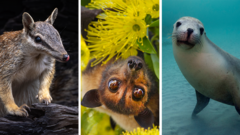
AUSTRALIA WILDLIFE EXTINCTION CRISIS
Australia Faces Biodiversity Crisis Amid Extinction Threat
AI summaryAustralia is experiencing a severe loss of its distinct native wildlife, cementing its position as a global hotspot for species extinction. Despite the accelerating decline, ongoing conservation efforts surrounding key native animals offer a path toward ecological recovery, according to reports from BBC Science.

JACKIE THE EAGLE ILL
Jackie the Famous California Eagle Diagnosed With Anaemia
AI summaryJackie, a world-famous bald eagle featured on a popular California nest live-stream, has fallen critically ill. Veterinary findings reported by BBC Science confirm the iconic raptor was recently diagnosed with anaemia.

96% ECLIPSE OVER ENGLAND
Partial Solar Eclipse to Obscure Up to 96% of Sun in August
AI summaryParts of England are expected to experience a major celestial event on August 12 as a partial solar eclipse sweeps across the region. At its peak, the moon could block out up to 96 percent of the sun in certain locations, according to reports from BBC Science.

TYPHOON WINDS FLIP LORRY
Typhoon Winds Overturn Lorry in Eastern China's Zhejiang
AI summaryHeavy gale-force winds and torrential rain from a typhoon battered Wenzhou in eastern China's Zhejiang province. Footage released by BBC Science shows a commercial lorry being blown onto its side by the intense storm.