Partial Solar Eclipse to Darken English Skies on August 12
England Set for Up to 96% Sun Obscuration in August Partial Solar Eclipse
AUGUST 12 SOLAR ECLIPSE
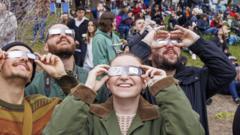
Illustration concept: A dramatic wide shot of a deep partial solar eclipse in a darkened English sky, showing a thin crescent of the sun visible behind silhouettes of rural English trees, high detail, photorealistic.
AI summary
Skywatchers across large parts of England are preparing for a significant partial solar eclipse scheduled for August 12. According to BBC Science, the moon will obscure as much as 96 percent of the sun during the peak of the event.
Why this matters
A partial solar eclipse reaching 96 percent coverage is a high-magnitude astronomical display that noticeably dims daylight across populated regions. Events of this scale provide significant educational value and draw widespread attention from both amateur skywatchers and professional researchers.
Key takeaways
- A partial solar eclipse will take place on August 12.
- Multiple regions across England will witness the celestial event.
- The moon will cover up to 96 percent of the sun at maximum alignment.
- BBC Science indicates widespread visibility across the country.
Astronomy enthusiasts across England are marking August 12 on their calendars for a major celestial spectacle. According to reports from BBC Science, a solar eclipse will sweep across the sky, obscuring substantial portions of daylight.
During the height of the phenomenon, vast areas of England are anticipated to see up to 96 percent of the sun covered by the moon. While not a total eclipse, an obscuration level this high will result in a noticeable darkening of the daytime environment.
Solar eclipses occur when the moon passes between the Earth and the Sun, casting a shadow across sections of the planet. In a partial eclipse, the celestial bodies do not form a perfectly straight line, leaving a thin, bright crescent of the sun visible even at maximum coverage.
Observers planning to view the mid-August astronomical spectacle are urged to take appropriate eye safety precautions. Looking directly at the sun, even when 96 percent obscured, can cause permanent ocular damage unless certified eclipse glasses or indirect projection methods are used.
Frequently asked questions
- When will the partial solar eclipse occur in England?
- The partial solar eclipse is set to take place on August 12.
- How much of the sun will be obscured during the event?
- Reports indicate that many parts of England will experience up to 96 percent coverage of the sun by the moon.
- Is special protection required to view a partial eclipse?
- Yes. Looking directly at the sun without specialized solar filters or certified eclipse glasses can cause severe eye injury, even during a 96 percent partial eclipse.
Source & transparency
- By:
- The Reviser Desk
- Source:
- BBC Science
- Original publication:
- Aug 10, 2026, 3:21 PM
- The Reviser publication:
- Aug 10, 2026, 3:21 PM
- Updated:
- Aug 11, 2026, 8:00 AM
This report was independently written by The Reviser editorial desk from verified source material. It is not original on-the-ground reporting by The Reviser.
Related stories
STARGAZING NIGHT AUGUST 12
August 12 Marked as Top Stargazing Date of the Year
AI summaryAugust 12 has been highlighted as one of the premier dates for celestial viewing this year. According to reports from BBC Science, skywatchers can expect some of the year's top astronomical highlights on this night.

HEATWAVE SAFETY WARNING DISABILITY
Disabled Campaigners Warn Heatwave Advice Increases Risks
AI summaryDisability advocates have warned that standard public health guidance for extreme heat can exacerbate risks for disabled individuals. According to reports from BBC Science, campaigners emphasize that official advice often fails to account for specific medical and accessibility needs.
DOUBLE SKY SHOW NEXT WEEK
Solar Eclipse and Perseid Meteor Shower Due Next Week
AI summaryAstronomy enthusiasts are preparing for a rare double celestial spectacle scheduled for next week. A significant partial solar eclipse will obscure much of the sun before the annual Perseid meteor shower reaches its maximum activity.
PERSEID METEOR SHOWER PEAKS
Perseid Meteor Shower Peak Offers Best View Wednesday
AI summaryThe annual Perseid meteor shower will reach its peak on Wednesday night, according to BBC Science. This event offers celestial observers their best opportunity to spot shooting stars across the night sky.