Nigel Farage, Populism, and Satire in British Politics
Dissecting Populism and Political Satire in Parliamentary By-Elections
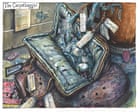
POPULISM AND SATIRE IN POLITICS
Illustration concept: An editorial illustration concept showing a dramatic parliamentary debate hall rendered in dark ink and watercolor satire style, symbolizing political discourse, democracy, and public commentary, neutral artistic style without text.
CSS / PCS revision
Key points, takeaways and exam-style Q&A formatted as a printable one-file study pack.
AI summary
Satirical visual commentary by illustrator Martin Rowson in Guardian Opinion highlights the evolving role of populist rhetoric in British electoral politics, specifically regarding Nigel Farage's campaign in Clacton. The commentary reflects broader systemic debates on democratic accountability, media narrative framing, and the global resurgence of right-wing populism.
Why this matters
Political satire serves as a critical mechanism for public scrutiny in constitutional democracies, exposing ideological contradictions and electoral posturing. Understanding these populist maneuvers provides essential comparative insights for public policy analysts and CSS aspirants studying Western governance frameworks and their international geopolitical ramifications.
Key takeaways
- Political satire functions as an informal check on charismatic populism within parliamentary democracies.
- Populist electoral strategies capitalize on anti-establishment sentiment and systemic governance failures.
- Media representation and editorial illustration play a pivotal role in shaping public perceptions during key elections.
- Comparative analysis of Western populist movements provides crucial insights for governance and constitutional studies in developing nations.
Satirical illustration has long functioned as a formidable instrument of political critique within Western parliamentary democracies. In a visual commentary published by Guardian Opinion, political cartoonist Martin Rowson addresses the political maneuvers surrounding Nigel Farage and the Clacton electoral dynamics. The depiction centers on the socio-political tensions generated by populist insurgents targeting traditional political strongholds. For political analysts and public administration scholars, this commentary underscores how caricature distils complex constitutional and electoral shifts into accessible public discourse.
Populist politics, exemplified by figures like Farage, relies heavily on anti-establishment rhetoric, nationalism, and direct voter appeal that bypasses traditional party machinery. Proponents argue that such political movements revitalize democratic engagement by addressing grievances neglected by mainstream political elites, such as immigration control and economic peripheralization. However, critics maintain that populist campaigns often rely on simplistic solutions to multifaceted structural challenges, potentially weakening institutional norms and exacerbating social polarization.
From an institutional governance perspective, political satire acts as a counterweight to populist charisma. Visual commentators like Rowson utilize subversion and grotesque imagery to deconstruct public personas, exposing underlying policy deficits and rhetorical inconsistencies. While supporters of robust press freedoms view this as essential democratic oversight, defenders of populist movements frequently dismiss political cartooning as partisan elite pushback aimed at delegitimizing legitimate voter frustration.
For competitive exam aspirants in Pakistan studying International Relations and Governance, the dynamics of British populist politics offer valuable comparative lessons. Parliamentary democracies across the Global South, including Pakistan, frequently grapple with similar electoral patterns characterized by charismatic anti-system leaders, polarized electorates, and intense media scrutiny. Analyzing how established democracies absorb or fracture under populist pressure highlights the critical necessity of strong constitutional safeguards, judicial independence, and an uninhibited press.
Ultimately, the intersection of political satire and populist campaigning in contests like Clacton illustrates the enduring friction within modern democratic governance. While populist leaders leverage public discontent to redefine electoral boundaries, political satire remains a vital democratic apparatus for preserving accountability. A balanced democratic framework requires both responsive governance to genuine public grievances and resilient institutional mechanisms capable of sustaining nuanced public debate.
Frequently asked questions
- What is the strategic significance of political satire in parliamentary elections?
- Political satire serves as a tool for public accountability, deconstructing elite political rhetoric and challenging systemic narratives through visual critique.
- How does populism impact traditional party dynamics in Western democracies?
- Populism displaces conventional party loyalties by mobilizing voters around anti-establishment rhetoric, charismatic leadership, and single-issue platforms.
- Why is the study of Western political trends relevant for CSS and PCS exam aspirants?
- Examining Western political dynamics helps candidates compare institutional resilience, electoral governance, and media influence across different democratic systems.
Source & transparency
- By:
- The Reviser Desk
- Source:
- Guardian Opinion
- Original publication:
- Aug 14, 2026, 4:18 PM
- The Reviser publication:
- Aug 14, 2026, 4:18 PM
- Updated:
- Aug 14, 2026, 4:32 PM
This report was independently written by The Reviser editorial desk from verified source material. It is not original on-the-ground reporting by The Reviser.
Related stories

FARAGE CLACTON VOTE SCRUTINY
Nigel Farage Clacton Win Sparks Financial Scrutiny Debate
AI summaryAccording to Guardian Opinion, Reform UK leader Nigel Farage secured a victory in a Clacton byelection that was boycotted by major political parties. Despite the win, Farage continues to face regulatory scrutiny regarding an unreported £5 million gift from an overseas cryptocurrency billionaire.

RED VS BLUE DIVIDE
US Political Polarization and the National Unity Debate
AI summaryDiscussions published by NYT Opinion highlight growing debates over whether intense ideological divides between American states could lead to political fragmentation. The commentary reflects broader public angst regarding democratic stability, foreign aid commitments, and national cohesion in a deeply polarized electorate.
HEATWAVE REALITIES EXAMINED
UK Heatwave Positives Examined in Guardian Editorial Cartoon
AI summaryGuardian Opinion published a satirical editorial cartoon by Natalya Lobanova focusing on the UK's recent summer heatwave. The piece highlights public reactions to changing weather patterns and underscores the growing global conversation surrounding climate adaptation.

TRUTH AND ACCOUNTABILITY
Political Accountability vs Reconciliation in Governance
AI summaryA recent commentary in NYT Opinion examines how attempts to rewrite history after political violence undermine genuine reconciliation. The analysis emphasizes that political stability requires rigorous legal accountability rather than political expediency.