Campus Ideology: How Student Self-Segregation Is Growing
The Silent Splintering of the American University Campus
CAMPUS DIVIDE GOES HIDDEN
Illustration concept: A conceptual, high-quality photograph of college students sitting on opposite sides of a university courtyard, separated by a visual soft-focus blur, representing social distance and partisan division, editorial lighting.
AI summary
A recent analysis published by The New York Times suggests that modern higher education is experiencing a subtle yet profound shift in political dynamics. Rather than engaging in open debate, students are increasingly isolating themselves into ideological enclaves on campus.
Key takeaways
- Campus political dynamics are shifting from public debate toward quiet social self-segregation.
- A New York Times Opinion piece notes that students increasingly build personal networks around political alignment.
- Voluntary ideological isolation limits opportunities for students to encounter diverse perspectives.
- University administrators face ongoing challenges in encouraging meaningful cross-partisan dialogue.
Higher education has long served as a battleground for competing ideas, but recent commentary points to a quieter, more concerning evolution in how political friction manifests on university grounds. According to an essay published by The New York Times Opinion section, today's undergraduates are engaging less in robust intellectual exchange and more in voluntary partisan isolation.
The publication observes that this dynamic extends far beyond traditional protest culture or visible campus activism. Instead of confronting opposing viewpoints in lecture halls or common spaces, students are increasingly organizing their social circles, housing arrangements, and extracurricular activities strictly around shared political beliefs.
This phenomenon of ideological self-segregation creates subtle silos that threaten the foundational educational goal of exposure to diverse perspectives. The commentary argues that when young adults deliberately avoid peers who hold differing worldviews, the academic environment transforms from a hub of broad critical inquiry into a collection of echoing social bubbles.
Observers noted that this quiet retreat into like-minded groups presents a unique dilemma for university leadership. While high-profile demonstrations typically capture national headlines, the silent withdrawal of students into political comfort zones poses a more persistent hurdle to fostering genuine civic tolerance across campus.
Frequently asked questions
- What is the core argument of the NYT Opinion essay?
- The essay argues that political division on campuses has taken a subtle form, where students voluntarily separate themselves into ideological social bubbles rather than interacting across partisan lines.
- How does student self-segregation differ from visible campus activism?
- Unlike rallies or organized debates, self-segregation is an informal, daily retreat where students choose friends, living spaces, and social groups that match their political views.
- Why do commentators view ideological isolation as problematic?
- Analysts suggest that avoiding opposing perspectives undermines the traditional goal of higher education, which is to foster critical thinking and prepare students for a pluralistic society.
Source & transparency
- By:
- Jawad
- Source:
- NYT Opinion
- The Reviser publication:
- Aug 7, 2026, 2:33 PM
- Updated:
- Aug 8, 2026, 10:27 AM
This report was independently written by The Reviser editorial desk from verified source material. It is not original on-the-ground reporting by The Reviser.
Related articles

GRID REALITIES FOR AI POWER
Pakistan's 2,000MW AI Power Plan Faces Grid Realities
AI summaryPakistan's decision to reserve 2,000 megawatts of electricity for artificial intelligence infrastructure and cryptocurrency mining has sparked intense debate over energy equity and grid capability. According to an analytical perspective published by Dawn, headline generation figures overlook crucial technical challenges such as regional transmission bottlenecks and seasonal demand fluctuations.

HONORING THE FALLEN POLICE
Pakistan's Police Sacrifice Amid Rising Terror Risk
AI summaryTop state leaders honored fallen law enforcement officers on Police Martyrs Day, praising their dedication against violent extremism and crime. However, editorial commentary from Dawn highlights an escalating fatality rate, as hundreds of security personnel lost their lives in counterterrorism efforts throughout early 2026.
MONSOON DESTRUCTION FLOOD CRISIS
Pakistan Monsoon Floods: A Growing Humanitarian Crisis
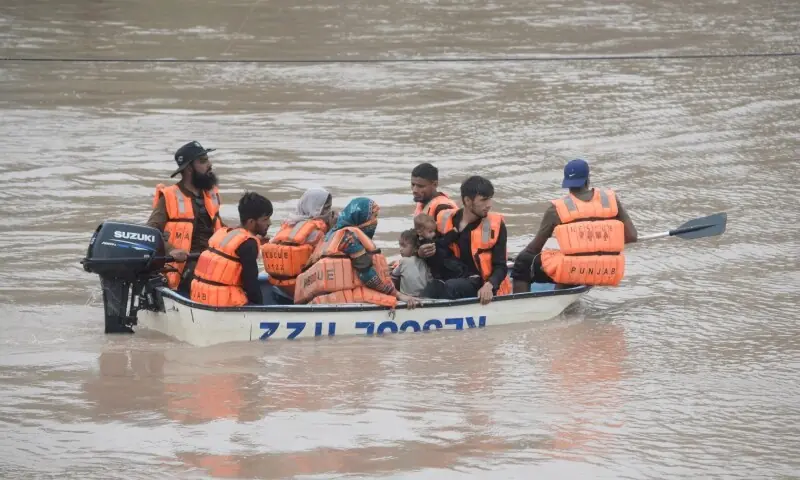
AI summaryHeavy monsoon rains across Pakistan have claimed over 150 lives and severely damaged critical infrastructure, according to recent official statistics. Dawn highlights that transport blockages, particularly in rugged terrain like Chitral, are preventing vulnerable populations from accessing essential healthcare facilities.
NAVIGATING STRAIN AND NUANCE
How Commentators Manage Cognitive Strain
AI summaryIn a landscape demanding constant commentary, media analysts must find strategies to retain cognitive clarity and process emotional tension. Insights from NYT Opinion emphasize the role of passive engagement in sustaining nuanced public discourse.