Wildfires Destroy Rare Moth and Snake Habitats
Century-Long Recovery Ahead for Wildfire-Damaged Habitats
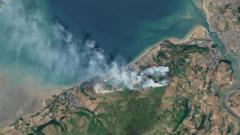
WILDFIRES DESTROY RARE HABITATS
Illustration concept: A dramatic landscape shot of burnt terrain following a wildfire, featuring charred soil and faint early vegetation regrowth under a misty sky.
AI summary
Recent summer wildfires have decimated crucial habitats for native snakes and rare moth species. Specialists warn that the environmental recovery from this destruction could span several centuries.
Key takeaways
- Wildfires this summer destroyed key habitats for rare moths and snakes.
- Experts estimate ecological recovery could take hundreds of years.
- Sensitive species face heightened survival risks due to specialized habitat loss.
Environmental specialists warn that ecosystems impacted by blazes this summer face a daunting timeline, with full ecological recovery potentially requiring centuries. The intense heat and rapid spread of the fires swept through sensitive natural landscapes, inflicting severe long-term damage on delicate biological networks.
According to reports from BBC Science, the summer blazes led to the destruction of vital habitats supporting local snake populations and rare moth species. The loss of these specialized micro-environments poses an immediate threat to the surviving wildlife and the overall biodiversity of the affected regions.
Conservationists emphasize that rare species are especially vulnerable when primary habitats are lost, as their breeding, shelter, and foraging grounds cannot be easily replicated or quickly restored. The destruction of key plant life disrupts essential food chains, leaving displaced creatures with few alternatives for survival.
While baseline vegetation may begin to re-emerge over coming seasons, scientists stress that rebuilding fully functional, interconnected ecosystems takes hundreds of years. Environmental managers now face the complex task of monitoring these damaged regions to mitigate long-term population declines.
Frequently asked questions
- Which species were directly affected by the recent wildfires?
- Reports from BBC Science indicate that summer blazes destroyed crucial habitats belonging to local snakes and rare moth species.
- How long could it take for these ecosystems to recover?
- Environmental experts estimate that complete ecological recovery and habitat restoration could take hundreds of years.
- Why is habitat destruction particularly dangerous for rare moths and snakes?
- These species depend on specific ecological conditions for food and shelter, making them highly vulnerable when their localized ecosystems are lost to fire.
Source & transparency
- By:
- The Reviser Desk
- Source:
- BBC Science
- Original publication:
- Aug 7, 2026, 5:15 AM
- The Reviser publication:
- Aug 7, 2026, 5:15 AM
- Updated:
- Aug 8, 2026, 10:30 PM
This report was independently written by The Reviser editorial desk from verified source material. It is not original on-the-ground reporting by The Reviser.
Related stories

TURTLE FLOWN 5000 MILES HOME
Rare Turtle Rescued in Wales Returned to Caribbean
AI summaryA rare sea turtle discovered stranded along the Welsh coastline is being returned to its native habitat in the Caribbean Sea. The creature will travel roughly 5,000 miles by air following rehabilitation efforts.

AUSTRALIA WILDLIFE EXTINCTION CRISIS
Australia Faces Biodiversity Crisis Amid Extinction Threat
AI summaryAustralia is experiencing a severe loss of its distinct native wildlife, cementing its position as a global hotspot for species extinction. Despite the accelerating decline, ongoing conservation efforts surrounding key native animals offer a path toward ecological recovery, according to reports from BBC Science.

SPACEX SHARES UNLOCKED NOW
SpaceX Employee Stock Unlocked: Financial Windfall Ahead
AI summaryLong-time staff members at SpaceX are set to experience substantial personal payouts as internal share restrictions lift on Thursday. Reporting from BBC Science indicates that early hires stand to benefit most from the upcoming stock unlock event.

HOSEPIPE BANS IN EFFECT
Drought Triggers Hosepipe Bans for Over 20 Million Homes
AI summaryMillions of residents are facing mandatory water use restrictions following an official drought declaration. Increased consumer demand combined with prolonged low rainfall has prompted hosepipe bans affecting over 20 million households.