US Fuel Prices Near $4 as Iran Tensions Strain Budgets
Rising Middle East Tensions Push US Gasoline Prices Near $4 Mark
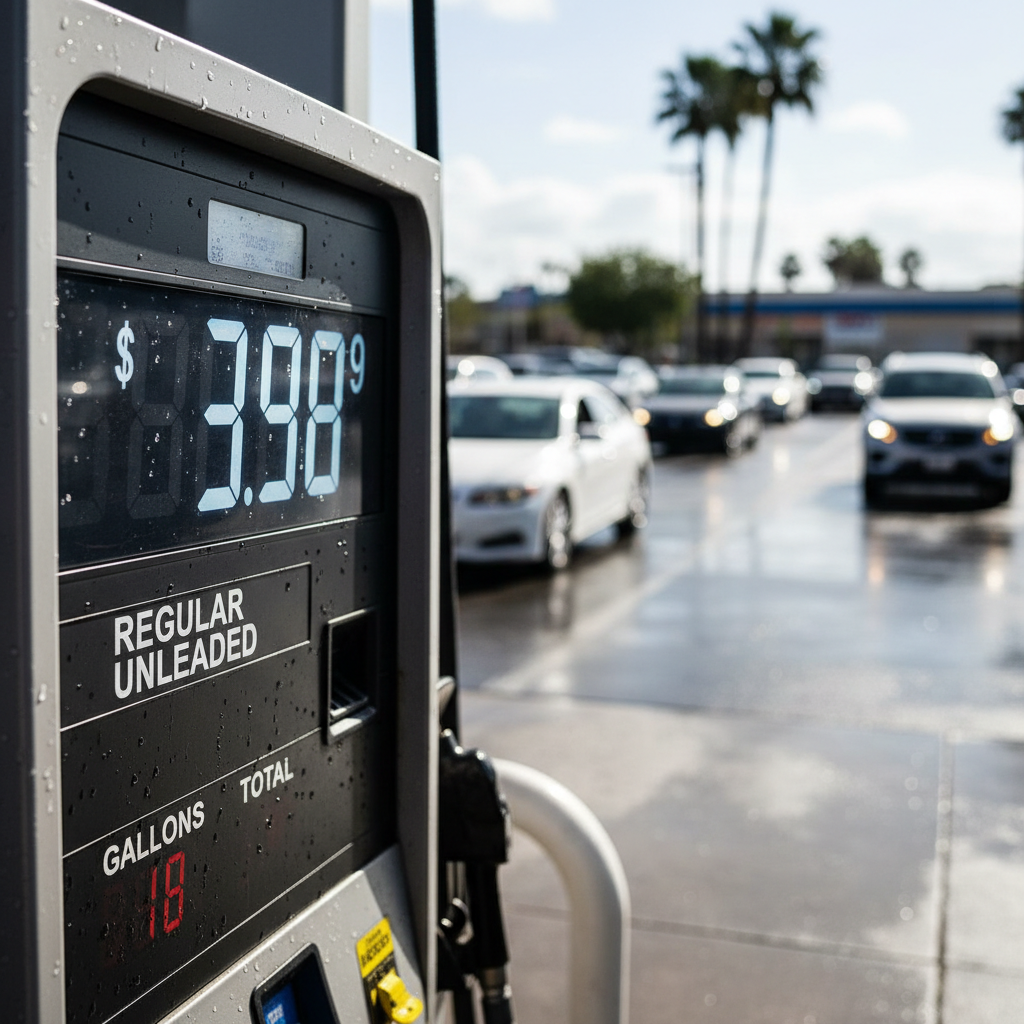
GAS PRICES NEAR $4
Illustration concept: A close-up shot of a digital gas station pump display in the United States displaying a price near four dollars per gallon, with cars softly blurred in the background under daylight.
AI summary
Surging energy expenses linked to ongoing conflict involving Iran are taking a toll on American consumers at retail gas pumps. With fuel prices lingering around $4 a gallon, elevated energy costs are increasingly straining everyday household spending across the United States.
Why this matters
Sustained increases in retail fuel costs ripple far beyond individual vehicle fill-ups, raising transportation expenses for consumer goods and services. For lower- and middle-income households, paying roughly $4 per gallon reduces discretionary income and amplifies broader cost-of-living pressures. Continued volatility in global energy markets could also complicate broader efforts to stabilize inflation.
Key takeaways
- US retail gasoline prices have climbed close to $4 per gallon amidst Middle East conflict.
- Heightened geopolitical tension involving Iran remains a primary driver of elevated energy costs.
- Higher fuel expenses are placing renewed financial pressure on domestic household budgets.
American consumers are experiencing the financial impact of geopolitical instability in the Middle East directly at retail service stations, where fuel costs continue to climb. Escalating conflict involving Iran has put upward pressure on international energy markets, leading to noticeable increases in domestic pump prices.
According to reports from Express Tribune Business, gasoline prices across the United States are currently lingering near $4 per gallon. The surge reflects broader market concerns over potential supply disruptions originating from the volatile energy-producing region.
The sustained rise in fuel prices is creating a direct drain on household finances. As driving costs climb, consumers are forced to reallocate daily spending, cutting back in other areas to cover essential transportation expenses.
The broader economic ripple effects of higher fuel costs extend into supply chains and logistics, potentially reinforcing persistent price pressures. For American families already navigating elevated living costs, the ongoing rise at the pump presents a refreshed financial challenge.
Frequently asked questions
- What is driving the recent increase in US gas prices?
- Escalating geopolitical tensions involving Iran in the Middle East have driven up global energy costs, leading to higher retail gasoline prices in the United States.
- How high have gasoline prices risen in the United States?
- According to reports from Express Tribune Business, retail gasoline is currently hovering around $4 a gallon across the country.
- How are higher fuel costs affecting American households?
- Elevated gas prices increase daily transportation expenses, putting additional pressure on domestic household budgets and reducing discretionary spending.
Source & transparency
- By:
- The Reviser Desk
- Source:
- Express Tribune Business
- Original publication:
- Aug 14, 2026, 9:42 AM
- The Reviser publication:
- Aug 14, 2026, 9:42 AM
- Updated:
- Aug 14, 2026, 5:04 PM
This report was independently written by The Reviser editorial desk from verified source material. It is not original on-the-ground reporting by The Reviser.
Related stories

US BORROWING COSTS SPIKE
US 30-Year Bond Yields Hit Highest Level Since 2001
AI summaryYields on U.S. 30-year Treasury bonds have climbed to their highest levels since 2001 following a recent debt sale. The escalation in borrowing costs recently pushed Washington to coordinate with Tokyo on currency intervention to stop Japan from liquidating Treasury holdings.

WHEAT PRICES SURGE AGAIN
Chicago Wheat Futures Surge Amid Black Sea Supply Fears
AI summaryChicago wheat futures advanced on Friday, marking their sharpest weekly increase in a month due to ongoing conflict-driven supply disruptions in the Black Sea region. Corn and soybean prices also registered modest gains, though upcoming rain in the US Midwest capped further increases.

MASSIVE GRID POWER FAILURE
Central Asian Grid Failure Triggers Mass Blackouts
AI summaryA major disturbance in Central Asia's unified power grid caused widespread electricity blackouts across Kazakhstan, Kyrgyzstan, and Tajikistan on Friday. Energy authorities across all three nations confirmed the disruption and stated that emergency efforts to restore electricity were under way.

HORMUZ SHIPPING AT STANDSTILL
Strait of Hormuz Shipping Halts After New Maritime Attacks
AI summaryMaritime transit through the Strait of Hormuz has come to a near-halt after two state-owned Emirati oil vessels were attacked in the critical shipping lane. The incidents follow a breakdown in ceasefire negotiations between Washington and Tehran, raising fresh concerns over global energy supply routes.