US 30-Year Bond Yields Hit Highest Level Since 2001
US Long-Term Borrowing Costs Surge to 25-Year High Following Treasury Auction
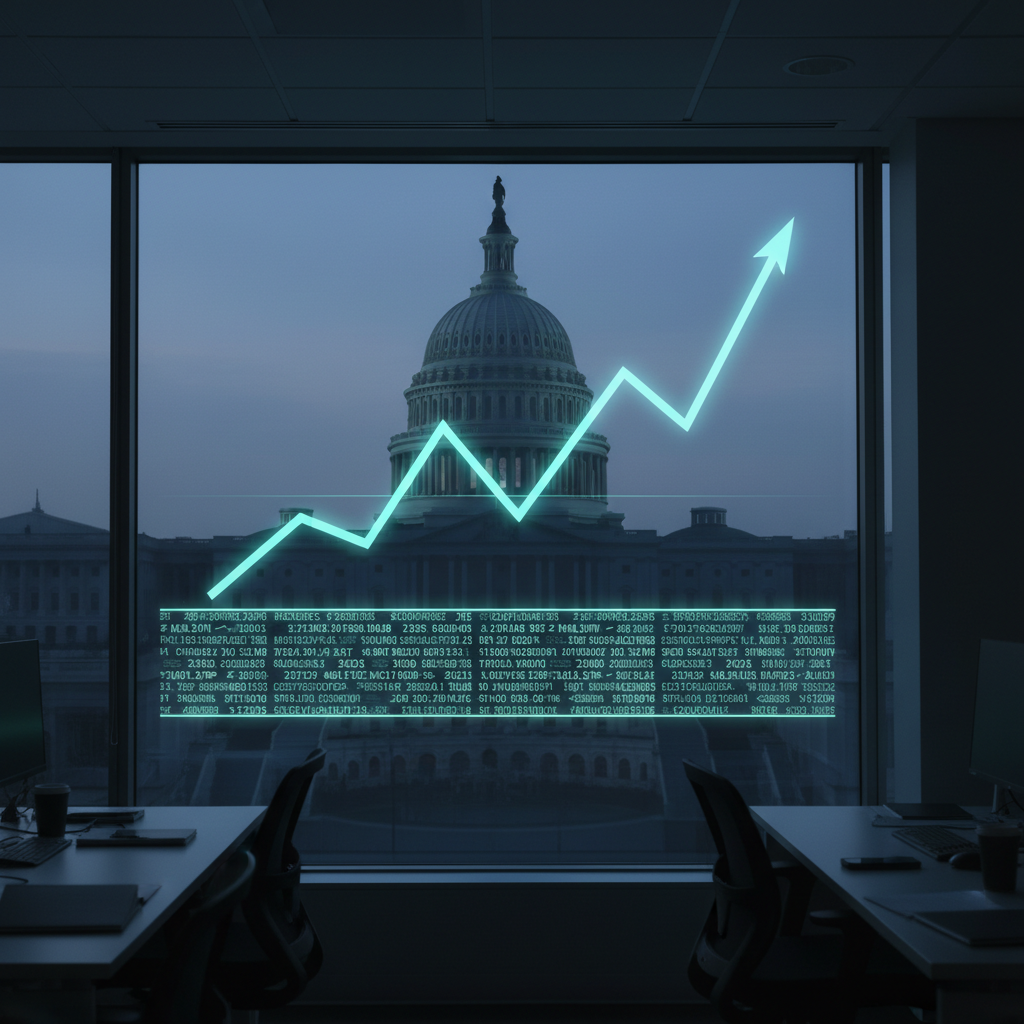
US BORROWING COSTS SPIKE
Illustration concept: A modern financial editorial graphic featuring a glowing line chart spiking upward against the dark silhouette of the Washington Capitol dome and financial tickers, professional vector style.
AI summary
Yields on U.S. 30-year Treasury bonds have climbed to their highest levels since 2001 following a recent debt sale. The escalation in borrowing costs recently pushed Washington to coordinate with Tokyo on currency intervention to stop Japan from liquidating Treasury holdings.
Why this matters
Higher long-term yields increase the cost of national debt service, placing heavier demands on federal revenue. Because U.S. Treasuries set a global benchmark, elevated borrowing costs also spill over into consumer lending, corporate credit, and foreign exchange markets worldwide.
Key takeaways
- U.S. 30-year Treasury bond yields reached their highest point since 2001.
- Higher borrowing costs mean the federal government faces increased costs to fund its budget.
- Washington and Tokyo intervened jointly in FX markets earlier this month to support the yen.
- The currency intervention aimed to prevent Japan from selling U.S. Treasuries to support its own currency.
The United States government is navigating its highest long-term borrowing costs in a quarter-century following a recent auction of 30-year Treasury bonds. Debt yields scaled heights not observed since 2001, underscoring growing friction in sovereign debt markets and persistent inflation concerns among global investors.
According to reports from Guardian Business, the steep rise in yields creates an immediate hurdle for federal fiscal planning. Higher bond yields mean Washington must issue new debt and roll over maturing obligations at far steeper interest rates, raising the overall price of maintaining government operations.
These rising debt service costs were a primary factor driving joint economic strategy between American and Japanese officials earlier this month. The two nations engaged in a synchronized currency market intervention designed to bolster the Japanese yen.
U.S. monetary officials were concerned that Japan might sell off a significant portion of its U.S. Treasury stockpile to protect the yen independently. Had Tokyo dumped Treasuries into the open market, bond prices would have plummeted further, triggering an even sharper spike in American borrowing costs.
market experts emphasize that the outcome leaves government finance officers in a demanding position, noting that officials "have to fund the government at more expensive levels." As interest payments absorb a larger fraction of the federal budget, market participants are keeping a close eye on how global fiscal authorities navigate persistent inflationary pressures.
Frequently asked questions
- Why did U.S. long-term borrowing costs reach a 25-year high?
- Yields on 30-year U.S. Treasury bonds rose sharply during recent debt auctions due to investor concerns regarding inflation and the supply of government debt.
- How did Japan's currency factor into U.S. bond market concerns?
- Washington worried Japan might sell off its U.S. Treasury reserves to defend the weakening yen, which would have increased Treasury supply and driven U.S. borrowing costs even higher.
- What is the direct impact of higher 30-year Treasury yields?
- Higher yields force the U.S. government to pay more interest to borrow money, while also driving up long-term borrowing costs across mortgage and corporate credit markets.
Source & transparency
- By:
- The Reviser Desk
- Source:
- Guardian Business
- Original publication:
- Aug 14, 2026, 6:43 AM
- The Reviser publication:
- Aug 14, 2026, 6:43 AM
- Updated:
- Aug 14, 2026, 7:01 AM
This report was independently written by The Reviser editorial desk from verified source material. It is not original on-the-ground reporting by The Reviser.
Related stories

US DEBT YIELDS SURGE
US 30-Year Treasury Yields Reach Highest Level Since 2001
AI summaryThe United States Treasury faced its highest long-term borrowing costs in nearly a quarter-century following a recent 30-year bond sale. Analysts warn that persistent federal deficits and ongoing inflation concerns could drive long-term yields even higher.
PAKISTAN SEEKS $10B US SWAP
Pakistan Seeks $10 Billion Currency Swap From US Treasury
AI summaryIslamabad has formally approached Washington for a $10 billion currency-swap arrangement through the US Treasury’s Exchange Stabilisation Fund. The request comes as Pakistan serves as a key diplomatic intermediary during the ongoing conflict between the United States and Iran.
THAI BAHT SLIPS LOWER
Thai Baht Drops to 33.20 Against US Dollar in Early Trading
AI summaryThailand's currency depreciated by 0.17% against the US dollar in early Friday trading, touching 33.20 per dollar. The decline follows the previous session's close of 33.1425, with early market activity hovering between 33.165 and 33.250.

PALM OIL STAYS STABLE
Malaysian Palm Oil Flat as Supply Rise Offsets El Niño Risk
AI summaryMalaysian palm oil futures held largely steady during Friday trading, balancing pressure from growing domestic stockpiles against concerns over El Niño weather disruptions and firmer crude oil markets. The benchmark October contract gained 0.06% by midday, placing it on track for a second straight weekly increase.