Stranded Rare Sea Turtle Flown from Wales to Caribbean
Rescued Kemp's Ridley Turtle Transported from Wales Back to Native Waters
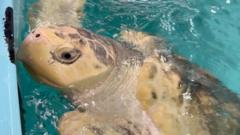
RARE TURTLE RETURNED HOME
Illustration concept: A high-detail photograph of a Kemp's ridley sea turtle resting in a specialized ocean transport crate, bathed in soft natural lighting, wildlife conservation setting, realistic texture.
AI summary
A stranded Kemp's ridley sea turtle discovered along the coast of Wales has been repatriated across the Atlantic Ocean. Reports from BBC Science confirm the rare marine animal was flown back toward its native waters in the Caribbean Sea.
Why this matters
Kemp's ridley sea turtles are among the most endangered marine turtle species globally, making individual rescue and rehabilitation efforts vital to population recovery. Transatlantic strandings occur when juvenile turtles are carried off course by powerful ocean currents into cold northern waters, where specialized air transport is often required to safely return them to warmer climate zones.
Key takeaways
- A rare Kemp's ridley sea turtle was rescued after washing up on the coast of Wales.
- The stranded marine reptile received medical rehabilitation before being repatriated.
- The turtle was flown across the Atlantic back toward its native habitat near Texas and the Caribbean Sea.
- Transatlantic strandings happen when ocean currents sweep sea turtles off migration routes into cold northern waters.
A rare Kemp's ridley sea turtle discovered stranded along the Welsh coastline has been returned to its natural environment following an international conservation effort, according to reports from BBC Science.
The marine reptile was found washed ashore far from its primary Atlantic habitat. Wildlife experts identified the animal as a Kemp's ridley, a critically vulnerable species typically inhabiting warm waters in the Gulf of Mexico and the Caribbean Sea.
After receiving essential care to rehabilitate its health following the cold-water strand, plans were coordinated to transport the turtle back across the ocean. The creature was placed aboard a flight designed to safely move it back toward Texas and the Caribbean Sea.
Marine biologists note that sea turtles occasionally get swept up in strong Atlantic ocean currents, driving them off their natural migration routes into chilled northern waters off the European coast.
The successful repatriation flight marks a significant win for conservationists dedicated to protecting one of the planet's rarest sea turtle species, offering the rescued animal a second chance in its native habitat.
Frequently asked questions
- What species of turtle was found in Wales?
- The animal was identified as a Kemp's ridley sea turtle, recognized as one of the rarest sea turtle species in the world.
- How did the turtle end up on the Welsh coast?
- Sea turtles can be swept away by powerful Atlantic currents, pushing them far off course into northern European waters.
- Where was the turtle returned to?
- According to BBC Science, the turtle was flown across the Atlantic to be rehomed in warm waters near Texas and the Caribbean Sea.
Source & transparency
- By:
- The Reviser Desk
- Source:
- BBC Science
- Original publication:
- Aug 12, 2026, 1:32 PM
- The Reviser publication:
- Aug 12, 2026, 1:32 PM
- Updated:
- Aug 12, 2026, 2:01 PM
This report was independently written by The Reviser editorial desk from verified source material. It is not original on-the-ground reporting by The Reviser.
Related stories

WALES TOXIC WASTE EXPOSED
Michael Sheen Probes Claims of Toxic Waste Dumping in Wales
AI summaryWelsh actor Michael Sheen has launched an investigation into allegations regarding the widespread disposal of cancer-causing chemicals across Wales. Reports from BBC Science highlight concerns over the long-term toxic environmental legacy left in local communities.

PERSEID METEOR SHOWER PEAKS
Perseid Meteor Shower Peak Offers Best View Wednesday
AI summaryThe annual Perseid meteor shower will reach its peak on Wednesday night, according to BBC Science. This event offers celestial observers their best opportunity to spot shooting stars across the night sky.
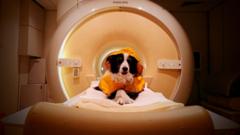
HOW DOGS READ SMILES
How Canine Brains Process Human Smiles and Scowls
AI summaryA recent scientific study reported by BBC Science has uncovered the neural activity inside a dog's brain when observing human facial expressions. Researchers observed distinct brain responses when dogs were exposed to human smiles compared to scowls.

HEATWAVE SAFETY WARNING DISABILITY
Disabled Campaigners Warn Heatwave Advice Increases Risks
AI summaryDisability advocates have warned that standard public health guidance for extreme heat can exacerbate risks for disabled individuals. According to reports from BBC Science, campaigners emphasize that official advice often fails to account for specific medical and accessibility needs.