Strait of Hormuz Shipping Drops to Six Ships as Peace Hopes Fade
Strait of Hormuz Daily Vessel Transits Sink to Just Six Ships
HORMUZ SHIPPING DROPS TO 6
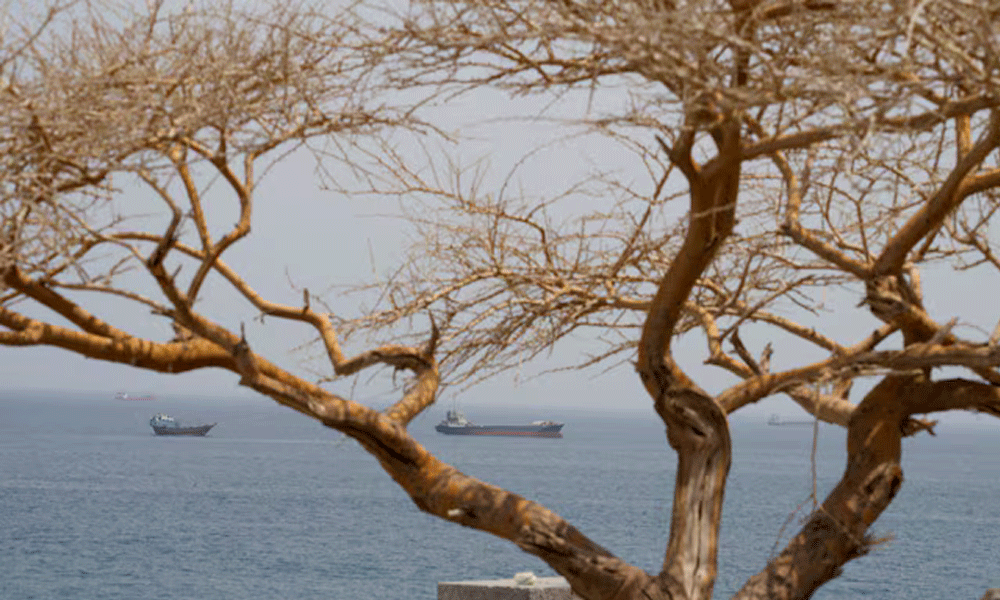
Illustration concept: A wide-angle cinematic photograph of commercial oil tankers navigating through a calm narrow maritime strait during twilight, dark blue water, dramatic cloudy sky, soft realistic sunlight reflecting on the ocean surface, high resolution photographic style.
AI summary
Daily vessel transits through the strategic Strait of Hormuz dropped to just six on Monday, down from a recent 10-day average of 11. Tracking data reveals a sharp contrast with pre-war levels when up to 140 ships navigated the crucial energy corridor daily.
Why this matters
The Strait of Hormuz serves as a primary transit route for global petroleum and gas shipments, making its operational status crucial for global energy security. Reduced maritime traffic highlights how escalating geopolitical conflict directly impacts international trade routes and commercial shipping lines. Extended disruptions in this corridor can quickly trigger price volatility in world commodity markets.
Key takeaways
- Vessel transits through the Strait of Hormuz fell to six on Monday, down from a 10-day average of 11.
- Pre-war daily shipping traffic through the waterway regularly ranged between 130 and 140 vessels.
- Out of six transiting ships, four entered the gulf while two departed, carrying cargoes including LPG and residual fuels.
- Red Sea shipping via the Bab el-Mandeb strait held stable at 25 vessels on Monday compared to its 24-ship average.
Maritime traffic passing through the crucial Strait of Hormuz slipped to a mere six vessels on Monday, according to tracking data from commodity intelligence firm Kpler. The figure marks a notable drop from the recent ten-day average of approximately 11 ships, coming amid growing diplomatic uncertainty between Washington and Tehran.
Detailed data recorded as of 0420 GMT Tuesday shows that four commodity carriers entered the Persian Gulf passage. Among these inbound vessels were two unladen oil product tankers heading into the waterway.
Conversely, only two ships made their exit through the strait during the same period. These outbound vessels comprised a small tanker carrying liquefied petroleum gas alongside another ship transporting residual fuels.
The current low volume of shipping represents a dramatic reduction compared to historical norms. Prior to the conflict, the critical maritime chokepoint regularly facilitated the passage of roughly 130 to 140 commercial vessels every day.
Meanwhile, maritime traffic through another vital regional shipping lane remained largely stable. Tracking records indicate that 25 ships navigated the Bab el-Mandeb strait in the Red Sea on Monday, matching closely with its 10-day daily average of nearly 24 vessels. The downturn in Hormuz traffic followed recent diplomatic developments, including US President Donald Trump's response to conditions set by Iranian officials.
Frequently asked questions
- How many vessels transited the Strait of Hormuz on Monday?
- Only six vessels passed through the Strait of Hormuz on Monday, compared to a recent 10-day average of about 11 ships.
- What was the normal daily traffic in the Strait of Hormuz prior to conflict?
- Before the conflict, approximately 130 to 140 commercial ships typically transited the strait every day.
- How did shipping traffic in the Bab el-Mandeb strait compare?
- In contrast to Hormuz, traffic in the Red Sea's Bab el-Mandeb strait remained steady, with 25 vessels transiting on Monday relative to a 10-day average of nearly 24 ships.
Source & transparency
- By:
- The Reviser Desk
- Source:
- Business Recorder
- Original publication:
- Aug 11, 2026, 5:59 AM
- The Reviser publication:
- Aug 11, 2026, 5:59 AM
- Updated:
- Aug 11, 2026, 6:01 AM
This report was independently written by The Reviser editorial desk from verified source material. It is not original on-the-ground reporting by The Reviser.
Related stories
ADNOC OPENS NEW OIL TENDER
ADNOC Issues 8th Spot Crude Tender for Gulf Oil Loading
AI summaryAbu Dhabi National Oil Company has launched its eighth spot crude tender since June, offering Upper Zakum, Umm Lulu, and Das crude for autumn loading. The state energy producer continues utilizing a shuttle fleet to move oil out of the Arabian Gulf past the Strait of Hormuz, having already placed at least 94 million barrels.

THAI BAHT RISES VS DOLLAR
Thai Baht Strengthens Against US Dollar in Early Trading
AI summaryThe Thai baht appreciated slightly against the US dollar on Monday morning, hovering near 32.99 per dollar. Financial market data showed the currency trading in a narrow range after closing at 33.03 in the previous session.

OIL SURGES NEAR $88
Crude Prices Surge to Multi-Week Highs Amid US-Iran Deadlock
AI summaryCrude futures reached their highest levels in weeks on Tuesday after peace negotiations between the United States and Iran stalled over new demands from Washington. Meanwhile, Asian equity markets traded quietly as lingering concerns over global inflation continued to weigh on investor sentiment.

PAK-RUSSIA FARM TIES
Pakistan, Russia Discuss Agriculture and Farm Machinery Ties
AI summaryPakistan and Russia held talks on Monday to deepen bilateral ties across the agriculture and livestock sectors. Discussions centered on securing modern farm machinery, quality fertilizers, pesticides, and vaccines to boost local crop productivity.