SC Rules Tax Ordinance Penalties Unlawful in Pakistan
Supreme Court Invalidates Retroactive Income Tax Penalties
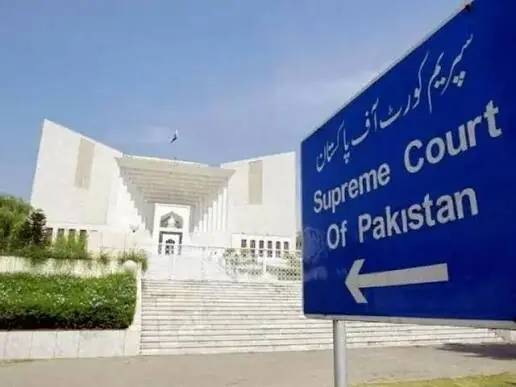
TAX PENALTIES DECLARED UNLAWFUL
Illustration concept: A clean editorial visual showing the Supreme Court building of Pakistan in Islamabad, alongside legal balance scales and tax documents, professional news style.
AI summary
A five-judge bench of the Supreme Court has ruled that penalties under Sections 182, 184, and 186 of the Income Tax Ordinance, 2001 are legally unsustainable. The court established that statutory amendments under Sections 122(5) and 122(5A) apply prospectively, overturning past conflicting judgments.
Why this matters
This ruling provides long-awaited legal certainty for corporate taxpayers in Pakistan regarding historical tax assessments. By firmly rejecting retroactive application of tax penalties, the judgment prevents arbitrary financial penalties against businesses for tax years completed under former legal frameworks.
Key takeaways
- Supreme Court larger bench declared penalties under ITO 2001 Sections 182, 184, and 186 unlawful.
- Amendments to Sections 122(5) and 122(5A) apply prospectively, not retroactively to assessments on or before June 30, 2002.
- The five-judge bench affirmed the Eli Lilly Pakistan ruling and declared the Islamic Investment Bank precedent erroneous.
- Tax proceedings under the repealed 1979 ordinance remain strictly governed by the old legislative framework.
A five-member larger bench of the Supreme Court of Pakistan has declared penalties levied under key provisions of the Income Tax Ordinance, 2001 to be unlawful and legally unsustainable. The judgment establishes that legal amendments modifying tax assessment rules cannot be enforced retroactively against taxpayers.
The larger bench, led by Justice Shahid Waheed, was specifically formed to resolve a standing conflict between two previous three-judge Supreme Court decisions. The court determined that statutory penalties under Sections 182, 184, and 186 of the tax ordinance lack legal backing.
Central to the legal challenge was whether legislative changes to Sections 122(5) and 122(5A) of the 2001 ordinance could alter tax assessments completed on or before June 30, 2002. According to Business Recorder, the apex court upheld the precedent set in the Eli Lilly Pakistan (Pvt.) Ltd case (2009 PTD 1392), confirming that these amending provisions are strictly prospective in nature.
Consequently, the bench dismissed a competing 2016 ruling in the Islamic Investment Bank Ltd case (2016 SCMR 816), declaring its retroactive approach erroneous in law. The judges clarified that tax assessments finalized under the repealed Income Tax Ordinance of 1979 must remain strictly governed by that former statutory framework.
By establishing clear boundaries on statutory prospectivity, the landmark ruling eliminates ongoing legal ambiguities for corporate entities facing retroactive reassessments and penalty demands from tax authorities.
Frequently asked questions
- What did the Supreme Court decide regarding Income Tax Ordinance penalties?
- The Supreme Court declared that penalties imposed under Sections 182, 184, and 186 of the Income Tax Ordinance, 2001 are unlawful and legally unsustainable.
- Who headed the larger Supreme Court bench in this decision?
- The five-member larger bench of the Supreme Court was headed by Justice Shahid Waheed.
- Does the ruling affect tax assessments completed before June 30, 2002?
- Yes, the court ruled that statutory amendments under Sections 122(5) and 122(5A) apply prospectively, meaning they cannot be applied retroactively to assessments ending on or before June 30, 2002.
Source & transparency
- By:
- The Reviser Desk
- Source:
- Business Recorder
- Original publication:
- Aug 11, 2026, 1:53 AM
- The Reviser publication:
- Aug 11, 2026, 1:53 AM
- Updated:
- Aug 11, 2026, 2:30 AM
This report was independently written by The Reviser editorial desk from verified source material. It is not original on-the-ground reporting by The Reviser.
Related stories

TAX APPEAL DISMISSED BY ATIR
ATIR Rejects Tax Department Appeal Over Flawed Assessment
AI summaryThe Appellate Tribunal Inland Revenue Lahore Bench has rejected a tax commissioner's appeal against a local taxpayer, rebuking the tax authorities for unmindful litigation. The tribunal upheld an earlier ruling that overturned a massive tax demand based on misunderstood third-party sales figures.

DAILY FUEL PRICES IN PAKISTAN
Pakistan Explores Daily Fuel Pricing in Market Deregulation Plan
AI summaryPakistan is evaluating plans to deregulate its downstream petroleum sector and transition to daily retail fuel price revisions. The proposed shift aims to minimize market distortions, curb inventory losses for oil companies, and align local fuel rates with global crude fluctuations.

FAIR TAX MONITORING DEMANDED
FBR Urged to Expand Juice Industry Electronic Monitoring
AI summaryThe Fruit Juice Council has called on the Federal Board of Revenue to apply its real-time production monitoring rules universally across all juice producers. The group warned that enforcing the system solely on formal sector companies risks penalizing compliant businesses while leaving undocumented operators unmonitored.

TRADE DEALS DEEPENED
Australia and Vietnam Build Clean Energy Trade Ties
AI summaryAustralian Prime Minister Anthony Albanese and visiting Vietnamese President To Lam announced plans to strengthen their nations' comprehensive strategic partnership. The two leaders pledged cooperation on clean energy, semiconductors, and critical minerals while raising concerns over restrictive trade practices.