Pakistan's Forensic Crisis Demands Urgent Reform
How Compromised Medico-Legal Reports Sabotage Justice in Pakistan
JUSTICE UNDER THREAT
Illustration concept: A dramatic close-up of a judge's wooden gavel resting beside medical legal files and a magnifying glass in a dimly lit setting.
AI summary
The high-profile death of a young Karachi businessman has once again exposed critical vulnerabilities in Pakistan's medico-legal and forensic procedures. An editorial commentary from Dawn argues that systematic procedural lapses and institutional pressure routinely compromise criminal investigations across the country.
Key takeaways
- Controversies surrounding the death of Mir Raza Ali highlight severe procedural gaps in Karachi's investigative protocol.
- Initial suicide claims by police faced immediate pushback from the family and public criticism from a police surgeon.
- Dawn emphasizes that disputed post-mortem reports reflect a broad, systemic failure in Pakistan's forensic infrastructure.
- External pressures and technical shortcomings regularly lead to altered evidence and compromised trial outcomes.
The troubling details surrounding the death of Mir Raza Ali, a young businessman from Karachi, have brought national attention back to the fragility of Pakistan's investigative mechanisms. While local police initially leaned toward classifying the incident as a suicide, the victim's family forcefully rejected the assertion, alleging that he was subjected to kidnapping, torture, and murder. The case took a dramatically complex turn after a senior police surgeon publicly expressed doubts about the original post-mortem report on live television, prompting the father to petition the court for an exhumation and the creation of a specialized medico-legal board.
However, the path to establishing the truth encountered immediate administrative hurdles. Just twenty-four hours after judicial authorization was granted for the body to be exhumed, the process had to be halted. The family lodged formal objections over an unexpected, last-minute reshuffling of the medical panel, casting a fresh shadow of doubt over the impartiality of the proceedings.
In a recent commentary, the English-language daily Dawn highlights this dispute as part of a much broader, alarming pattern across the country's legal landscape. Medico-legal assessments form the structural bedrock of the criminal justice process; when these evaluations contain errors or omissions, the entire evidentiary architecture collapses. Yet, as the newspaper observes, disputed forensic findings have become an uncomfortably routine feature of major criminal trials.
Beyond basic incompetence or a lack of technical standard operating procedures, medical examiners frequently face external arm-twisting designed to alter findings. Misrepresenting or mischaracterizing bodily injuries directly obstructs judicial outcomes, leaving courtrooms to rely on compromised documentation. Dawn stresses that practitioners operating within such high-stakes environments cannot afford to cut corners or succumb to external influence.
Furthermore, the editorial points to significant institutional shortcomings in forensic science, noting that investigative staff repeatedly struggle with basic tasks such as recreating crime scenes or detailing offender and victim profiles. Without comprehensive institutional overhauls and stringent safeguards to shield forensic specialists from coercion, flawed investigations will continue to deny justice to victims and their surviving families.
Frequently asked questions
- What triggered the controversy in the Mir Raza Ali case?
- The case generated intense debate when initial police assumptions of suicide were publicly challenged by a police surgeon, while the family maintained allegations of kidnapping, torture, and homicide.
- Why was the exhumation of the body postponed?
- The exhumation was put on hold after the family expressed strong reservations regarding the sudden, last-minute reconstitution of the judicial medico-legal board.
- What broader concern does Dawn raise about Pakistan's forensic system?
- Dawn argues that widespread technical deficiencies, improper crime scene reconstructions, and coercive pressure to modify medical evidence routinely undermine criminal prosecutions nationwide.
Source & transparency
- By:
- Jawad
- Source:
- Dawn Opinion
- The Reviser publication:
- Aug 8, 2026, 12:24 AM
- Updated:
- Aug 8, 2026, 10:24 AM
This report was independently written by The Reviser editorial desk from verified source material. It is not original on-the-ground reporting by The Reviser.
Related articles

GRID REALITIES FOR AI POWER
Pakistan's 2,000MW AI Power Plan Faces Grid Realities
AI summaryPakistan's decision to reserve 2,000 megawatts of electricity for artificial intelligence infrastructure and cryptocurrency mining has sparked intense debate over energy equity and grid capability. According to an analytical perspective published by Dawn, headline generation figures overlook crucial technical challenges such as regional transmission bottlenecks and seasonal demand fluctuations.

HONORING THE FALLEN POLICE
Pakistan's Police Sacrifice Amid Rising Terror Risk
AI summaryTop state leaders honored fallen law enforcement officers on Police Martyrs Day, praising their dedication against violent extremism and crime. However, editorial commentary from Dawn highlights an escalating fatality rate, as hundreds of security personnel lost their lives in counterterrorism efforts throughout early 2026.
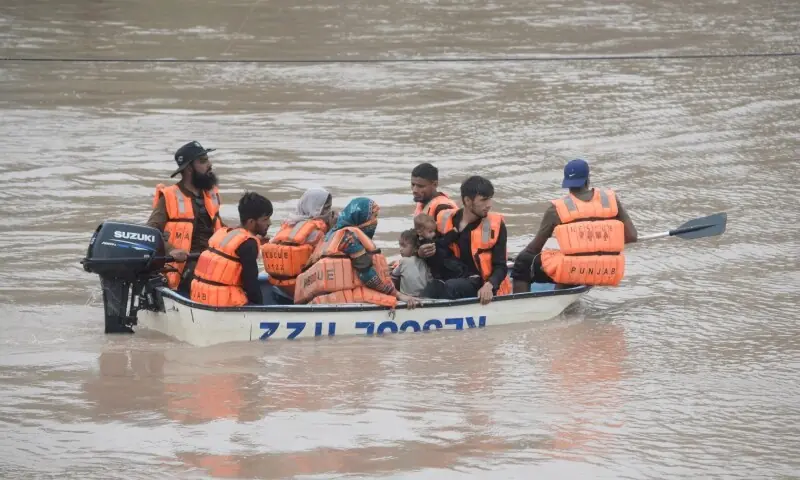
MONSOON DESTRUCTION FLOOD CRISIS
Pakistan Monsoon Floods: A Growing Humanitarian Crisis
AI summaryHeavy monsoon rains across Pakistan have claimed over 150 lives and severely damaged critical infrastructure, according to recent official statistics. Dawn highlights that transport blockages, particularly in rugged terrain like Chitral, are preventing vulnerable populations from accessing essential healthcare facilities.
NAVIGATING STRAIN AND NUANCE
How Commentators Manage Cognitive Strain
AI summaryIn a landscape demanding constant commentary, media analysts must find strategies to retain cognitive clarity and process emotional tension. Insights from NYT Opinion emphasize the role of passive engagement in sustaining nuanced public discourse.