Pakistan Fiscal Crisis: Rethinking Tax Policy and Services
State Fiscal Capacity vs Public Services: Analyzing Pakistan’s Revenue Crisis
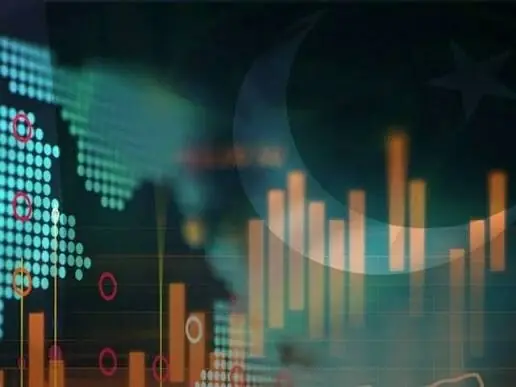
TAXES VS PUBLIC SERVICES
Illustration concept: A modern, professional editorial graphic showing a balanced scale with tax finance documents on one side and crumbling public infrastructure outlines on the other, set against a dark blue background with abstract financial graphs.
CSS / PCS revision
Key points, takeaways and exam-style Q&A formatted as a printable one-file study pack.
AI summary
Business Recorder Opinion highlights how Pakistan's annual budgetary reliance on revenue targets and debt expansion fails to fix deteriorating public services. The analysis emphasizes that perpetual tax adjustments without structural reform weaken the social contract between the state and its citizens.
Why this matters
Persistent gaps between state tax collection and public service delivery undermine civil trust in state institutions across developing economies. For Pakistan, continuing to raise revenue burdens without delivering adequate healthcare, education, and infrastructure threatens long-term socio-economic stability.
Key takeaways
- The perpetual reliance on short-term tax policy tweaks fails to address the underlying structural deficit in public service delivery.
- Expanding tax targets alongside growing expenditure and national debt erodes public trust when basic infrastructure remains underdeveloped.
- A resilient social contract requires aligning revenue extraction with tangible state investment in healthcare, education, and public infrastructure.
- Institutional tax reform must transcend annual fiscal adjustments to focus on equitable burden-sharing and accountable public spending.
In Pakistan, annual budgetary debates consistently orbit around familiar fiscal metrics: reducing the budget deficit, chasing aggressive tax revenue targets, and managing soaring public debt. Writing in Business Recorder Opinion, tax policy experts note that this annual ritual of adjusting tax rates, withdrawing exemptions, and reallocating burdens treats fiscal policy as a mechanical exercise rather than a reflection of state capability.
Despite successive finance bills introducing new taxation measures year after year, public expenditure and national liabilities continue to outstrip revenue generation. On one side, government planners emphasize the mathematical necessity of expanding the tax net to prevent sovereign default and satisfy international lenders. On the other, tax-paying citizens face a stark reality where heightened financial contributions yield negligible improvements in public utilities, basic healthcare, primary education, and road infrastructure.
This disconnect carries profound implications for Pakistan's governance and socio-economic cohesion. Drawing parallels with structural critiques of modern political economy, such as those articulated by sociologist Wolfgang Streeck, the gap between tax collection and public service quality threatens the social contract. When state institutions act primarily as revenue extractors without delivering corresponding public goods, informal economic activity expands, compliance wanes, and institutional mistrust deepens.
From a broader developmental perspective relevant to governance and political economy studies, Pakistan’s fiscal predicament mirrors a wider crisis across global South economies struggling with debt overhangs and administrative inertia. Relying heavily on indirect taxation or superficial policy adjustments disproportionately burdens low- and middle-income segments, worsening income inequality and stifling human capital development across the region.
Ultimately, addressing Pakistan's fiscal crisis requires moving beyond cosmetic adjustments in annual finance bills. Sustainable governance demands a fundamental recalibration where tax policy is directly tethered to transparent public investment and accountable expenditure. Rebuilding public trust mandates that every rupee collected from citizens translates into measurable enhancements in civic infrastructure and human welfare.
Frequently asked questions
- What is the main critique of Pakistan's fiscal approach in this analysis?
- The core critique highlights that annual budgetary cycles focus heavily on short-term tax hikes and revenue targets while failing to improve essential public services like education and healthcare.
- How does the current taxation model affect public trust?
- When citizens face higher tax burdens and rising national debt without seeing visible improvements in basic public infrastructure, it strains the social contract between citizens and the state.
- What structural changes are recommended for tax policy in Pakistan?
- Experts argue for moving beyond routine annual budget tweaks toward comprehensive fiscal reforms that ensure equitable tax distribution and accountable public spending.
Source & transparency
- By:
- The Reviser Desk
- Source:
- Business Recorder Opinion
- Original publication:
- Aug 12, 2026, 2:09 AM
- The Reviser publication:
- Aug 12, 2026, 2:09 AM
- Updated:
- Aug 12, 2026, 4:00 AM
This report was independently written by The Reviser editorial desk from verified source material. It is not original on-the-ground reporting by The Reviser.
Related stories
POWER TRUST RISK RETURN
Resurgent Power Trusts Threaten Energy Market Stability
AI summaryA resurgence of debt-heavy mega-mergers in the power sector mirrors the utility monopolies of a century ago, according to commentary from Project Syndicate. This analytical piece examines the risks of utility consolidation, corporate leverage, and the strategic policy lessons for Pakistan’s energy governance.
REFORMS OR CONSTITUTIONAL VIOLATIONS?
Constitutional Reforms and Provincial Restructuring in Pakistan
AI summaryRecent proposals by Pakistan's interior minister have reignited national debate regarding large-scale constitutional reforms and the creation of new provinces. According to analysis published by Business Recorder Opinion, meaningful governance reform requires strict adherence to constitutional boundaries rather than hasty structural restructuring.
ADMINISTRATIVE REFORM IN PAKISTAN
Administrative Reform in Pakistan: Why Governance Delays Persist
AI summaryPakistan's administrative structure has remained virtually unchanged since 1969 despite its population growing from 58.5 million to an estimated 259.3 million by 2026. A Business Recorder Opinion analysis highlights how political resistance prevents essential decentralisation, contrasting Pakistan's stagnation with regional reorganisations.

VALUING TALENT OVER BRAND
Psychological Safety vs Physical Security in Governance
AI summaryAn analysis by Business Recorder Opinion highlights the growing disparity between physical security investments and psychological safety within modern corporate environments. The piece examines how organizational culture influences professional self-worth and talent retention across both large enterprises and smaller firms.