Pakistan Carbon Markets: Article 6 Climate Finance Gap
Unlocking Article 6: Can Carbon Markets Bridge Pakistan's Climate Finance Deficit?
BRIDGING THE CLIMATE GAP
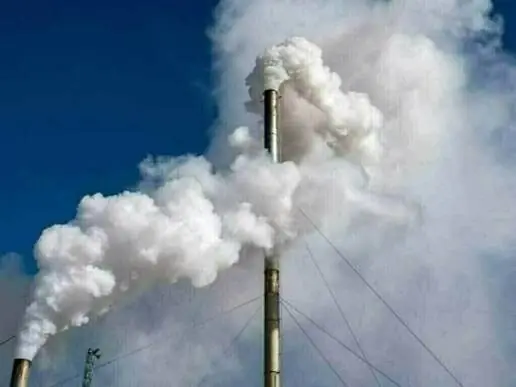
Illustration concept: A modern renewable energy installation in Pakistan featuring solar arrays and wind turbines integrated with green financial growth icons, photorealistic editorial illustration.
CSS / PCS revision
Key points, takeaways and exam-style Q&A formatted as a printable one-file study pack.
AI summary
Pakistan requires over $565 billion by 2035 to meet its climate commitments but has only raised $1.4 to $2.0 billion annually through traditional avenues over the last decade. As noted by Business Recorder Opinion, operationalizing carbon markets under Article 6 of the Paris Agreement offers a vital opportunity to secure non-debt climate finance if robust governance is established.
Why this matters
Pakistan contributes less than 0.8 percent of global greenhouse gas emissions yet faces extreme climate vulnerability alongside a staggering financial shortfall. Accessing Article 6 carbon trading enables the country to mobilize private and international capital for green projects without deepening national sovereign debt.
Key takeaways
- Pakistan faces an acute climate financing deficit, needing over $565 billion by 2035 against historical inflows of just $1.4–$2.0 billion annually.
- Article 6 of the Paris Agreement provides the legal framework for cross-border carbon trading and results-based climate finance.
- Effective participation requires strong domestic governance to avoid double-counting credits and safeguard national emission targets.
- Carbon markets offer non-debt capital inflows, helping ease Pakistan's balance of payments while funding sustainable energy and adaptation infrastructure.
Pakistan stands at a critical juncture in global climate governance, generating less than 0.8 percent of global greenhouse gas emissions yet consistently ranking among the world's most vulnerable nations to climate-induced disasters. To fulfill its updated Nationally Determined Contributions (NDCs) under the Paris Agreement, the country requires over $565 billion by 2035. However, as highlighted in an analysis by Business Recorder Opinion, traditional financing mechanisms have proven vastly inadequate, yielding a meager $1.4 billion to $2.0 billion annually over the past decade.
This structural deficit necessitates innovative financial solutions, chief among them carbon markets operationalized through Article 6 of the Paris Agreement. Article 6 establishes a voluntary legal and procedural framework enabling sovereign nations and private entities to trade internationally transferred mitigation outcomes. For a fiscal-starved developing economy like Pakistan, engaging in carbon credit trading offers a practical pathway to attract non-debt, results-based external capital while simultaneously incentivizing domestic clean energy, forest conservation, and adaptation initiatives.
Proponents argue that carbon pricing mechanisms provide an efficient, market-driven catalyst for decarbonization without placing additional strains on public balance sheets. Conversely, policy analysts caution that entering international carbon markets without robust national institutional architecture risks double-counting carbon reductions and inadvertently selling off low-cost mitigation credits needed for domestic targets. Establishing a transparent regulatory framework remains essential to ensure high-integrity transactions and safeguard national sovereignty over carbon rights.
For South Asia, where climate degradation transcends international borders, Pakistan's successful integration into global carbon markets could serve as a reference point for regional cooperation and resource mobilization. Transitioning toward carbon-based results finance would bolster climate-resilient infrastructure, reduce the nation's long-term reliance on costly fossil fuel imports, and lessen dependence on traditional multilateral debt instruments that exacerbate fiscal distress.
In conclusion, carbon markets represent a vital strategic tool to bridge Pakistan's formidable climate financing gap, provided the necessary governance structures are swiftly established. For policy planners and competitive exam candidates evaluating economic sustainability, the issue underscores the urgent need to align domestic regulatory mechanisms with international market standards. If Pakistan successfully navigates these institutional hurdles, carbon trading can transform environmental vulnerability into long-term economic resilience.
Frequently asked questions
- What is Pakistan's current climate financing gap?
- Pakistan requires more than $565 billion by 2035 to fulfill its updated Nationally Determined Contributions (NDCs), but has only secured between $1.4 billion and $2.0 billion annually over the past decade.
- How does Article 6 of the Paris Agreement assist Pakistan?
- Article 6 creates a voluntary mechanism for countries to trade international mitigation outcomes, allowing Pakistan to attract foreign public and private investments by monetizing carbon reduction projects.
- What governance risks does Pakistan face in carbon trading?
- The primary risks include weak institutional monitoring, potential double-counting of carbon offsets, and selling low-cost mitigation outcomes that the country might need to achieve its own domestic climate goals.
Source & transparency
- By:
- The Reviser Desk
- Source:
- Business Recorder Opinion
- Original publication:
- Aug 12, 2026, 2:18 AM
- The Reviser publication:
- Aug 12, 2026, 2:18 AM
- Updated:
- Aug 12, 2026, 2:30 AM
This report was independently written by The Reviser editorial desk from verified source material. It is not original on-the-ground reporting by The Reviser.
Related stories

ADMINISTRATIVE REFORM IN PAKISTAN
Administrative Reform in Pakistan: Why Governance Delays Persist
AI summaryPakistan's administrative structure has remained virtually unchanged since 1969 despite its population growing from 58.5 million to an estimated 259.3 million by 2026. A Business Recorder Opinion analysis highlights how political resistance prevents essential decentralisation, contrasting Pakistan's stagnation with regional reorganisations.

VALUING TALENT OVER BRAND
Psychological Safety vs Physical Security in Governance
AI summaryAn analysis by Business Recorder Opinion highlights the growing disparity between physical security investments and psychological safety within modern corporate environments. The piece examines how organizational culture influences professional self-worth and talent retention across both large enterprises and smaller firms.
POWER TRUST RISK RETURN
Resurgent Power Trusts Threaten Energy Market Stability
AI summaryA resurgence of debt-heavy mega-mergers in the power sector mirrors the utility monopolies of a century ago, according to commentary from Project Syndicate. This analytical piece examines the risks of utility consolidation, corporate leverage, and the strategic policy lessons for Pakistan’s energy governance.

US GROWTH REAL OR FRAGILE
US Economic Resilience and Global Financial Vulnerabilities
AI summaryDespite experiencing unprecedented macroeconomic shocks, the United States economy continues to expand near its long-term potential rate. However, analysis indicates that underlying risks such as debt-fueled speculation and geopolitical volatility could undermine this apparent stability.