Pakistan Balances Regional Ties via Makkah Security Pact
Reassuring Tehran: Pakistan's Strategic Balancing Act in the Middle East
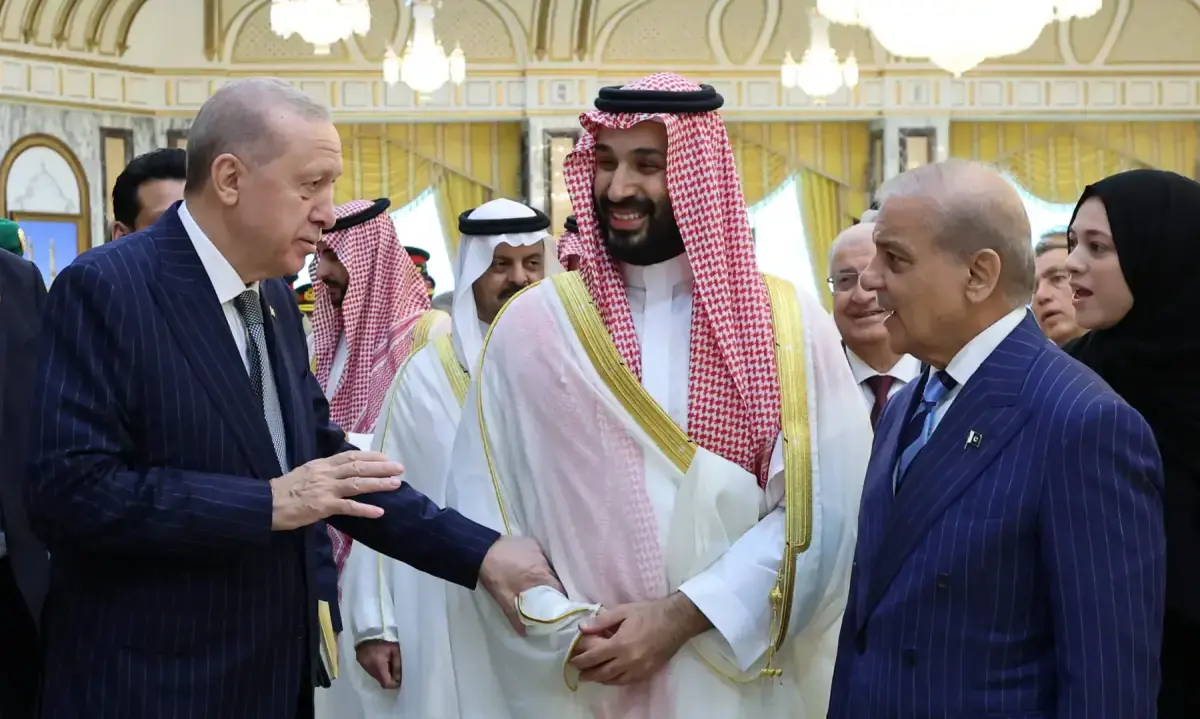
PAKISTAN IRAN DEFENSE PACT TALKS
Illustration concept: A conceptual illustration featuring the flags of Pakistan, Iran, Saudi Arabia, and Turkiye around a diplomatic conference table, rendered in a professional geopolitical editorial style.
CSS / PCS revision
Key points, takeaways and exam-style Q&A formatted as a printable one-file study pack.
AI summary
Following the signing of the Makkah Joint Defence Agreement alongside Saudi Arabia and Turkiye, Islamabad actively engaged Tehran to prevent diplomatic friction. Iranian officials welcomed the assurances, noting that regional security architecture must increasingly rely on intra-regional cooperation rather than Western security guarantees.
Why this matters
Pakistan's ability to navigate the complex security dynamics of the Middle East is vital for its domestic economic stability and regional neutrality. By proactively reassuring Iran, Islamabad aims to avoid being drawn into bloc politics while reinforcing strategic partnerships with Gulf powers and Turkiye. This delicate balancing act serves as an essential case study in diplomatic hedging for foreign policy analysts.
Key takeaways
- Proactive diplomatic outreach to Tehran demonstrates Pakistan's commitment to strategic neutrality in Middle Eastern security affairs.
- Reassurances from PM Shehbaz Sharif and FM Ishaq Dar framed the Makkah pact strictly as a defensive framework rather than an anti-Iran coalition.
- Tehran's receptive response highlights a potential shift toward intra-regional security reliance over Western defense guarantees.
- Maintaining balanced ties with Riyadh and Tehran is essential for Pakistan's border security, economic stability, and diplomatic posture.
Pakistan's foreign policy has long been tested by the volatile geopolitics of the Middle East, requiring a cautious balance between maintaining deep strategic ties with Gulf monarchies and preserving peaceful relations with neighboring Iran. Following the signing of the Makkah Joint Defence Agreement with Saudi Arabia and Turkiye, Islamabad immediately initiated diplomatic outreach to Tehran. According to Dawn Opinion, top Pakistani leadership moved swiftly to clarify the scope and intent of the new trilateral defense pact to alleviate any strategic misgivings in Iran.
In high-level diplomatic communications, Pakistani Foreign Minister Ishaq Dar informed Iranian Foreign Minister Abbas Araghchi that the agreement should not be interpreted as an instrument of confrontation. Reinforcing this stance domestically, Prime Minister Shehbaz Sharif informed his cabinet that the partnership is established strictly for defensive purposes. These proactive measures underscore Pakistan's institutional awareness of Iran's security anxieties, particularly regarding potential regional encirclement or foreign-backed alliances along its eastern border.
From Tehran's perspective, the initial response appears measured and receptive. An Iranian foreign ministry spokesperson publicly confirmed that Tehran sees no indication that the accord is designed to isolate or encircle Iran. Iranian diplomats further contextualized the pact as evidence that Middle Eastern states are gradually recognizing the limits of relying on the United States security umbrella, signaling a shared interest in intra-regional security mechanisms even amid lingering strategic divergence.
For competitive-exam aspirants analyzing Pakistan’s strategic calculus, this episode highlights the imperative of strategic hedging in a multipolar regional order. Joining defense agreements with Riyadh and Ankara allows Pakistan to deepen military coordination, secure financial goodwill, and enhance defense exports. Simultaneously, maintaining open diplomatic channels with Tehran prevents cross-border tensions, safeguards border management projects, and ensures that Islamabad does not become embroiled in sectarian or regional power rivalries.
In conclusion, Pakistan’s recent diplomatic maneuvers illustrate a mature application of non-confrontational diplomacy in a highly polarized neighborhood. While trilateral defense agreements bolster Pakistan’s deterrence capabilities and ties with key Muslim allies, sustained dialogue with non-signatory neighbors like Iran remains indispensable. Achieving long-term regional stability will require Islamabad to continually uphold this equilibrium, ensuring its defense commitments strengthen regional security without provoking counter-alliances.
Frequently asked questions
- What is the Makkah Joint Defence Agreement?
- It is a trilateral defense partnership signed between Pakistan, Saudi Arabia, and Turkiye aimed at bolstering defensive capabilities and military cooperation.
- How did Pakistan reassure Iran regarding the defense pact?
- Pakistani leaders, including Foreign Minister Ishaq Dar and Prime Minister Shehbaz Sharif, clarified directly to Iranian officials and the cabinet that the pact is strictly defensive and not targeted against Tehran.
- How did Iran react to Pakistan's diplomatic assurances?
- An Iranian foreign ministry spokesperson acknowledged the assurances, stating Tehran saw no reason to believe the agreement was intended to encircle Iran.
Source & transparency
- By:
- The Reviser Desk
- Source:
- Dawn Opinion
- Original publication:
- Aug 12, 2026, 2:38 AM
- The Reviser publication:
- Aug 12, 2026, 2:38 AM
- Updated:
- Aug 12, 2026, 3:31 AM
This report was independently written by The Reviser editorial desk from verified source material. It is not original on-the-ground reporting by The Reviser.
Related stories

TRILATERAL DEFENSE PACT SIGNED
Pakistan Saudi Arabia Turkiye Defense Pact Reshapes Security
AI summaryA recent defense agreement involving Pakistan, Saudi Arabia, and Turkiye has expanded previous bilateral ties into a trilateral security framework across South Asia, the Middle East, and Europe. According to an analysis by Dawn Opinion, this partnership creates a major strategic block amid rising global security challenges.

MICHIGAN SENATE DIPLOMACY DEBATE
Michigan Senate Race Highlights US Foreign Policy Dilemma
AI summaryA commentary published by NYT Opinion examines the political messaging required for Democratic nominees in swing states like Michigan regarding Middle East policy. The piece explores how candidates attempt to navigate competing voter demands while maintaining broad electoral coalitions.
EXECUTIVE POWER & GOVERNANCE
Examining Trump Cabinet Appointments and Executive Power Dynamics
AI summaryAn evaluation published by Washington Post Opinions highlights how presidential appointments frequently challenge political expectations and test institutional norms. Examining these administrative choices provides key insights into executive strategy, bureaucratic friction, and international governance trends.

ADMINISTRATIVE REFORM IN PAKISTAN
Administrative Reform in Pakistan: Why Governance Delays Persist
AI summaryPakistan's administrative structure has remained virtually unchanged since 1969 despite its population growing from 58.5 million to an estimated 259.3 million by 2026. A Business Recorder Opinion analysis highlights how political resistance prevents essential decentralisation, contrasting Pakistan's stagnation with regional reorganisations.