Iron Ore Prices Hold Flat Amid BHP Strike and Weak China Data
Iron Ore Markets Stabilise as Australian Strike Counters Weak Chinese Inflation
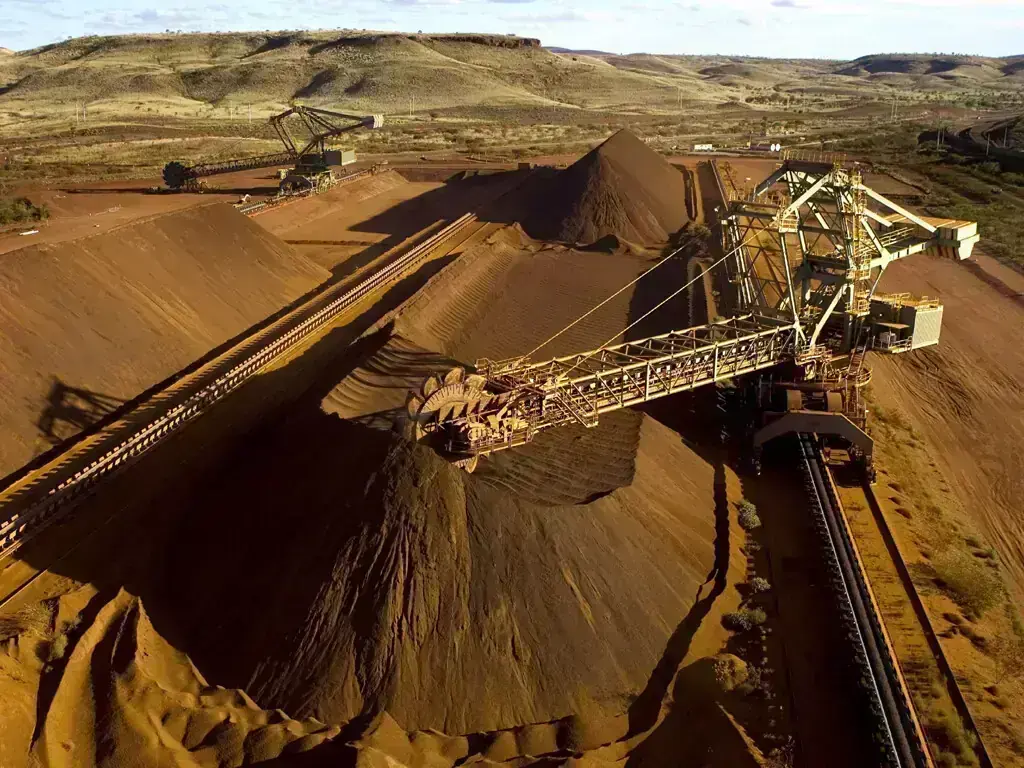
IRON ORE STRIKE VS CHINA
Illustration concept: A large industrial bulk carrier ship loading iron ore at a sunlit deepwater port terminal with red dust and massive mechanical conveyor belts, hyper-realistic, news photography style.
AI summary
Iron ore trading remained largely rangebound on Monday as market participants weighed competing factors in supply and demand. Supply disruptions caused by a historic worker strike at BHP's Port Hedland in Western Australia were countered by softer-than-expected producer price inflation figures out of China.
Why this matters
Port Hedland handles three-quarters of iron ore shipments originating from Western Australia's resource-rich Pilbara district, making any operational halt critical to international steelmaking supply chains. Concurrently, softening producer inflation in China highlights persistent domestic demand weakness in the world's largest consumer of industrial metals. Understanding these market tensions offers valuable insight into global commodity pricing trends and industrial activity.
Key takeaways
- Iron ore futures held flat on Monday as traders weighed Australian supply risks against weak Chinese economic indicators.
- A labor strike expanded at BHP's Port Hedland in Western Australia, marking the first major industrial action at the hub in 25 years.
- Port Hedland handled 75 percent of Pilbara region iron ore exports in the year through June.
- China's Dalian Commodity Exchange contract stood at 716 yuan per ton, while Singapore benchmark September iron ore rose 0.21 percent to $95.25 per ton.
- Soft Chinese producer price inflation data for July limited upward price movement.
Global iron ore markets experienced limited movement on Monday, with traders navigating opposing market forces driven by Australian labor actions and slowing factory-gate prices in East Asia. Benchmark contracts in both Asia and mainland China reflected a cautious stance among investors evaluating supply vulnerabilities alongside weakening industrial demand.
In China, the most-active iron ore futures contract on the Dalian Commodity Exchange stayed unchanged at 716 yuan ($106.13) per metric ton. Meanwhile, on the Singapore Exchange, the benchmark September contract managed a modest gain of 0.21 percent, trading at $95.25 per ton in early deals.
Market sentiment received upward pressure after additional workers expanded a walkout on Sunday at BHP's Port Hedland facilities in Western Australia. The labor action marks the first significant strike at the massive export gateway in 25 years. The strategic importance of the site is substantial, having processed 75 percent of all iron ore shipped out of the Pilbara region during the twelve-month period ending in June.
Market participants are monitoring the labor dispute closely, assessing whether management and unions can reach a prompt resolution before supply flows face prolonged disruption. An extended shutdown could restrict global availability of the key steelmaking material, potentially forcing buyers to source higher-cost alternatives.
However, potential price surges were kept in check by macroeconomic headwinds from top consumer China. Reports indicate that China's producer price inflation cooled more rapidly than anticipated in July, signaling subdued industrial momentum and capping immediate upside potential for industrial metals.
Frequently asked questions
- Why are iron ore prices holding steady?
- Prices are rangebound because potential supply constraints caused by a labor strike at BHP's Australian operations are offset by sluggish demand signals from China.
- What is happening at BHP's Port Hedland facilities?
- Workers expanded a strike at the Western Australian export hub, marking the first major industrial action at the facility in a quarter-century.
- How significant is Port Hedland to the global iron ore market?
- Port Hedland is a major global export gateway, accounting for 75 percent of all iron ore shipped from Western Australia's Pilbara region in the year ending June.
Source & transparency
- By:
- The Reviser Desk
- Source:
- Business Recorder
- Original publication:
- Aug 10, 2026, 6:22 AM
- The Reviser publication:
- Aug 10, 2026, 6:22 AM
- Updated:
- Aug 10, 2026, 6:31 AM
This report was independently written by The Reviser editorial desk from verified source material. It is not original on-the-ground reporting by The Reviser.
Related stories
CHINA INFLATION COOLS IN JULY
China July Inflation Slows as Energy Prices Fall
AI summaryOfficial statistics show that China experienced a slowdown in both producer and consumer price growth during July, heavily influenced by falling global energy costs. In response to sluggish domestic demand, Beijing is moving to expedite budgeted infrastructure disbursements.
PALM OIL FUTURES RISE
Malaysian Palm Oil Futures Advance on Stronger Overseas Oils
AI summaryMalaysian palm oil futures drifted upward on Monday morning, supported by gains in competing vegetable oil markets in Chicago and Dalian. Investors remained cautious ahead of official monthly supply and demand figures from the Malaysian Palm Oil Board.

THAI BAHT RISES VS DOLLAR
Thai Baht Strengthens Against US Dollar in Early Trading
AI summaryThe Thai baht appreciated slightly against the US dollar on Monday morning, hovering near 32.99 per dollar. Financial market data showed the currency trading in a narrow range after closing at 33.03 in the previous session.

INDIAN BONDS EYE INFLATION DATA
Indian Bond Market Awaits Local and US Inflation Data
AI summaryIndian sovereign bonds are expected to start the week on a firm note ahead of crucial inflation releases from both India and the United States. Softening US Treasury yields following weak non-farm payroll data have fueled expectations of easier global monetary policy.