China July Inflation Slows as Energy Prices Fall
Factory-Gate and Consumer Inflation Decelerate Across China in July
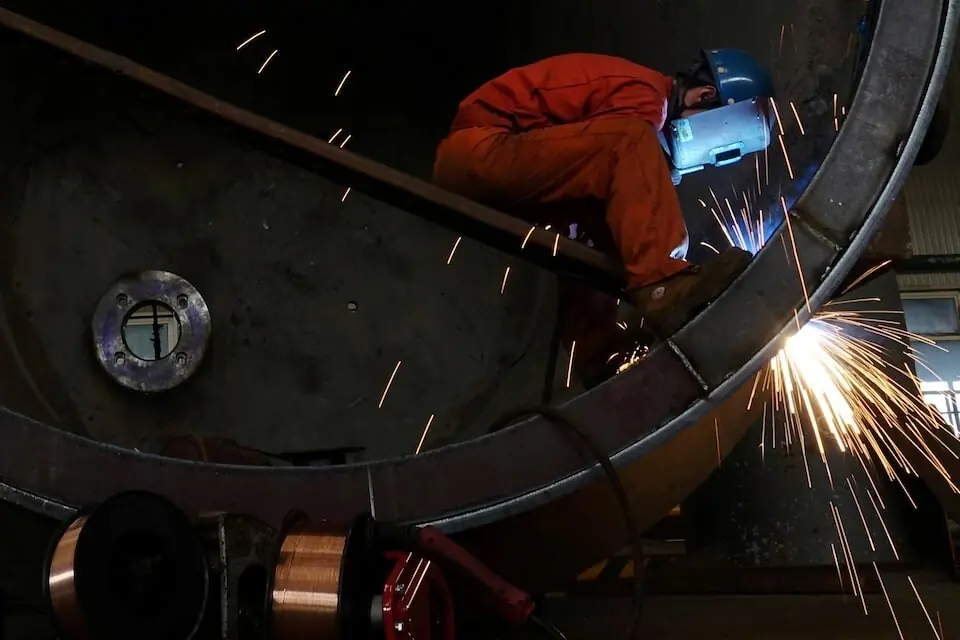
CHINA INFLATION COOLS IN JULY
Illustration concept: A modern shipping container terminal in China with automated cranes and industrial skyline, clear blue sky, high quality business journalism photograph
AI summary
Official statistics show that China experienced a slowdown in both producer and consumer price growth during July, heavily influenced by falling global energy costs. In response to sluggish domestic demand, Beijing is moving to expedite budgeted infrastructure disbursements.
Key takeaways
- China's producer price inflation slowed to a three-month low in July.
- Consumer price inflation also decelerated due to lower energy prices and weak domestic demand.
- Beijing plans to accelerate fiscal disbursements on infrastructure to boost growth.
- ANZ analysts expect the economic effect of increased government spending to lag by about one quarter.
To address an uneven economic landscape marked by robust export manufacturing alongside subdued domestic spending, Chinese authorities are accelerating government expenditure on infrastructure projects scheduled for the second half of the year.
The policy push comes as freshly released official statistics from Beijing reveal a broader cooling in price pressures across the country. In July, factory-gate inflation decelerated to its lowest level in three months, while consumer price growth similarly lost momentum, according to reports from Business Recorder.
The deceleration in both consumer and producer inflation was primarily driven by a pullback in global energy costs, despite ongoing geopolitical tensions involving the United States, Israel, and Iran. That drop in energy prices coincided with soft domestic consumption, keeping overall inflationary pressures beneath market expectations.
Highlighting these dynamics, Zhaopeng Xing, senior China strategist at ANZ, noted that softer energy markets combined with weakening demand dragged both inflation gauges below forecasts. Xing pointed out that erratic oil price trends complicate future inflation projections, while the full economic impact of faster second-half fiscal disbursements will likely experience a lag of roughly one quarter.
With industrial output continuing to outpace internal consumption, policymakers in Beijing remain under pressure to ensure planned budgetary disbursements translate into tangible economic support before the end of the year.
Frequently asked questions
- What caused China's inflation metrics to cool in July?
- A retreat in international oil and energy prices, coupled with sluggish domestic demand, dragged down both producer and consumer price inflation below market projections.
- How is the Chinese government responding to weak domestic demand?
- Chinese leadership pledged to hasten fiscal spending on pre-budgeted infrastructure projects through the remainder of the year to support broader economic activity.
- When will Beijing's fiscal spending impact the market?
- ANZ strategist Zhaopeng Xing estimates that the economic effects of accelerated fiscal disbursements in the second half of the year will materialize with a lag of roughly one quarter.
Source & transparency
- By:
- Tony
- Source:
- Business Recorder
- Original publication:
- Aug 9, 2026, 5:22 AM
- The Reviser publication:
- Aug 9, 2026, 5:22 AM
- Updated:
- Aug 9, 2026, 7:01 AM
This report was independently written by The Reviser editorial desk from verified source material. It is not original on-the-ground reporting by The Reviser.
Related articles

GERMANY CHINA TRADE DEFICIT WIDENS
Germany Trade Deficit with China Widens in First Half 2026
AI summaryGermany's trade deficit with China expanded during the first half of 2026 as exports to the Asian country dropped over 12% to under €37 billion. The shift pushed China down to ninth among Germany's export markets as Chinese firms cut reliance on European goods.
DELTA FLIGHT EMERGENCY EVACUATION
Delta Jet Evacuated in Atlanta After Fumes Hit Cockpit
AI summaryA Delta Air Lines flight bound for Orlando was forced to make an emergency return to Atlanta after crew members detected fumes inside the cockpit on Saturday. All 205 people on board evacuated via emergency slides, with two individuals later requiring medical attention before passengers were moved to a replacement plane.

HUB WATER CRISIS ESCALATES
Hub Industrial Area Faces Acute Water Deprivation Crisis
AI summaryIndustrial operations in Hub are confronting a crippling water shortage, threatening local manufacturing and economic output. Business representatives allege that the region is suffering from a systematic withholding of its designated water supply.

FLOUR PRICES RISE IN PAKISTAN
Pakistan Flour Prices Surge Amid Grain Import Delay
AI summaryWheat and flour prices across Pakistan have registered further increases despite federal plans to import one million tonnes of grain. Market traders warn that without immediate price management, consumers will fail to see substantial relief once imported supplies arrive.