FBR Imposes Graded Fines for Customs Delay Under New Rules
FBR Cracks Down on Customs Clearance Delays with Steeper Daily Penalties
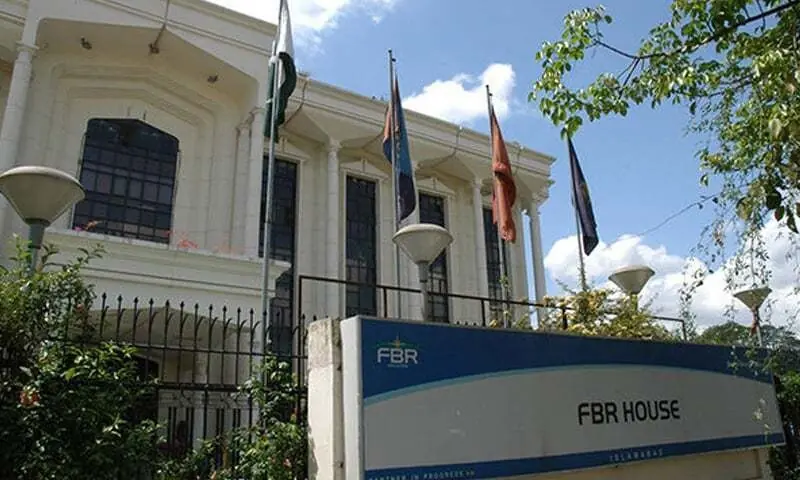
FBR CRACKS DOWN ON DELAYS
Illustration concept: A modern shipping terminal in Pakistan filled with stacked colorful freight containers, with customs inspectors standing alongside conducting checks, photorealistic style, daytime lighting.
AI summary
The Federal Board of Revenue has introduced a new schedule of graded penalties starting October 1 to deter intentional customs clearance delays. The decision follows instructions from Prime Minister Shehbaz Sharif after a private firm exploited filing delays for temporary financial gain.
Why this matters
Importers and exporters operating in Pakistan face stricter financial consequences for administrative delays at ports and warehouses. By capping penalties at Rs1 million while sharply raising daily non-compliance fines, the tax authority aims to curb fraudulent tactics, accelerate trade clearance, and improve regulatory compliance under the Customs Act 1969.
Key takeaways
- The FBR introduced new penalty rules under SRO 1346 of 2026, effective from October 1.
- Fines for late goods declaration submissions begin at Rs25,000 daily after 20 days, rising to Rs50,000 daily.
- Total accumulated penalties for delayed customs filings are capped at Rs1 million.
- The corrective measures follow directives from PM Shehbaz Sharif after a private firm manipulated filing delays.
In an effort to prevent commercial exploitation and streamline port clearances, Pakistan's tax administration has instituted an updated schedule of financial penalties for delays in customs filings.
Under SRO 1346 of 2026, which took effect on October 1, the Federal Board of Revenue (FBR) established escalating fines targeting traders who fail to adhere to timelines set out in the Customs Act 1969. The updated framework replaces the penalty schedule issued during the previous year.
The revised regulatory framework mandates severe daily charges for non-compliance. Importers who fail to lodge a goods declaration for home consumption, transhipment, or warehousing within 20 days of cargo arrival will incur a fine of Rs25,000 per day during the initial five-day breach. Beyond that initial grace period, the sanction escalates to Rs50,000 daily, subject to an overall maximum limit of Rs1 million.
According to reports from Dawn Business, these stringent measures stem from a recent scam involving a private firm that deliberately stalled filing its goods declarations to secure an unfair temporary advantage. The incident prompted direct intervention from Prime Minister Shehbaz Sharif, who ordered the FBR to implement systemic safeguards to prevent similar occurrences in the future.
By establishing higher daily financial penalties, tax officials expect to reduce cargo bottlenecking at port terminals and ensure steady customs revenue collection for the federal government.
Frequently asked questions
- When did the FBR's new customs penalty rules come into force?
- The new graded penalty schedule became effective on October 1 under notification SRO 1346 of 2026.
- What fine is charged for late goods declaration filings?
- If an importer fails to submit a goods declaration within 20 days of arrival, the fine is Rs25,000 per day for the first five days and Rs50,000 per day thereafter, capped at Rs1 million.
- What prompted the FBR to increase penalties on customs delays?
- The changes were ordered after Prime Minister Shehbaz Sharif instructed the FBR to take action following a scam where a private firm deliberately delayed filings for temporary gain.
Source & transparency
- By:
- The Reviser Desk
- Source:
- Dawn Business
- Original publication:
- Aug 14, 2026, 2:29 AM
- The Reviser publication:
- Aug 14, 2026, 2:29 AM
- Updated:
- Aug 14, 2026, 2:30 AM
This report was independently written by The Reviser editorial desk from verified source material. It is not original on-the-ground reporting by The Reviser.
Related stories
NEW FBR CUSTOMS FINES
FBR Revises Pakistan Customs Penalties From October 1
AI summaryThe Federal Board of Revenue has announced revised fines for customs violations starting October 1, targeting late goods declarations and delayed cargo removals. Under SRO 136(I)/2026, maximum penalties can reach up to Rs1 million for severe delays in filing documentation.

TAX RECORD FRAUD EXPOSED
FTO Probes Tax Fraud via Mismatched Electricity Records
AI summaryThe Federal Tax Ombudsman has ordered the Federal Board of Revenue to launch an inquiry into cases where tax collected through electricity bills is wrongly credited to unrelated citizens. Officials suspect this practice may be a deliberate tactic allowing actual power consumers to remain outside the national tax net.
PAKISTAN SEEKS $10B US SWAP
Pakistan Seeks $10 Billion Currency Swap From US Treasury
AI summaryIslamabad has formally approached Washington for a $10 billion currency-swap arrangement through the US Treasury’s Exchange Stabilisation Fund. The request comes as Pakistan serves as a key diplomatic intermediary during the ongoing conflict between the United States and Iran.

GOLD SOARS TO RS463K
Pakistan Gold Prices Surpass Rs463,000 as Global Rally Continues
AI summaryDomestic gold rates in Pakistan surged on Wednesday, with per tola prices advancing by Rs4,200 to reach Rs463,936. The upward move mirrored international bullion gains, where prices rose $42 to settle at $4,415 per ounce.