Evaluating Pakistan Governance Failure and Structural Reform
Naqvi’s Summit Admission Highlights Pakistan’s Deepening Institutional Crisis
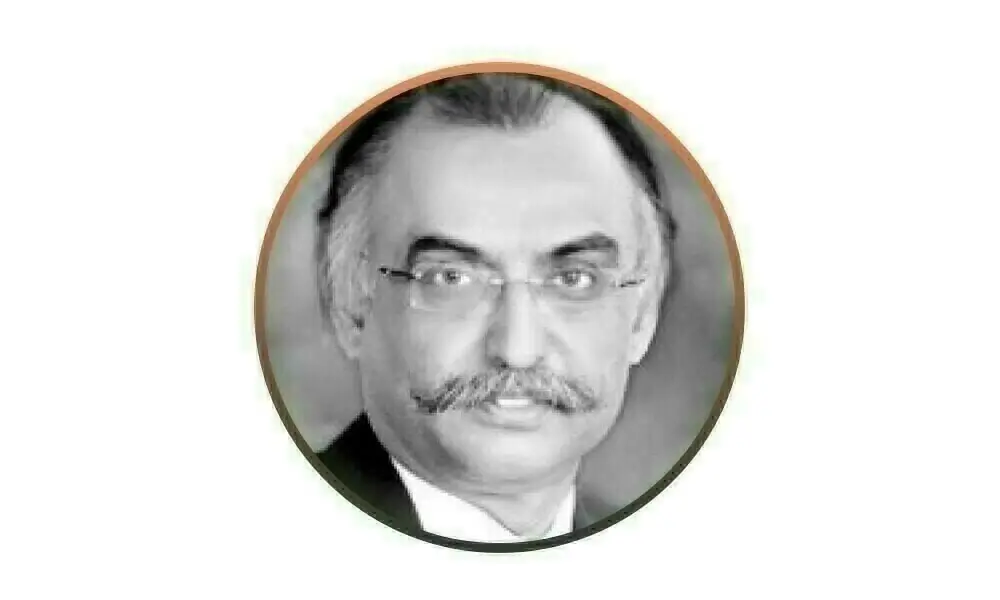
SYSTEMIC FAILURE IN PAKISTAN
Illustration concept: An editorial illustration depicting the podium of the Pakistan Economic Summit in Islamabad with a microphone, set against a dark architectural backdrop representing state institutions, minimalist modern policy art style.
CSS / PCS revision
Key points, takeaways and exam-style Q&A formatted as a printable one-file study pack.
AI summary
At the Pakistan Economic Summit in Islamabad, Interior Minister Mohsin Naqvi publicly acknowledged that the nation's governance structure has failed to deliver. This admission underscores a growing consensus among policymakers regarding Pakistan's long-standing institutional shortcomings and the urgent need for structural overhaul.
Why this matters
When a sitting federal minister explicitly concedes systemic governance failure, it signals a critical moment for state institutions and policy design in Pakistan. Addressing these administrative bottlenecks is essential for economic revival, administrative accountability, and restoring citizen trust. For constitutional scholars and policy aspirants, the debate highlights the tension between preserving democratic decentralization and reforming state machinery.
Key takeaways
- Systemic Admission: Interior Minister Mohsin Naqvi's public declaration at the Pakistan Economic Summit highlights a rare executive admission of state delivery failure.
- Historical Continuity: Long-standing institutional deficiencies have prompted comparisons to historical critiques regarding Pakistan's economic and administrative viability.
- Constitutional vs Operational Debate: Policy analysts remain divided over whether governance bottlenecks stem from the 1973 constitutional architecture or poor implementation and bureaucratic inefficiency.
- Devolution Dilemma: Effective reform requires balancing provincial autonomy secured under the constitutional framework with genuine administrative local devolution.
A rare admission from within the highest corridors of power has reignited a debate regarding the efficacy of Pakistan's state machinery. Speaking at the Pakistan Economic Summit held in Islamabad on July 29-30, Interior Minister Mohsin Naqvi declared that the country's governance structure has failed to deliver meaningful outcomes. Naqvi, who served as Punjab's caretaker chief minister in 2024 and has held federal ministerial portfolios for two years, made observations that reflect a broader structural malaise that analysts argue can no longer be overlooked.
According to analysis published by the Business Recorder Opinion desk, Naqvi’s candid assessment echoes long-standing warnings from academic and policy circles. As early as December 2021, commentary delivered at Hamdard University in Karachi asserted that Pakistan had ceased to function as a viable going concern. The reality that an incumbent cabinet member in the PML-N administration is now reiterating these systemic flaws suggests an overdue alignment between critical commentary and official recognition after decades of institutional drift.
From a policy perspective, Pakistan's governance deficit stems from an administrative framework that frequently disconnects state delivery from public welfare. For over seven decades, federal and provincial apparatuses have struggled to maintain fiscal discipline, deliver public services, or foster transparent institutional accountability. However, debate remains divided on whether the root cause lies within the constitutional framework itself—such as the four-province architecture established under the 1973 Constitution and the financial distribution mechanism of the National Finance Commission Award—or within poor execution and political misgovernance.
Critics of the current distribution advocate for deep administrative decentralization, pointing out that hyper-centralized provincial capitals often replicate the inefficiencies of federal bureaucracies. Conversely, constitutional defenders caution against prematurely dismantling the 1973 framework, emphasizing that provincial autonomy and federal consensus are crucial for national cohesion in a diverse federation. Striking a balance between local devolution and centralized administrative efficiency remains the central challenge facing reformists.
The implications of this governance stagnation extend beyond domestic administration, directly affecting Pakistan's economic viability and international standing. Unproductive public spending and weak institutional capacity hinder sustained growth, leaving the state reliant on external financial cushions while basic service delivery languishes. For civil service aspirants and policy strategists, resolving this governance bottleneck requires moving past rhetorical admissions toward concrete civil service, fiscal, and constitutional reforms that prioritize the citizen over state bureaucracy.
Frequently asked questions
- What did Interior Minister Mohsin Naqvi state regarding Pakistan's governance?
- Speaking at the Pakistan Economic Summit in Islamabad, Naqvi stated that Pakistan's current governance structure has failed to deliver results to the public.
- What is the main debate surrounding Pakistan's constitutional structure?
- Analysts debate whether state failure is tied to the 1973 constitutional structure and financial distribution under the National Finance Commission, or if it is primarily caused by executive incompetence and poor institutional implementation.
- Why is the admission of governance failure significant for policy reforms?
- Acknowledgment by a sitting federal minister indicates high-level consensus on administrative breakdown, paving the way for discussions on civil service, fiscal, and structural devolution reforms.
Source & transparency
- By:
- The Reviser Desk
- Source:
- Business Recorder Opinion
- Original publication:
- Aug 11, 2026, 1:34 AM
- The Reviser publication:
- Aug 11, 2026, 1:34 AM
- Updated:
- Aug 11, 2026, 1:03 PM
This report was independently written by The Reviser editorial desk from verified source material. It is not original on-the-ground reporting by The Reviser.
Related stories
POWER TRUST RISK RETURN
Resurgent Power Trusts Threaten Energy Market Stability
AI summaryA resurgence of debt-heavy mega-mergers in the power sector mirrors the utility monopolies of a century ago, according to commentary from Project Syndicate. This analytical piece examines the risks of utility consolidation, corporate leverage, and the strategic policy lessons for Pakistan’s energy governance.

URBAN PLANNING VS GOVERNANCE
Islamabad Underpass Project Highlights Urban Governance Crisis
AI summaryDawn Opinion examines the Capital Development Authority's decision to construct an underpass in Islamabad, viewing it as a symptom of elite-centric urban planning. The analysis highlights how prioritizing signal-free corridors undermines sustainable public transit and devolved local governance in Pakistan.
HALF LEFT WITHOUT SHELTER
Balochistan Flood Housing Cuts Highlight Governance Gaps
AI summaryThree years after the 2022 floods submerged one-third of Pakistan, authorities in Balochistan capped a World Bank-backed housing project at 69,000 units, leaving over half of verified displaced families without shelter assistance. The policy shift redirected funds to roads and irrigation, prompting the international lender to withdraw $180 million in additional financing amid reports of data misrepresentation in official records.

MEDIA POLITICS AND REALIGNMENT
Media Polarization and Modern Political Shifts Examined
AI summaryReflections from NYT Opinion columnist Ross Douthat underscore deep transformations across media structures, religious affiliations, and political realignments in recent decades. Understanding these structural shifts offers critical insights for public policy, societal cohesion, and democratic governance in both Western nations and developing democracies like Pakistan.