Balochistan Flood Housing Cuts Highlight Governance Gaps
Reallocation of Flood Relief Funds Leaves Thousands Without Shelter in Balochistan
HALF LEFT WITHOUT SHELTER
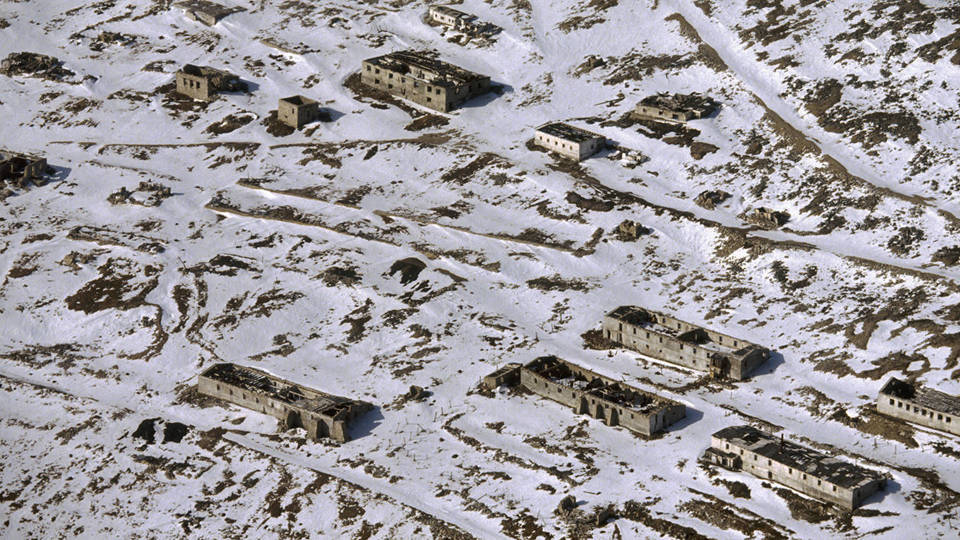
Illustration concept: A wide shot showing an arid landscape in rural Balochistan with unbuilt or half-constructed mud and brick house foundations under a clear sky.
CSS / PCS revision
Key points, takeaways and exam-style Q&A formatted as a printable one-file study pack.
AI summary
Three years after the 2022 floods submerged one-third of Pakistan, authorities in Balochistan capped a World Bank-backed housing project at 69,000 units, leaving over half of verified displaced families without shelter assistance. The policy shift redirected funds to roads and irrigation, prompting the international lender to withdraw $180 million in additional financing amid reports of data misrepresentation in official records.
Why this matters
The scaling back of Balochistan's flood housing program exposes fundamental challenges in Pakistan's post-disaster governance, financial management, and aid administration. By redirecting project capital away from shelter, local communities face prolonged displacement and heightened climate vulnerability. Analyzing these structural policy shifts provides critical insights into inter-agency fund management and institutional accountability.
Key takeaways
- More than 65,000 verified flood-affected families in Balochistan face exclusion from state housing assistance after project caps were imposed.
- Reallocating World Bank program funds toward roads and irrigation led the lender to withdraw $180 million in supplemental financing.
- An official investigation verified data discrepancies between 15,000 reported completed homes and 8,694 recorded in official files.
- The Planning Commission framed the financial redirection as a sectoral correction, whereas critics view it as an abandonment of displaced families.
Three years after the catastrophic 2022 floods submerged a third of Pakistan, the reconstruction roadmap in Balochistan faces major policy shifts. Over 134,000 verified displaced families were expecting state assistance for housing reconstruction, but recent administrative decisions reveal that roughly half will remain without government-rebuilt shelter.
A committee overseeing a World Bank-assisted project capped the housing target at approximately 69,000 units, diverting funds from the original $400 million budget toward infrastructure projects like roads and irrigation. This structural pivot prompted the international lender to pull back $180 million in supplemental financing that could have covered the remaining shelter units, effectively stranding initial commitments to provide disaster-resilient housing to every affected household.
According to an editorial analysis by Dawn Opinion, institutional governance issues further complicate the situation. Documentation presented to the Prime Minister claimed 15,000 homes had been constructed, whereas official records verified only 8,694 completed units. A subsequent inquiry established clear misrepresentation, though institutional accounts continue to differ on who inflated the metrics and for what underlying reasons.
The strategic redirection of resources has triggered debate over national public spending priorities. The Planning Commission defended the fiscal shift as a corrective adjustment, asserting that housing funds were improperly siphoned from health, education, and irrigation sectors at the program's inception. Conversely, critics argue that extracting these funds deprives vulnerable populations of fundamental shelter assistance during critical recovery stages.
For public policy analysts and civil service scholars, this development underscores persistent systemic bottlenecks in disaster response, foreign aid management, and multi-sectoral planning in Pakistan. Balancing immediate post-disaster humanitarian aid with long-term infrastructure development requires transparent audit frameworks, reliable baseline data, and consistent policy execution to prevent severe socio-economic distress in climate-impacted regions.
Frequently asked questions
- Why were housing reconstruction targets reduced in Balochistan?
- Project oversight officials capped housing assistance at roughly 69,000 units to redirect a portion of the original $400 million budget toward road network and irrigation infrastructure.
- What led the World Bank to withdraw additional project financing?
- Following the adjustment of housing scope and reallocation of funds away from shelter construction, the World Bank withdrew $180 million in additional financing meant to complete homes for flood victims.
- What discrepancy was identified in the official housing reports?
- An inquiry established that while records submitted to the Prime Minister reported 15,000 completed houses, official administrative documents verified only 8,694 units.
Source & transparency
- By:
- The Reviser Desk
- Source:
- Dawn Opinion
- Original publication:
- Aug 11, 2026, 1:48 AM
- The Reviser publication:
- Aug 11, 2026, 1:48 AM
- Updated:
- Aug 11, 2026, 2:01 AM
This report was independently written by The Reviser editorial desk from verified source material. It is not original on-the-ground reporting by The Reviser.
Related stories
KREMLIN POWER STRATEGY EXPLAINED
Putin's Domestic Security Tactics and Regime Power Mechanics
AI summaryAn analysis published by Project Syndicate suggests that Russian President Vladimir Putin employs historical repression tactics primarily to safeguard regime continuity rather than promote an overarching ideology. The commentary highlights how internal security mechanisms dictate both domestic governance and broader international posture.

MARKETS VS HUMAN LIFE
Financialisation of Global Conflict and Its Impact on Human Life
AI summaryRecent commentary in Dawn Opinion highlights how global geopolitical conflicts are increasingly evaluated through stock market indices rather than human suffering. The analysis links this shift to neoliberal economic structures that reduce peace, loss, and state stability to capital market calculations.
PUNJAB LG ELECTIONS DEBATE
Punjab Local Elections Fund Allocation and Devolution Strategy
AI summaryThe Punjab government has allocated funds for local body elections that were constitutionally due since April 2022. This decision coincides with widespread debates on whether grassroots devolution or creating new administrative units provides the ideal path to administrative efficiency.

RESEARCH TO PRACTICE GAP
US Health Policy Shift Hinders Research to Clinical Practice
AI summaryReports from NYT Opinion highlight concerns over the dismantling of federal agencies responsible for integrating medical research into clinical practice. This policy shift underscores the structural challenge of translating scientific innovation into equitable public health outcomes.