US Privacy Backlash Mounts Over Flock License Plate Cameras
Grassroots Resistance Grows Against Vast US License Plate Camera Network
SURVEILLANCE BACKLASH IN US
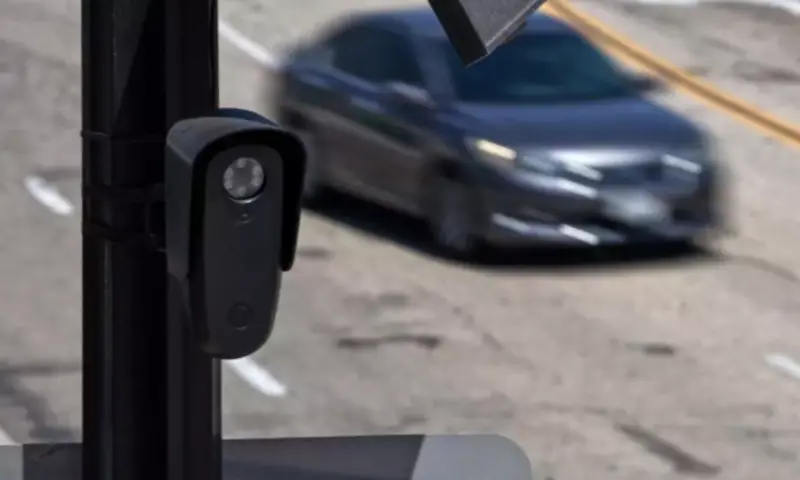
Illustration concept: A close-up photograph of a modern license plate reader camera mounted on a streetlight post along a suburban American road during dusk, dramatic side lighting.
AI summary
A rapidly expanding network of over 100,000 automated license plate readers across the United States is meeting aggressive resistance from privacy advocates. In response to mounting civil liberties concerns, some activists have turned to direct action, systematically disabling surveillance devices installed in local communities.
Why this matters
The rapid proliferation of automated license plate recognition systems has blurred the line between public safety and mass surveillance in American neighborhoods. As law enforcement, local businesses, and neighborhood associations pool tracking data into centralized cloud networks, the conflict highlights deep divisions over public privacy rights and government oversight. The emergence of physical sabotage signals a radicalizing opposition to private surveillance infrastructure.
Key takeaways
- Flock has installed over 100,000 license plate reader cameras across the United States.
- Police departments, businesses, and HOAs upload vehicle location data to Flock's shared cloud network.
- Civil rights advocates argue the vast surveillance system seriously threatens personal privacy.
- Grassroots activists in areas like Minneapolis have begun physically disabling camera equipment.
Across the United States, an expanding network of automated license plate readers has triggered a fierce public backlash, with privacy advocates and local activists taking extreme measures to halt mass surveillance in their communities.
The controversy centers on Flock, a technology start-up that has deployed more than 100,000 camera units nationwide in recent years. Purchased and operated by police agencies, commercial enterprises, and homeowners' associations, the systems are designed to detect criminal activity by capturing vehicular movements and streaming real-time data to a cloud database shared among paying subscribers.
However, critics argue that the unchecked collection of location data constitutes a severe breach of civil liberties and individual privacy rights. The widespread sharing of vehicle tracking information has raised alarms over potential government overreach and corporate monitoring of everyday citizens.
According to reports cited by Dawn World, opposition to the technology has increasingly escalated from public debate into direct sabotage. In the Minneapolis region, a masked activist going by the pseudonym Nomark revealed he had single-handedly disabled roughly 30 Flock devices near his residence. Though initially anxious about disabling the surveillance hardware, the self-styled vigilante told AFP that he is "not really as scared anymore."
As camera networks continue to monitor public roadways, the clash between community safety initiatives and personal privacy guarantees promises to remain a volatile issue across American municipalities.
Frequently asked questions
- What is Flock and how do its cameras work?
- Flock is a surveillance technology company that manufactures automated license plate reader cameras. The devices record passing vehicle data and upload it to a centralized cloud platform accessible by paying law enforcement and private subscribers.
- Why are critics opposing the Flock camera network?
- Opponents argue that collecting, storing, and sharing vast amounts of vehicular movement data infringes on constitutional privacy rights and creates an unchecked mass surveillance system.
- How are opponents fighting back against the cameras?
- Beyond legal and political advocacy, a growing grassroots movement has engaged in direct action, with some activists systematically vandalizing and disabling camera units in their neighborhoods.
Source & transparency
- By:
- The Reviser Desk
- Source:
- Dawn World
- Original publication:
- Aug 9, 2026, 6:12 PM
- The Reviser publication:
- Aug 9, 2026, 6:12 PM
- Updated:
- Aug 9, 2026, 6:30 PM
This report was independently written by The Reviser editorial desk from verified source material. It is not original on-the-ground reporting by The Reviser.
Related stories
IRAN REACTS TO NEW PACT
Iran Sees Lower US Influence in Saudi-Pakistan-Turkiye Pact
AI summaryIran does not consider the trilateral agreement between Saudi Arabia, Pakistan, and Turkiye to be an urgent security threat, according to foreign affairs analysts. Instead, Iranian leadership is concentrating on how the alliance reflects a diminishing strategic role for the United States in the region.

ISRAEL REJECTS GAZA PLAN
Israel Rejects US Gaza Plan Over Disarmament Dispute
AI summaryIsraeli Prime Minister Benjamin Netanyahu has formally rejected a 15-point Gaza peace proposal backed by the United States. He insisted that Israeli military forces will remain in the enclave until Hamas completely lays down its arms.
WEAPONS STOCKPILES DROPPING
Pentagon Demands Faster Arms Production Amid Stockpile Fears
AI summaryThe United States Department of Defense is urging domestic arms manufacturers to rapidly scale up munitions manufacturing to address shrinking inventory levels. Mounting geopolitical friction across the Middle East has heightened concerns over strategic stockpile reserves and defense readiness.
HORMUZ SHIPPING STILL RESTRICTED
Iran Demands US Concessions to Reopen Strait of Hormuz
AI summaryTehran has announced that navigation through the Strait of Hormuz will remain limited unless Washington fulfills several specified demands. The warning comes as the military confrontation involving Iran enters its 29th day of Phase II, according to reports by Al Jazeera.