Strait of Hormuz Vessel Traffic Drops Amid US Iran Tensions
Shipping Risk Keeps Hormuz Vessel Transits Below Monthly Average
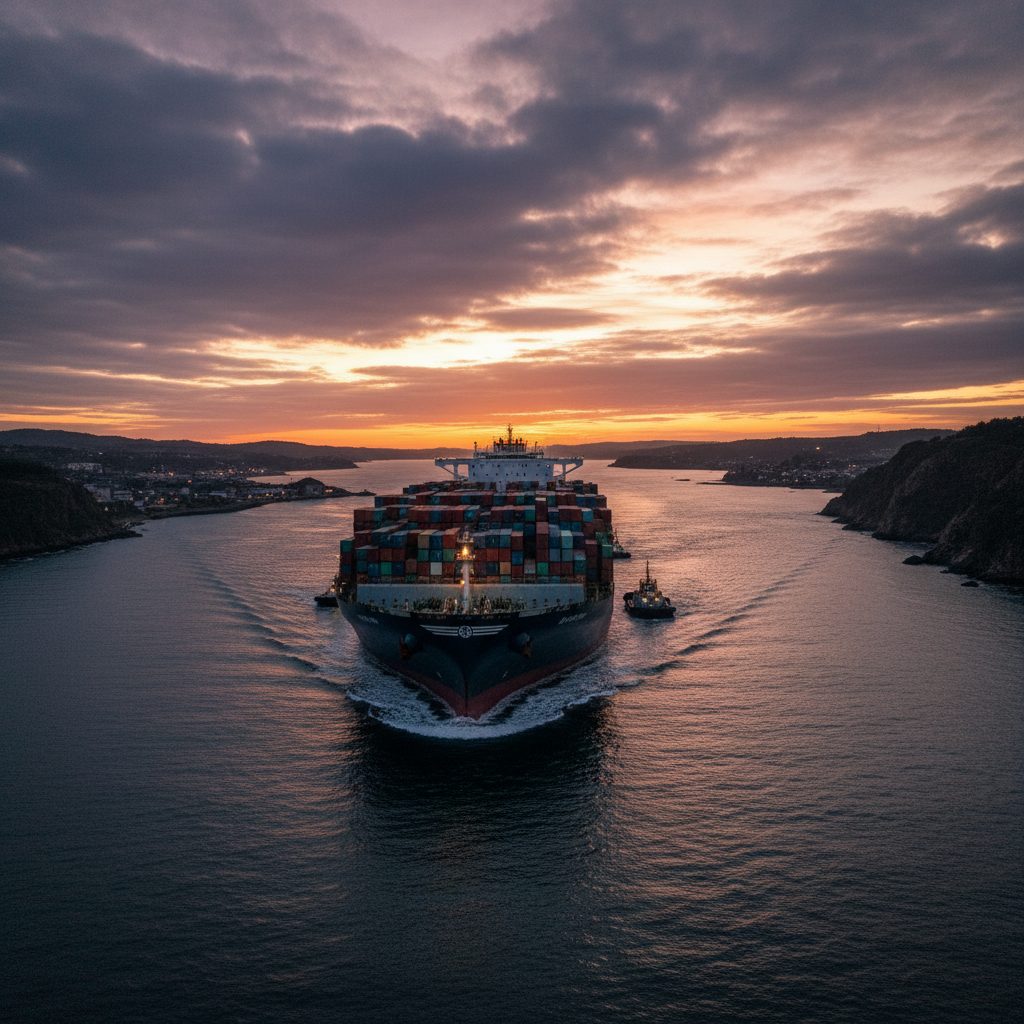
HORMUZ SHIPPING TRAFFIC DROPS
Illustration concept: A commercial cargo container ship navigating a narrow sea strait at dusk under a dramatic sky, photorealistic news photography style
AI summary
Commercial ship transits through the Strait of Hormuz have fallen below the daily average for the month as ongoing maritime risks weigh on regional trade routes. The slowdown coincides with persistent political friction and conflicting assertions between Washington and Tehran.
Why this matters
The Strait of Hormuz serves as one of the world's most critical maritime chokepoints for global energy supplies and commodity transit. Heightened security risks and reduced vessel movement can lead to elevated freight costs and increased volatility across international energy markets.
Key takeaways
- Commodity ship movement through the Strait of Hormuz remains below the monthly daily average.
- Heightened shipping risks continue to deter standard maritime traffic in the strategic passage.
- The reduction in transit comes amid persistent geopolitical friction and opposing claims from the US and Iran.
- Shipping lines remain cautious while navigating the vital global trade chokepoint.
Commercial shipping volume through the Strait of Hormuz continues to lag behind its monthly daily average, driven by ongoing maritime security concerns in the strategically vital waterway.
According to reports from Express Tribune World, persistent risks in the region have kept vessel operators cautious, leading to reduced movement of commodity carriers.
The maritime slowdown takes place against a backdrop of friction between the United States and Iran, with both nations trading competing claims regarding security and navigation rights in the area.
Despite ongoing international monitoring, transit levels have yet to recover to expected baselines as shipping firms weigh the potential hazards of navigating the corridor.
Market observers note that prolonged disruptions or sustained transit reductions through the narrow strait can ripple through global supply chains, impacting fuel transportation and maritime insurance rates.
Frequently asked questions
- Why has shipping traffic decreased in the Strait of Hormuz?
- Heightened maritime risks and political friction between the US and Iran have led to reduced vessel transits below the monthly daily average.
- Which types of ships are primarily affected by the transit drop?
- Commodity vessels moving through the strait have seen their transit numbers remain lower than average due to security concerns.
- What is causing security concerns in the Strait of Hormuz?
- Persistent geopolitical tensions and competing claims over navigation and security between Washington and Tehran have elevated risks for commercial vessels.
Source & transparency
- By:
- The Reviser Desk
- Source:
- Express Tribune World
- Original publication:
- Aug 14, 2026, 2:05 AM
- The Reviser publication:
- Aug 14, 2026, 2:05 AM
- Updated:
- Aug 14, 2026, 2:49 PM
This report was independently written by The Reviser editorial desk from verified source material. It is not original on-the-ground reporting by The Reviser.
Related stories

ZAMBIA VOTE COUNT HALTED
Zambia Halts Presidential Vote Count Following Unrest
AI summaryZambia's electoral commission has suspended the counting of presidential election votes across the country. The decision follows targeted violence against election workers and the theft of completed voting papers.

SERBIA AT CROSSROADS
Serbia Protests Expand One Year After Deadly Station Collapse
AI summaryPublic demonstrations in Serbia that began following a fatal railway canopy collapse have evolved into a broad national social movement. The tragedy, which claimed 16 lives, triggered sustained public anger and demands for systemic accountability.

€9M GOLD FOUND IN WALL
Belgian Builders Find €9m Gold Hidden Inside Cellar Wall
AI summaryConstruction workers installing sewage pipes at a Belgian property have discovered a gold cache valued at €9 million hidden behind basement walls. The discovery occurred unexpectedly while tradesmen were drilling through masonry in the building's cellar.

CROATIA WILDFIRES STRIKE OMIS
Croatia Wildfire Hospitalises Dozen in Tourist Town Omis
AI summarySevere wildfires spreading across Europe have struck the Croatian coastal town of Omis, leading to the hospitalisation of at least 12 individuals. The blazes form part of a broader surge in summer wildfires that have forced thousands of residents and tourists to evacuate regional hot spots.