Russia to Limit Retail Crypto Trading to BTC, ETH, USDT
Russia Prepares Restrictions on Retail Cryptocurrency Trading
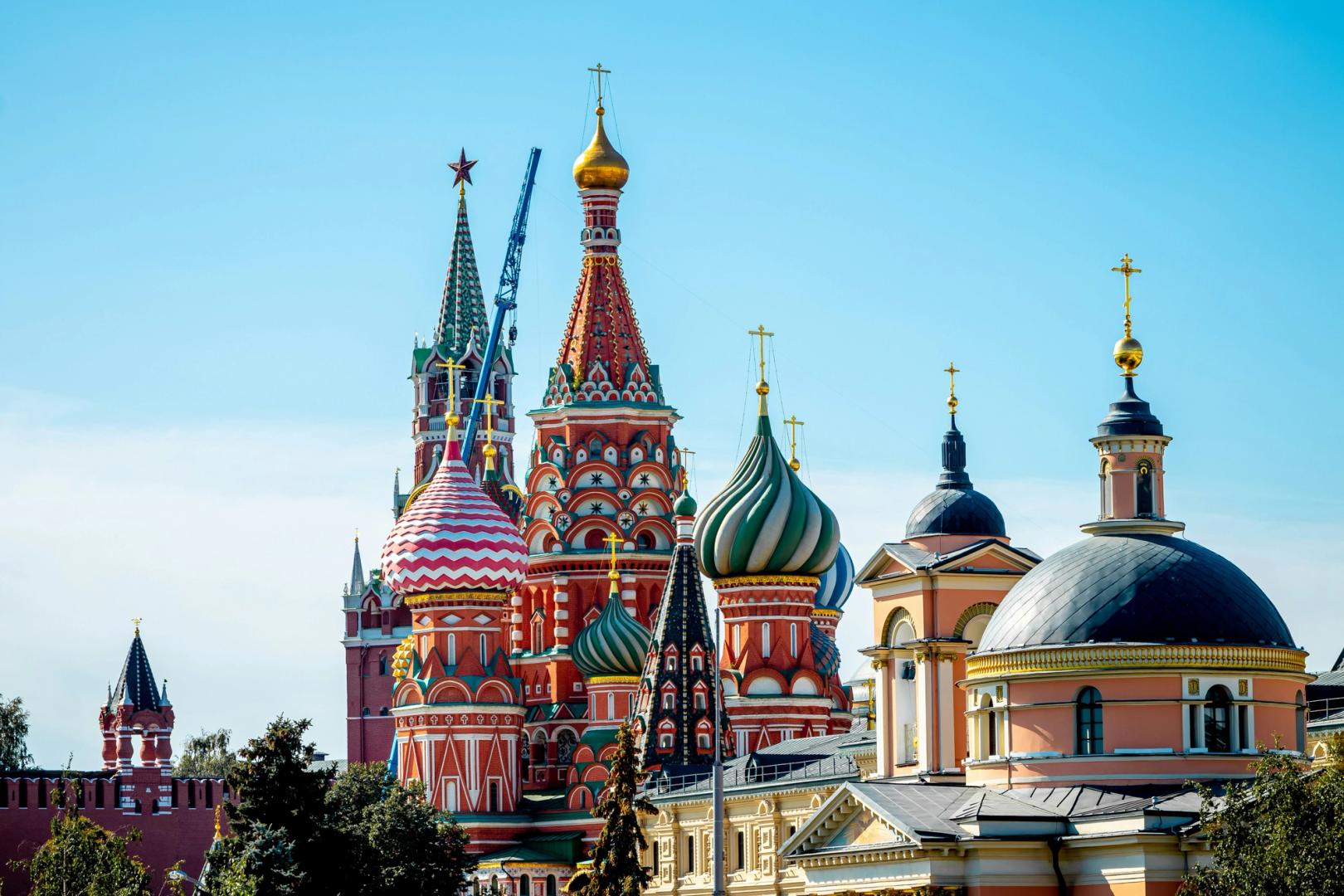
RUSSIA RESTRICTS CRYPTO TRADING
Illustration concept: A modern, professional 3D graphic showing physical gold Bitcoin, Ethereum, and Tether tokens set against a sleek dark backdrop with subtle Russian financial iconography.
AI summary
Russia is preparing new restrictions on retail cryptocurrency trading, confining non-qualified investors to a select list of digital assets including Bitcoin, Ether, and USDT. Under the proposed measures, retail traders will also be subject to an annual spending limit per financial intermediary, while accredited investors remain exempt.
Why this matters
The regulatory shift aims to safeguard inexperienced retail investors from high-risk altcoins while maintaining controlled legal avenues for major digital currencies. By establishing spending thresholds for retail participants while leaving qualified investors uncapped, Russian authorities are introducing a structured, multi-tiered framework for domestic crypto adoption.
Key takeaways
- Russia is moving to restrict non-qualified retail crypto trading strictly to Bitcoin, Ether, and USDT.
- Non-qualified investors will face an annual investment limit of 300,000 rubles (~$3,600) per intermediary.
- Qualified investors will remain exempt from any purchase caps under the proposed regulatory framework.
Russian authorities are advancing proposals to regulate retail participation in the digital asset market, aiming to restrict standard retail traders to a narrow selection of major cryptocurrencies. According to reports from CoinDesk, the regulatory framework will limit non-qualified investors to trading only Bitcoin, Ether, and Tether (USDT).
Under the proposed guidelines, non-qualified investors will also operate under strict monetary boundaries. These retail traders will face an annual purchasing limit of 300,000 rubles—approximately $3,600—per financial intermediary.
By contrast, accredited or qualified investors will remain unaffected by the purchase limits. This distinction creates a two-tiered regulatory environment that seeks to shield average consumers from the extreme price swings typical of smaller digital tokens while allowing high-net-worth and institutional entities unrestricted market access.
The initiative reflects Moscow's broader strategy to establish tighter control over retail cryptocurrency activity. By setting annual expenditure caps and narrowing permissible tokens to highly liquid assets, regulators aim to reduce systemic risk and financial exposure for everyday market participants.
Frequently asked questions
- Which cryptocurrencies will retail investors in Russia be permitted to trade?
- Under the proposed rules, non-qualified retail investors will be restricted to trading Bitcoin, Ether, and Tether (USDT).
- What is the spending limit for non-qualified investors in Russia?
- Non-qualified investors face an annual purchase cap of 300,000 rubles (roughly $3,600) per financial intermediary.
- Are qualified investors subject to the new crypto purchase cap?
- No, qualified investors will not face any purchasing limits under the outlined regulatory framework.
Source & transparency
- By:
- The Reviser Desk
- Source:
- CoinDesk
- Original publication:
- Aug 12, 2026, 11:19 AM
- The Reviser publication:
- Aug 12, 2026, 11:19 AM
- Updated:
- Aug 12, 2026, 11:32 AM
This report was independently written by The Reviser editorial desk from verified source material. It is not original on-the-ground reporting by The Reviser.
Related stories
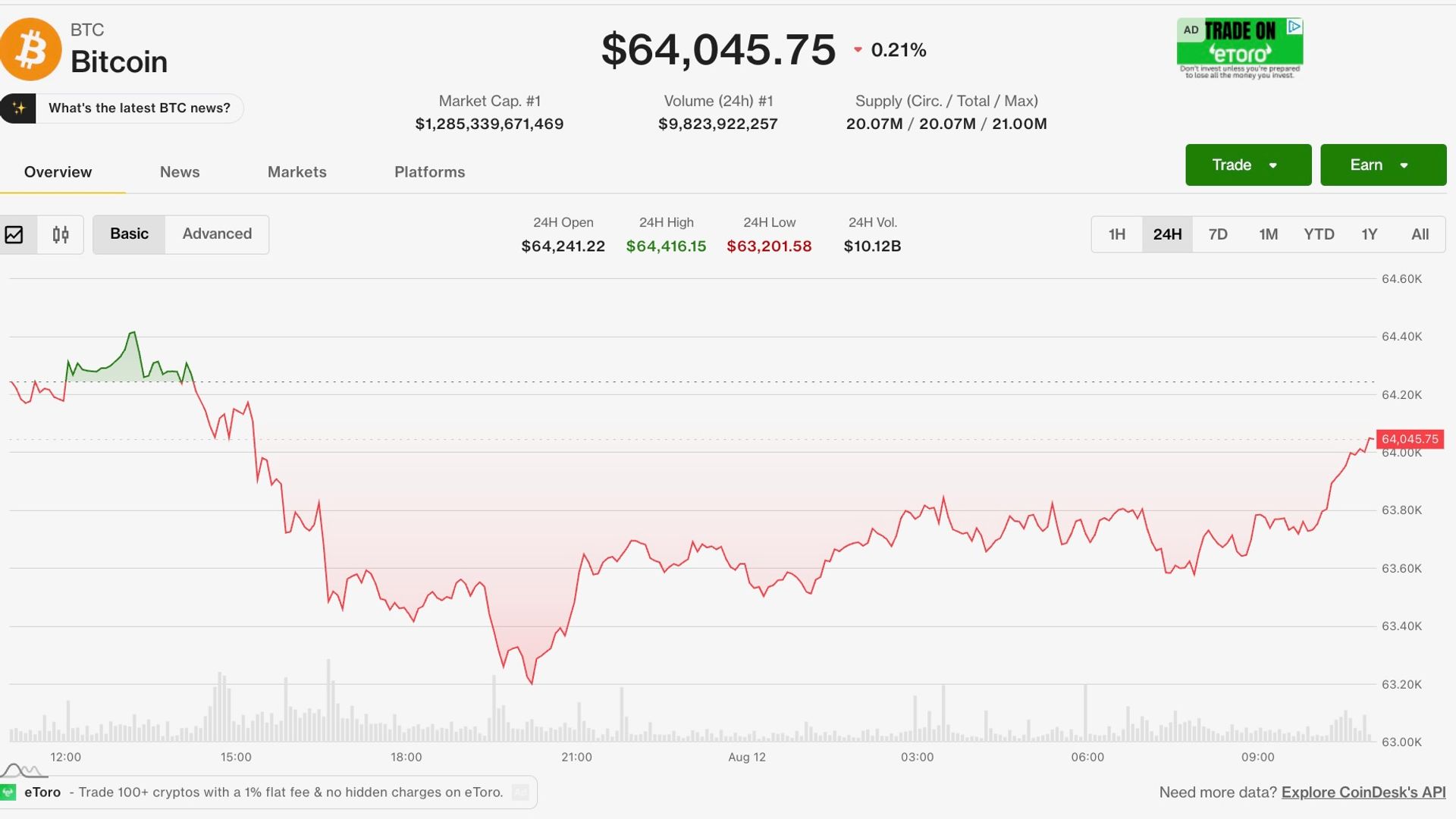
BITCOIN HOLDS NEAR $64K
Bitcoin Holds Near $64K as Crypto Market Awaits US Inflation Data
AI summaryCryptocurrency markets remain relatively muted with Bitcoin hovering close to the $64,000 mark as investors await the upcoming U.S. July inflation report. Meanwhile, sentiment across alternative digital assets was shaken following a security exploit targeting the Harmony protocol.
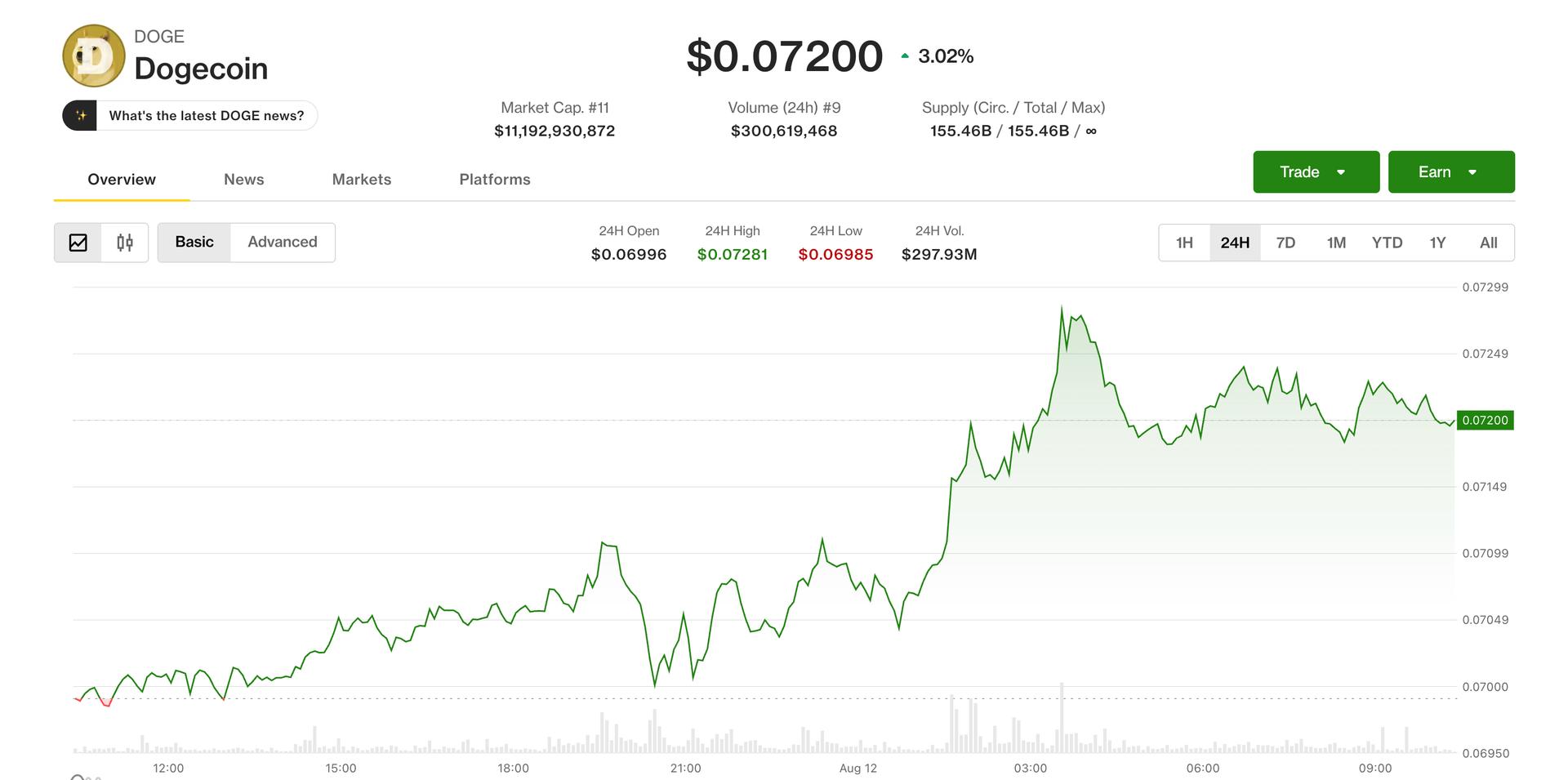
DOGE & BNB RALLY
Dogecoin and BNB Gain as Bitcoin Falls Near $63,700
AI summaryDogecoin and BNB paced gains across major digital assets, rising nearly 3% and 2% respectively. Meanwhile, Bitcoin dropped close to $63,700, standing out as the only top cryptocurrency to log losses on both daily and weekly timeframes.

METAPLANET SHIFTS 3,881 BTC
Metaplanet Shifts 3,881 Bitcoin Internally Amid $1.4B Paper Loss
AI summaryJapanese investment firm Metaplanet recently transferred 3,881 Bitcoin between private wallets under its control rather than sending them to a crypto exchange. On-chain data indicates the transfer is an internal operational shift rather than a sale, even as the company holds a $1.4 billion paper loss.
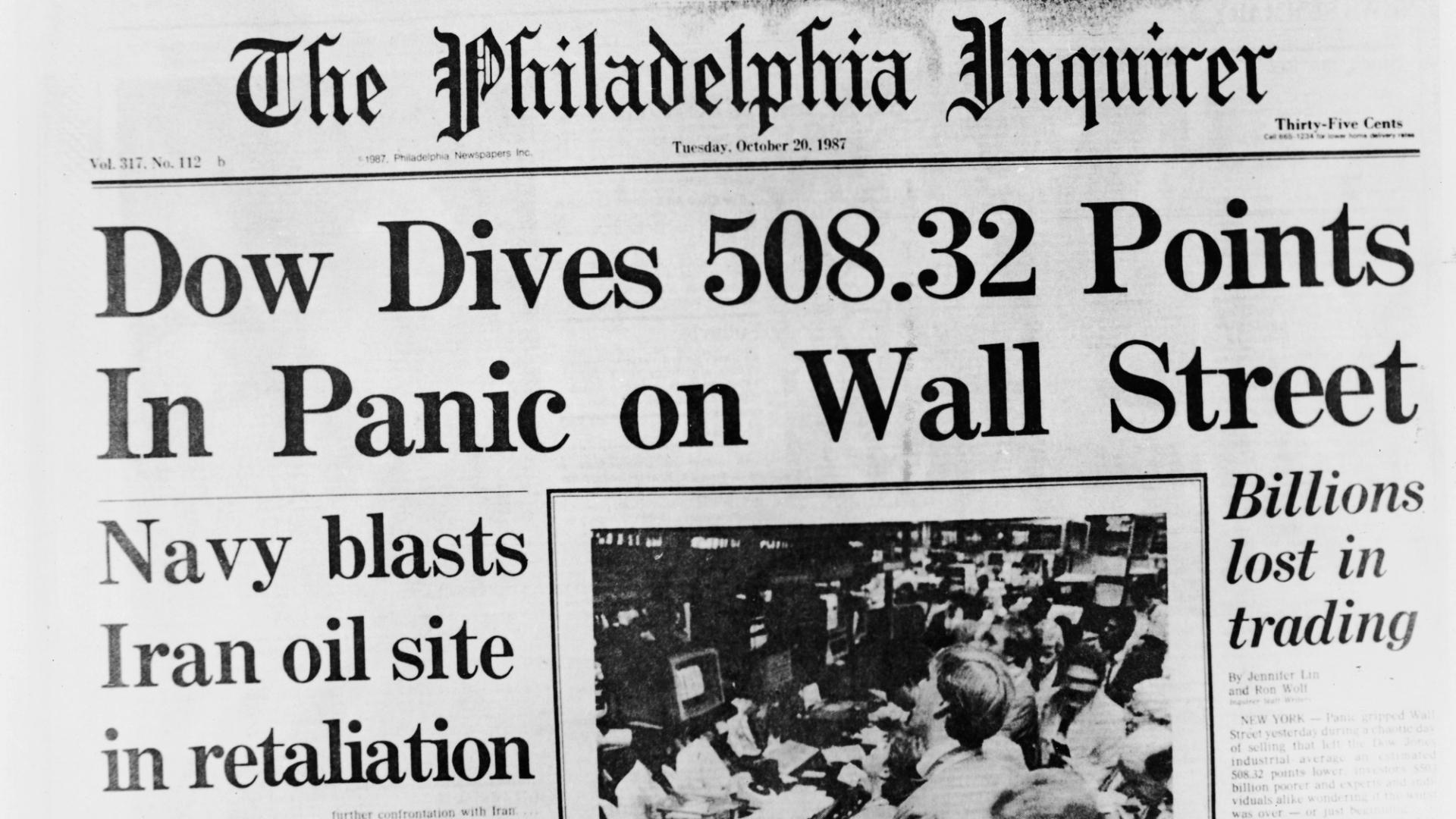
BITCOIN VS SAFE ASSETS
Bitcoin and Stocks Analysis Draws Lessons From 1960s-90s
AI summaryCoinDesk's market outlook for Aug. 11, 2026, analyzes historical competition between safe-haven assets and risk assets spanning the 1960s to the 1990s. The report applies these late-20th-century lessons to evaluate modern market behavior across Bitcoin and equities.