Bitcoin and Stocks Analysis Draws Lessons From 1960s-90s
Lessons From 1960s-90s Safe Asset Competition Applied to Bitcoin and Stocks
BITCOIN VS SAFE ASSETS
Illustration concept: A professional financial illustration showing macro market charts comparing historical safe assets and modern digital currencies like Bitcoin, stylized with subtle blue and orange stock index graphs.
AI summary
CoinDesk's market outlook for Aug. 11, 2026, analyzes historical competition between safe-haven assets and risk assets spanning the 1960s to the 1990s. The report applies these late-20th-century lessons to evaluate modern market behavior across Bitcoin and equities.
Why this matters
Understanding past market cycles helps investors evaluate how capital shifts between traditional safe havens and risk assets. As Bitcoin increasingly intersects with macro market trends, historical asset competition offers key insights for equity and digital asset portfolio management.
Key takeaways
- CoinDesk published a daily market look ahead on Aug. 11, 2026, examining historical safe asset trends.
- The report analyzes asset competition patterns spanning from the 1960s through the 1990s.
- Historical lessons are applied to modern market dynamics involving Bitcoin and traditional stocks.
- The analysis explores how capital shifts between safe havens and risk assets during economic shifts.
Financial markets are looking to historical economic patterns to better understand the current relationship between safe-haven instruments and risk assets. A market analysis published by CoinDesk on Aug. 11, 2026, examines how asset competition played out between the 1960s and the 1990s, offering potential parallels for contemporary investors.
The study focuses on the dynamic interaction between low-risk wealth preservation vehicles and high-risk yield-seeking assets over those four decades. By assessing these historical shifts, the reporting highlights how changes in monetary policy, inflation expectations, and economic stability historically drove capital flows across different asset classes.
These historical precedents are now being applied to modern portfolio structures, specifically evaluating how Bitcoin interacts with equity markets during periods of economic rebalancing. As digital assets become more integrated into broader financial analysis, observers are measuring whether Bitcoin behaves primarily as a speculative risk asset or a non-sovereign hedge akin to traditional safe havens.
CoinDesk's daily market perspective underscores the ongoing debate over safe-asset yield competition and its broader impact on equity valuations and cryptocurrency adoption trends.
Frequently asked questions
- What is the focus of the CoinDesk market report from Aug. 11, 2026?
- The report examines historical lessons from asset competition between the 1960s and 1990s and applies them to current dynamics in Bitcoin and stock markets.
- How do historical market cycles relate to Bitcoin?
- Analysts review past periods when safe assets competed with risk assets to evaluate whether Bitcoin functions as a safe haven or a risk asset in modern portfolios.
- Which time period does the market analysis examine?
- The study analyzes market cycles and economic behavior spanning four decades, specifically from the 1960s through the 1990s.
Source & transparency
- By:
- The Reviser Desk
- Source:
- CoinDesk
- Original publication:
- Aug 11, 2026, 11:13 AM
- The Reviser publication:
- Aug 11, 2026, 11:13 AM
- Updated:
- Aug 11, 2026, 4:04 PM
This report was independently written by The Reviser editorial desk from verified source material. It is not original on-the-ground reporting by The Reviser.
Related stories

BITCOIN WHALE WALLETS CLIMB
Big Bitcoin Wallets Reach Six-Month High as Whales Accumulate
AI summaryData from blockchain networks reveals that the count of major Bitcoin wallets holding 10,000 or more coins has expanded to 90, marking a six-month peak. According to reports from CoinDesk, this surge builds on recent buying trends by mid-sized investors despite regulatory delays and industry fallout.

TRUMP MEDIA CRYPTO LOSSES $361M
Trump Media Digital Asset Losses Reach $361 Million
AI summaryTrump Media has recorded $361 million in cryptocurrency losses following a sharp decline in the value of its digital asset treasury. According to reports from CoinDesk, the Truth Social parent company maintained 9,477 Bitcoin valued at $557 million as June came to a close, alongside depreciating holdings in Cronos.
BITCOIN VS AI CAPITAL
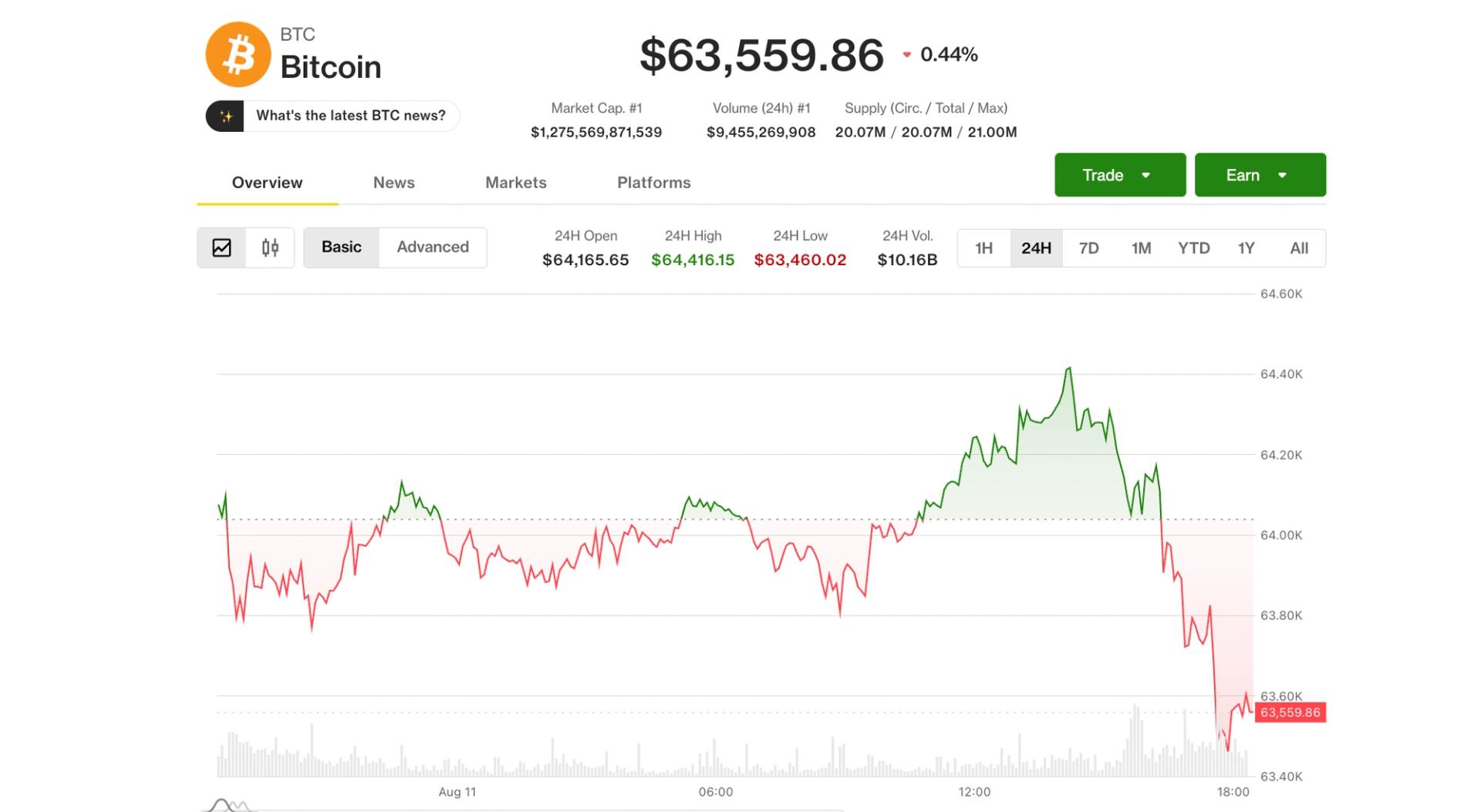
Bitcoin Faces Technical Scrutiny as Institutional Capital Shifts to AI
AI summaryInstitutional backing for Bitcoin is encountering new competition as corporate investors divert capital into artificial intelligence infrastructure. According to FxPro analyst Alex Kuptsikevich, this strategic shift places Bitcoin's flat 50-day moving average in sharp focus for traders.
CRYPTO FLAT OIL AT $89
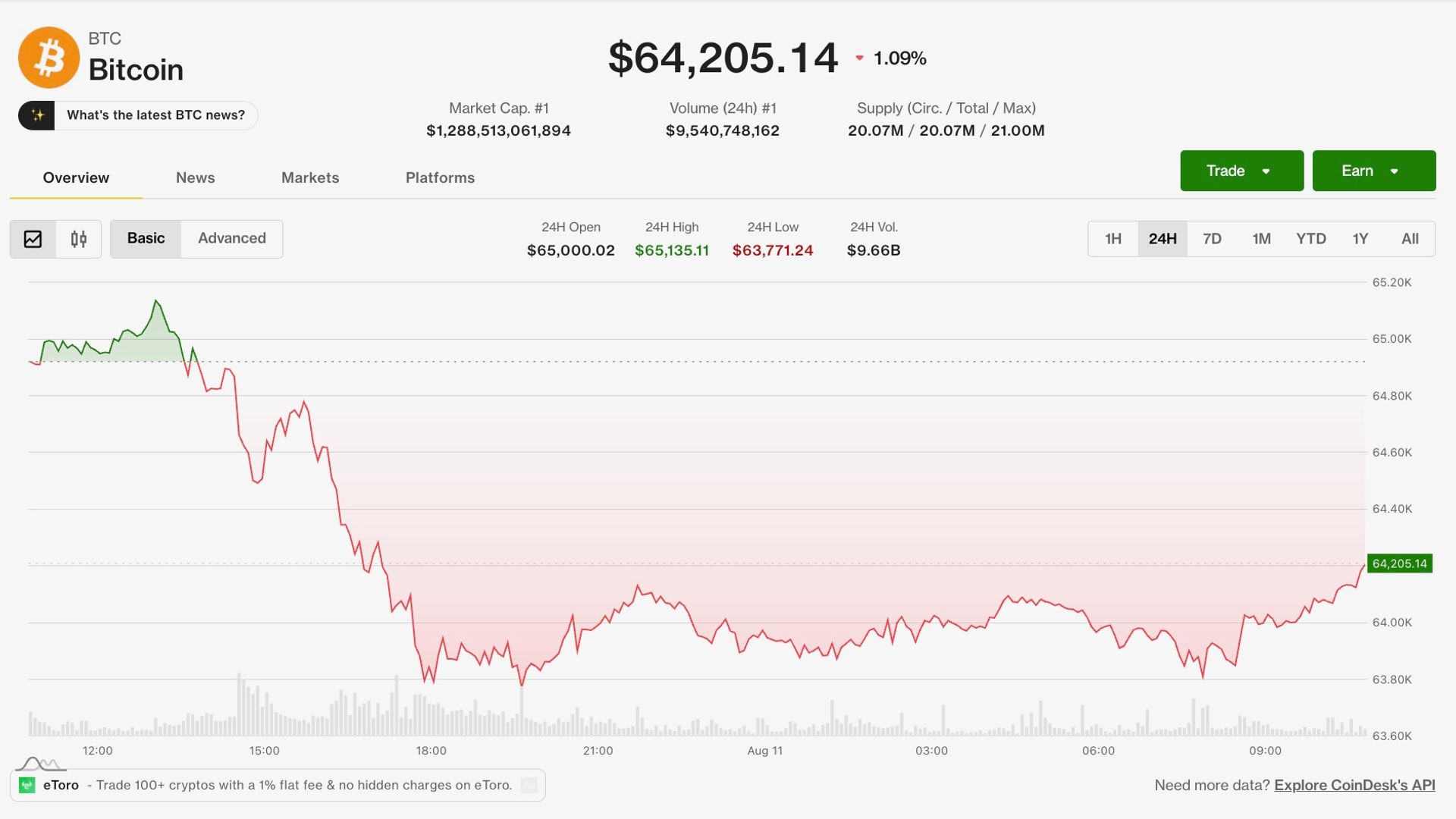
Bitcoin Stagnates Below $65K as Geopolitical Tensions Rise
AI summaryCryptocurrency markets remained muted with Bitcoin trading under $65,000 as geopolitical relief tied to the Strait of Hormuz dissolved. Oil prices climbed back to $89 per barrel following demands from former U.S. President Donald Trump for financial reparations from Iran.