Pakistani Leaders Push for New Provinces and Devolution
Cross-Party Forum Urges Administrative Restructuring in Pakistan
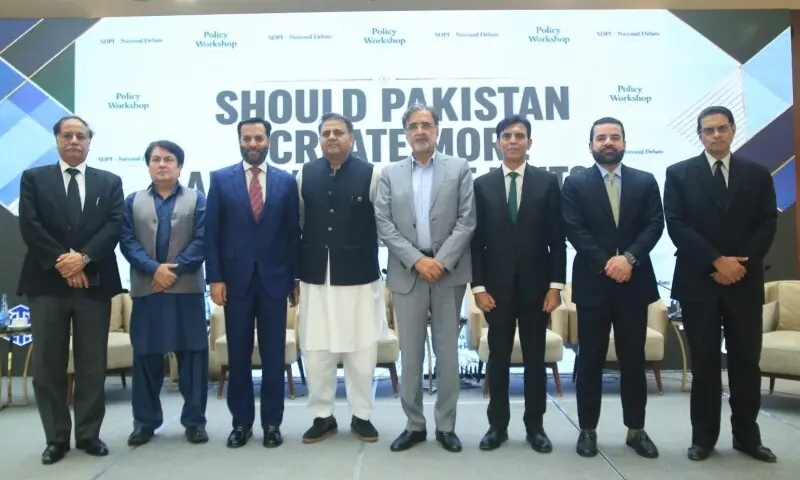
NEW PROVINCES DEBATE PAKISTAN
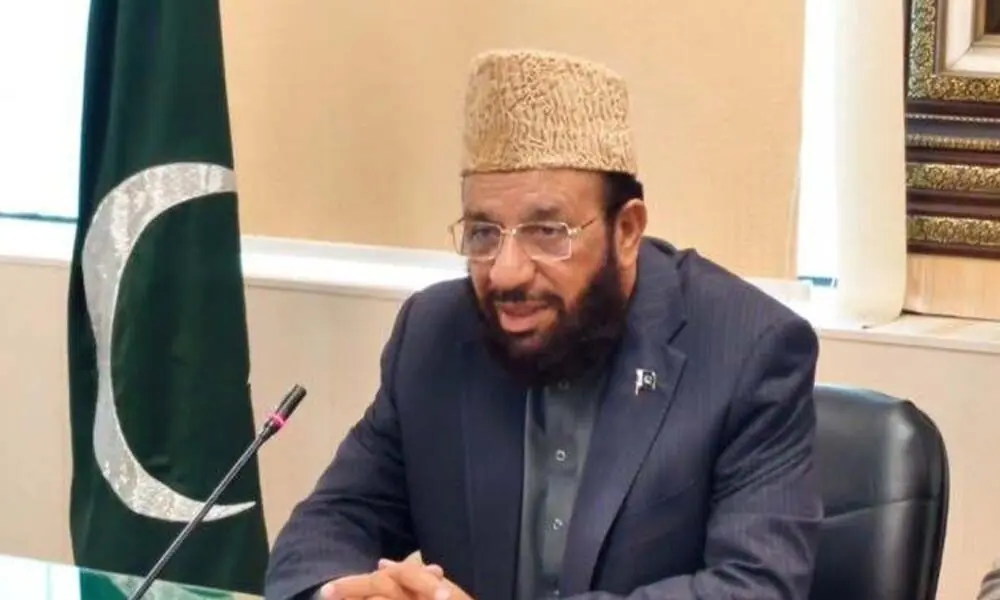
Illustration concept: A realistic photograph of a political debate conference in Islamabad, showing panelists at a long table with microphones, national flags in the background, professional press lighting, and delegates listening.
AI summary
Political leaders, technocrats, and civil society representatives gathered in Islamabad to advocate for establishing new provinces and strengthening local governance across Pakistan. Organized by the Sustainable Development Policy Institute, the cross-party discussion highlighted fiscal devolution and administrative restructuring as crucial steps to improve public service delivery.
Why this matters
Centralized decision-making in Pakistan has frequently led to administrative bottlenecks and public dissatisfaction in underrepresented regions. Empowering local government bodies and dividing large administrative units could streamline public services and enhance political representation. However, executing such restructuring requires substantial legislative consensus, constitutional amendments, and careful fiscal planning.
Key takeaways
- The Sustainable Development Policy Institute organized a national debate in Islamabad on creating new administrative units.
- Representatives from major political parties including PML-N, PPP, PTI, MQM, JI, and JUI-F took part in the forum.
- Speakers called for significant local government reforms and fiscal devolution to improve service delivery.
- Proposals for new provinces must consider constitutional bounds, public demand, and fiscal sustainability.
A broad coalition of political leaders, policymakers, and civic representatives convened in Islamabad to address Pakistan's escalating administrative challenges by advocating for new provinces and local government reforms. Organized by the Sustainable Development Policy Institute (SDPI), the national consultation titled "Should Pakistan create more administrative units?" brought together key stakeholders from across the political spectrum.
Participants included senior representatives from major political parties, including the Pakistan Muslim League-Nawaz (PML-N), Pakistan Peoples Party (PPP), Muttahida Qaumi Movement (MQM), Pakistan Tehreek-e-Insaf (PTI), Jamaat-i-Islami (JI), and Jamiat Ulema-i-Islam-Fazl (JUI-F). Federal ministers and technocrats also joined the panel to evaluate options for decentralizing state authority.
The dialogue centered on restructuring government machinery to better respond to citizens' needs. Speakers highlighted that delegating power to smaller administrative divisions and empowering municipal governance structures are essential steps toward resolving chronic governance deficiencies and ensuring equitable resource distribution.
Deliberations emphasized that any creation of new provinces or municipal reforms must adhere strictly to constitutional guidelines, fiscal reality, and public sentiment. Attendees noted that administrative efficiency, local institutional capacity, and long-term financial sustainability should serve as the primary metrics for evaluating future restructuring proposals, according to reports from Dawn Pakistan.
Frequently asked questions
- What was the main focus of the SDPI conference in Islamabad?
- The conference evaluated whether Pakistan should establish new administrative units and empower local governments to decentralize power and fix governance challenges.
- Which political parties attended the debate on administrative reforms?
- Key participants included delegates from PML-N, PPP, MQM, PTI, Jamaat-i-Islami, and JUI-F, alongside federal ministers and civil society leaders.
- What factors were identified as necessary for creating new provinces?
- Speakers emphasized that constitutional mandates, fiscal sustainability, public consensus, and administrative capability must guide any territorial restructuring.
Source & transparency
- By:
- The Reviser Desk
- Source:
- Dawn Pakistan
- Original publication:
- Aug 14, 2026, 3:39 AM
- The Reviser publication:
- Aug 14, 2026, 3:39 AM
- Updated:
- Aug 14, 2026, 3:45 AM
This report was independently written by The Reviser editorial desk from verified source material. It is not original on-the-ground reporting by The Reviser.
Related stories
FIXING PAKISTAN'S GOVERNANCE GAP
SDPI Debate Calls for Cultural Shift to Fix Governance
AI summaryA national debate hosted by the Sustainable Development Policy Institute emphasized that shifting political culture and institutional mindset is essential for meaningful governance reform in Pakistan. Participants noted that administrative restructuring alone cannot fix public service delivery without deeper behavioral change and fiscal sustainability.
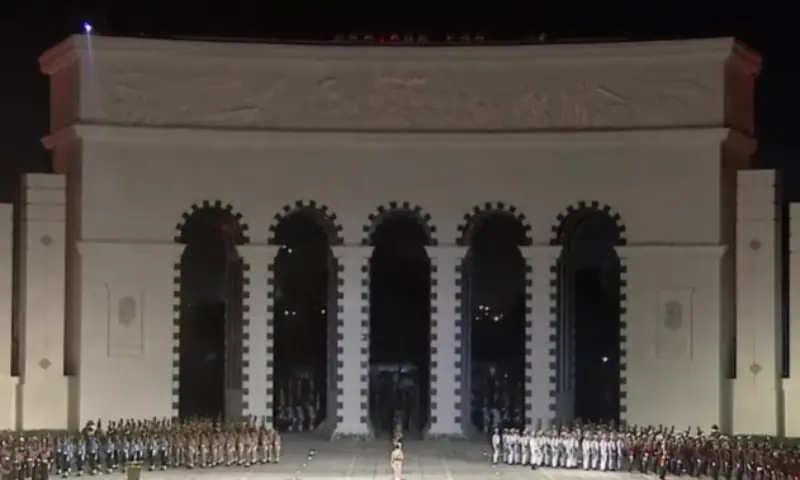
NEW MONUMENT UNVEILED
Yadgar-i-Fatah Monument Unveiled in Islamabad by Leaders
AI summaryCivilian and military leaders gathered in Islamabad on Thursday night to unveil the Yadgar-i-Fatah memorial on the eve of Pakistan's 80th Independence Day. The monument pays tribute to the nation's martyrs and commemorates the Marka-i-Haq.
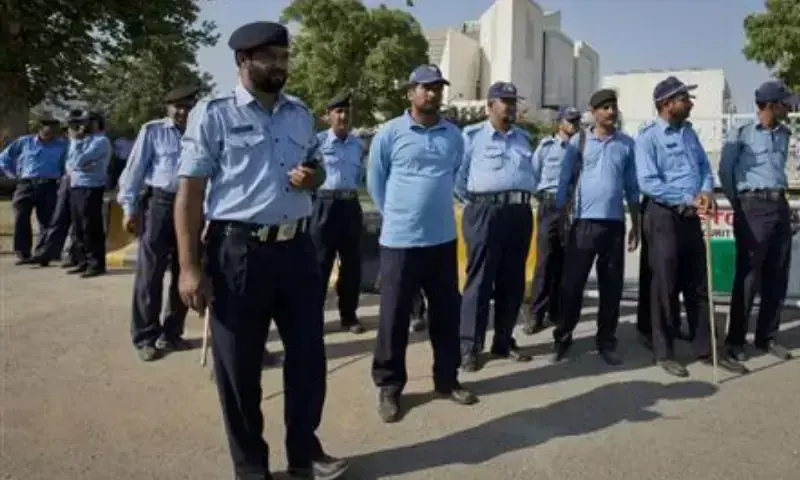
IHC SLAMS POLICE PROBES
IHC Scrutinizes Islamabad Police Investigation Quality
AI summaryThe Islamabad High Court has raised serious concerns regarding the investigative competency of the Islamabad police across multiple criminal proceedings. Justice Khadim Hussain Soomro summoned senior police leadership to court and warned that institutional action would follow if investigative procedures are not restructured.
21,000 HAJJ SLOTS SHORTFALL
Pakistan to Adjust 21,000 Shortfall Hajj Quota Slots Next Year
AI summaryThe Ministry for Religious Affairs and Interfaith Harmony informed a Senate panel that over 21,000 Hajj quota slots experienced a shortfall for the 2026 season. Officials assured lawmakers that the deficit will be adjusted next year while an expert committee awaits prime ministerial approval to review overall management.