Navigating EUR/USD Ranges Amid August Stagflation Risks
Why EUR/USD Currency Markets Face Range-Bound Pressure Ahead of August
EUR USD STAGFLATION TRAP
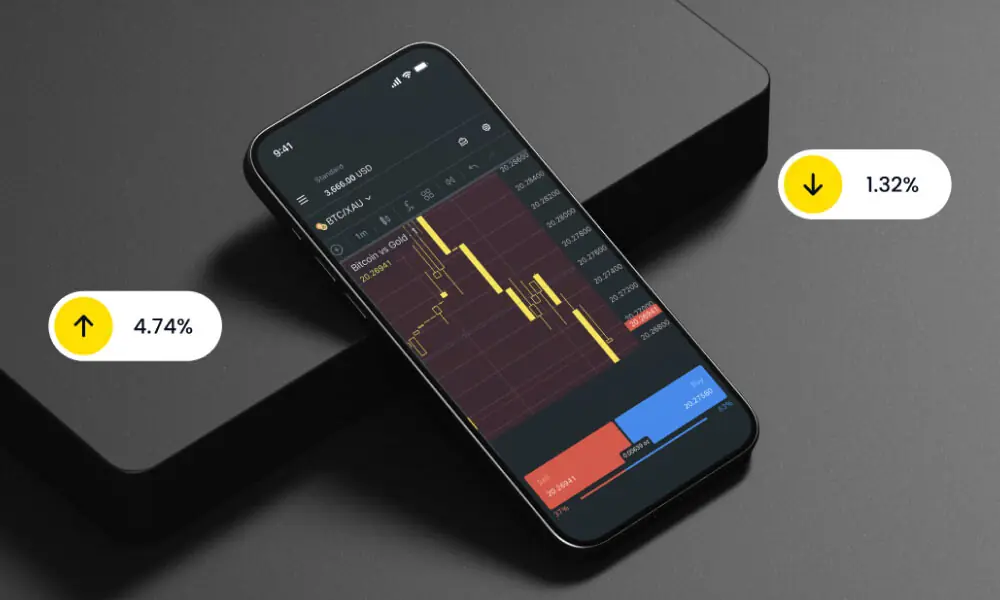
Illustration concept: A close-up shot of financial trading charts showing EUR/USD currency exchange rates on a computer screen, with subtle glowing blue and red candlestick indicators in a professional modern trading floor setting.
AI summary
Foreign exchange markets are facing a challenging environment as persistent inflation and slowing economic growth create stagflationary pressures ahead of August. With neither the European Central Bank nor the Federal Reserve holding a clear macroeconomic advantage, the EUR/USD currency pair remains caught between conflicting policy signals.
Why this matters
A range-bound currency market driven by stagflation makes directional forecasting difficult for global investors and businesses managing foreign exchange risk. As economic data delivers conflicting signals weekly, market participants must adapt strategies toward strict risk management rather than speculative betting. Understanding these macro constraints helps traders navigate unexpected shifts in major currency valuations.
Key takeaways
- Persistent inflation combined with slowing growth creates stagflationary pressures in major economies.
- Neither the ECB nor the Federal Reserve currently commands a clear macroeconomic advantage in FX markets.
- Conflicting economic data produces short-term market reversals rather than sustained currency trends.
- Traders are advised to focus on risk management and execution discipline instead of directional forecasting.
Foreign exchange markets entering August face an uncertain environment characterized by stubborn inflation figures alongside decelerating economic growth across major economies. According to market analysis published by Business Recorder, this combination of factors has created a stagflationary environment that limits clear directional trends in key currency pairs.
The EUR/USD exchange rate currently reflects these balanced macro headwinds. Neither the euro nor the US dollar holds a decisive advantage, as market participants continually adjust their expectations for future monetary policy decisions by both the European Central Bank and the Federal Reserve.
In this environment, economic indicators frequently offer contradictory narratives on a weekly basis. A higher inflation reading often fuels expectations of elevated interest rates and temporarily boosts a currency, only for a weak manufacturing or growth report to reverse those gains shortly after.
Because central banks are constrained by competing mandates to tame elevated prices without triggering severe economic downturns, currency valuation remains range-bound. As a result, market analysts suggest active traders pivot toward risk control and disciplined execution rather than relying on directional predictions.
Frequently asked questions
- Why is the EUR/USD exchange rate currently range-bound?
- The currency pair lacks a clear trend because both the US dollar and euro face similar macro pressures, including stubborn inflation and weakening economic momentum.
- How does stagflation affect central bank policy decisions?
- Stagflation presents a dilemma where central banks must weigh raising interest rates to curb inflation against lowering rates to support slowing growth.
- What trading approach is recommended during stagflationary market conditions?
- Analysts recommend focusing on objective risk management, execution discipline, and patience rather than making speculative directional predictions.
Source & transparency
- By:
- The Reviser Desk
- Source:
- Business Recorder
- Original publication:
- Aug 12, 2026, 7:17 AM
- The Reviser publication:
- Aug 12, 2026, 7:17 AM
- Updated:
- Aug 12, 2026, 7:30 AM
This report was independently written by The Reviser editorial desk from verified source material. It is not original on-the-ground reporting by The Reviser.
Related stories

TATA SONS LEADERSHIP SHIFT
Tata Sons Chairman Chandrasekaran May Resign Before AGM
AI summaryTata Sons Chairman N Chandrasekaran has reportedly discussed stepping down ahead of a crucial shareholder meeting on August 18. The potential exit follows reported friction with Noel Tata, head of the conglomerate's principal charitable trust.

RUPEE SLIPS AS OIL RISES
Indian Rupee Drops to Two-Week Low Amid Rising Oil Prices
AI summarySurging crude oil prices driven by escalating tension between the United States and Iran pushed the Indian rupee to a nearly two-week low on Tuesday. Suspected dollar-selling intervention by the Reserve Bank of India prevented steeper losses, leaving the currency at 95.4350 per dollar.

RUPEE PRESSURIZED AS OIL RISES
Indian Rupee Faces Pressure as Crude Oil Nears $90
AI summarySurging Brent crude prices approaching $90 a barrel have fueled strong dollar hedging by importers, placing heavy pressure on the Indian rupee. Although the Reserve Bank of India has actively sold dollars through state banks to cushion losses, regional currency weakness continues to weigh on sentiment.
PAKISTAN BUDGET OVERSIGHT GAP
US Report Urges Pakistan to Improve Budget Transparency
AI summaryA recent assessment by the United States Department of State emphasizes the need for Pakistan to strengthen parliamentary scrutiny over its public finances. While acknowledging the widespread online availability of the finalized budget, the report criticized delays in publishing preliminary executive budget proposals and urged greater transparency regarding state-owned enterprise debt.