Indian Rupee Drops to Two-Week Low Amid Rising Oil Prices
Rising Crude Prices Push Indian Rupee to Weakest Level in Two Weeks
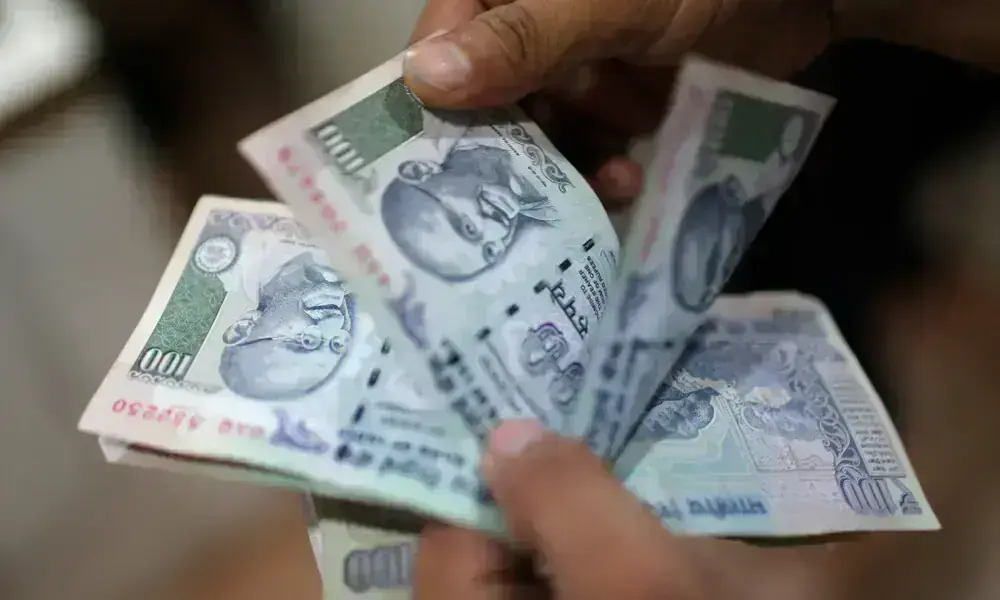
RUPEE SLIPS AS OIL RISES
Illustration concept: A close-up shot of Indian rupee banknotes beside a sleek digital stock market screen showing down-trending market indicators and an overlay of crude oil barrels, modern financial visual style.
AI summary
Surging crude oil prices driven by escalating tension between the United States and Iran pushed the Indian rupee to a nearly two-week low on Tuesday. Suspected dollar-selling intervention by the Reserve Bank of India prevented steeper losses, leaving the currency at 95.4350 per dollar.
Why this matters
India's heavy dependence on imported energy makes its currency particularly vulnerable to global oil disruptions. Higher crude prices risk expanding the country's trade deficit and accelerating imported inflation. If energy markets remain elevated, the Reserve Bank of India may need to draw more heavily on foreign exchange reserves to maintain currency stability.
Key takeaways
- The Indian rupee depreciated 0.15% to close at 95.4350 per dollar, reaching a two-week low.
- Brent crude futures climbed nearly 2.5% to $89.90 a barrel over U.S.-Iran geopolitical friction.
- The Reserve Bank of India likely intervened via dollar sales to limit the currency's decline.
- Indian equities fell with the Nifty 50 down 0.5%, while 10-year bond yields rose 3 basis points.
- India imports nearly 90% of its crude oil, leaving its economy exposed to energy market shocks.
Fresh volatility hit Indian financial markets on Tuesday after crude oil values jumped on geopolitical concerns, dragging the national currency down to its lowest close in nearly a fortnight. The rupee finished the trading session at 95.4350 per US dollar, reflecting a 0.15% decline from the previous day's close.
Global energy markets reacted sharply to diminishing expectations of a diplomatic resolution between the United States and Iran that could reopen the vital Strait of Hormuz shipping corridor. Consequently, Brent crude futures surged nearly 2.5% to reach $89.90 per barrel.
Market participants indicated that active central bank operations kept the domestic currency from suffering deeper losses. The Reserve Bank of India likely stepped into currency markets to supply dollars, effectively cushioning the rupee against broader selling pressure.
Beyond foreign exchange desks, the energy price shock reverberated across domestic financial markets. The benchmark Nifty 50 stock index dropped 0.5%, while prices for 10-year Indian government bonds slid, elevating the benchmark yield by 3 basis points.
India remains exposed to international energy shocks as it imports roughly 90% of its crude oil requirements. According to reports from Business Recorder, market traders warn that without persistent central bank intervention, continued gains in global crude oil could push the rupee toward the 95.80 level in the near term.
Frequently asked questions
- Why did the Indian rupee fall on Tuesday?
- The rupee declined due to surging crude oil prices triggered by fading hopes for a U.S.-Iran deal and lingering threats to the Strait of Hormuz.
- How did the central bank respond to the currency weakness?
- Traders reported that the Reserve Bank of India likely sold US dollars in the market to cushion the rupee against sharper losses.
- Why is India vulnerable to higher crude oil prices?
- India imports nearly 90% of its crude oil needs, making its trade balance, currency, and broader economy highly sensitive to energy price shocks.
Source & transparency
- By:
- The Reviser Desk
- Source:
- Business Recorder
- Original publication:
- Aug 11, 2026, 11:28 AM
- The Reviser publication:
- Aug 11, 2026, 11:28 AM
- Updated:
- Aug 11, 2026, 11:33 AM
This report was independently written by The Reviser editorial desk from verified source material. It is not original on-the-ground reporting by The Reviser.
Related stories

INDIAN BONDS SLIP ON CRUDE
Indian Bonds Fall as Crude Rally and US Yields Stir Inflation Fear
AI summaryIndian government bond prices declined on Tuesday following a surge in global crude prices and rising US Treasury yields. The market pressure comes as traders anticipate upcoming inflation data from both India and the United States.
RUPEE FLOOR AT 96
Indian Rupee Floor Pegged at 96 per Dollar by Crédit Agricole
AI summaryCrédit Agricole CIB India forecasts that the Indian rupee will trade within a range of 94 to 96 against the US dollar during the current financial year. Treasury leadership at the French lender attributes the currency's downside stability to easing global commodity prices alongside capital-attracting measures enacted by India's central bank and government.

OIL SURGES NEAR $88
Crude Prices Surge to Multi-Week Highs Amid US-Iran Deadlock
AI summaryCrude futures reached their highest levels in weeks on Tuesday after peace negotiations between the United States and Iran stalled over new demands from Washington. Meanwhile, Asian equity markets traded quietly as lingering concerns over global inflation continued to weigh on investor sentiment.

GOLD RATES SURGE AGAIN
Pakistani Gold Rates Rise to Rs459,736 as Global Market Surges
AI summaryPrecious metal prices in Pakistan posted notable gains on Tuesday following an upward trajectory in international bullion markets. According to data released by the All-Pakistan Gems and Jewellers Sarafa Association, gold per tola increased by Rs2,400 to reach Rs459,736.