NADRA Rolls Out New Chipless Identity Cards in Pakistan
NADRA Begins Phased Rollout of New Chipless Identity Cards
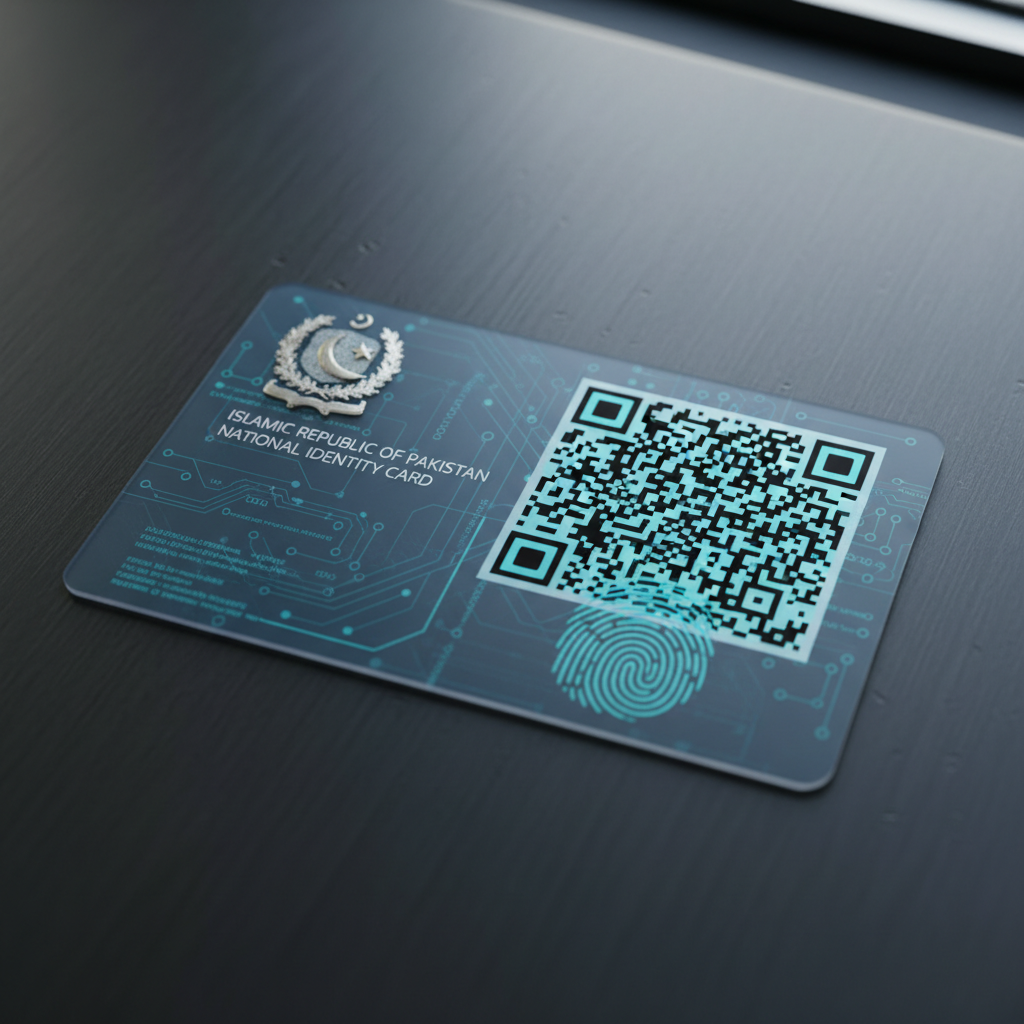
NEW CHIPLESS ID CARDS
Illustration concept: A modern concept photograph of a redesigned Pakistani National Identity Card displaying a prominent secure QR code on a sleek dark surface, subtle cyan digital security overlays, news editorial style.
AI summary
Pakistan's National Database and Registration Authority has initiated the gradual rollout of a new chipless National Identity Card featuring a secure QR code. Starting August 14, this upgraded credential will progressively replace the conventional standard identity card across the country.
Why this matters
The shift to a QR code-enabled chipless card represents a significant update in Pakistan's national identity infrastructure. By modernising document security while streamlining card production, the change aims to enhance identity verification across public and financial services. Citizens applying for or renewing identity documents will transition to the new format as the rollout progresses.
Key takeaways
- NADRA has launched a phased rollout of a new chipless National Identity Card in Pakistan.
- The new design replaces embedded microchips with secure, scannable QR codes for identity verification.
- Phased replacement of standard identity cards is scheduled to begin starting August 14.
- The update aims to modernize document verification procedures while improving production efficiency.
Pakistan's National Database and Registration Authority (NADRA) has officially commenced a gradual rollout of a redesigned National Identity Card that dispenses with traditional microchips in favour of advanced quick-response (QR) code technology. According to reports from Express Tribune Pakistan, the revised document design is scheduled to systematically succeed the existing standard identity card starting August 14.
Under the new framework, the embedded microchip featured in previous iterations will be phased out, making way for a high-security QR code printed directly onto the card. The updated security architecture is designed to enable rapid digital verification while reducing reliance on specialized hardware chip readers during routine identity checks.
The implementation is being executed in distinct phases to ensure a smooth transition across civic registration centers nationwide. Citizens seeking new registrations or renewals will begin receiving the redesigned chipless credentials as administrative centers integrate the revised issuing protocol.
NADRA's transition away from chip-integrated cards marks a strategic shift toward modern, software-driven identification verification methods. The move is expected to streamline card manufacturing workflows while maintaining robust security and fraud prevention standards across national databases.
Frequently asked questions
- What is changing with Pakistan's National Identity Card?
- NADRA is introducing a new chipless identity card that utilizes a secure QR code instead of an embedded microchip.
- When does the replacement process start?
- The phased transition to replace standard identity cards with the new chipless design begins on August 14.
- How will the new identity cards be verified?
- Verification will be performed digitally through the secure QR code printed on the card rather than reading an embedded chip.
Source & transparency
- By:
- The Reviser Desk
- Source:
- Express Tribune Pakistan
- Original publication:
- Aug 14, 2026, 8:46 AM
- The Reviser publication:
- Aug 14, 2026, 8:46 AM
- Updated:
- Aug 14, 2026, 3:03 PM
This report was independently written by The Reviser editorial desk from verified source material. It is not original on-the-ground reporting by The Reviser.
Related stories
NEW PROVINCES DEBATE PAKISTAN
Pakistani Leaders Push for New Provinces and Devolution
AI summaryPolitical leaders, technocrats, and civil society representatives gathered in Islamabad to advocate for establishing new provinces and strengthening local governance across Pakistan. Organized by the Sustainable Development Policy Institute, the cross-party discussion highlighted fiscal devolution and administrative restructuring as crucial steps to improve public service delivery.
AI PHOTO DECEPTION SINDH
Ex-Sindh Minister Marries Woman, Finds AI Altered Photos
AI summaryA former provincial minister from Sindh discovered following his marriage that photographs provided by his bride prior to the wedding had been modified using artificial intelligence. According to reports from Dawn Pakistan, the incident highlights emerging personal and legal concerns surrounding deceptive digital manipulation.
KP LAUNCHES WELFARE LOANS
KP Unveils Welfare Initiatives for Differently-Abled Persons
AI summaryKhyber Pakhtunkhwa has announced new social welfare initiatives aimed at supporting differently-abled individuals, including interest-free business loans and student scholarships. The provincial government is also launching the Ehsaas Umeed Card to provide monthly cash stipends to thousands of beneficiaries.

LEADERS URGE NATIONAL SOLIDARITY
Independence Day: Naqvi, Maryam, Murad Call for National Unity
AI summaryProminent Pakistani political figures, including Mohsin Naqvi, Maryam Nawaz, and Murad Ali Shah, issued messages of solidarity on Independence Day. They paid tribute to the pioneers and martyrs of the Pakistan Movement while stressing the necessity of collective action for national prosperity.