Makkah Defence Accord Open to Regional Allies, Says Pakistan
Trilateral Security Pact Open to Regional States, Clarifies Pakistan DPM
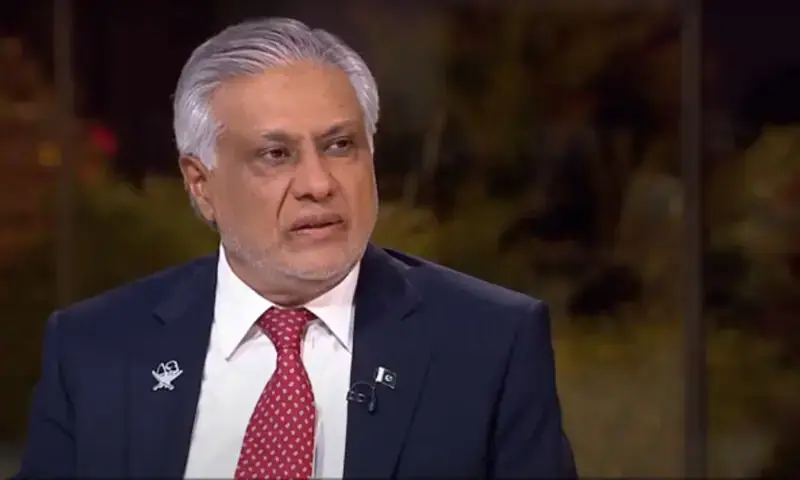
MAKKAH ACCORD REGIONAL SECURITY PACT
Illustration concept: A formal diplomatic setting displaying the national flags of Pakistan, Saudi Arabia, and Turkiye positioned on a modern conference stage, photo realistic, editorial style.
AI summary
The newly established Makkah Joint Defence Agreement between Pakistan, Saudi Arabia, and Turkiye is open to expansion by other regional nations, according to Pakistan's Deputy Prime Minister and Foreign Minister. Clarifying its scope, official statements emphasized that the alliance operates strictly as a defensive framework based on mutual deterrence.
Why this matters
This trilateral agreement establishes a mutual defense commitment among three major Muslim-majority military powers, treating an attack on one as an attack on all. If expanded to include key regional players such as Egypt, the alliance could significantly alter collective deterrence and security dynamics across the Middle East and South Asia.
Key takeaways
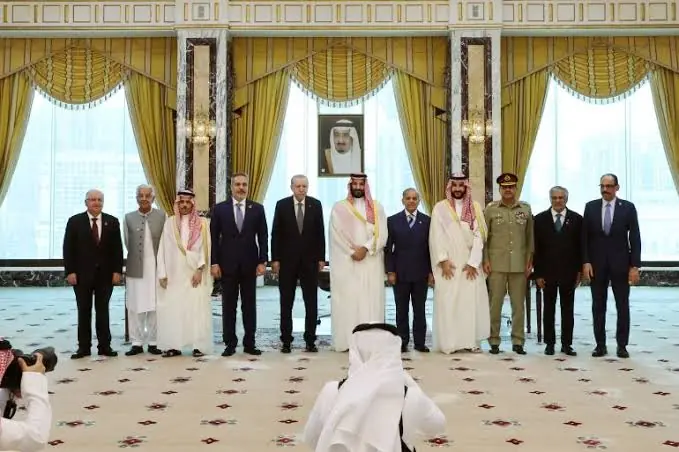
- Pakistan, Saudi Arabia, and Turkiye signed the Makkah Joint Defence Agreement to establish a collective deterrence framework.
- Pakistan's Foreign Minister clarified that the alliance is purely defensive and open to other regional nations.
- Under the pact's terms, an attack on one member state will be treated as an attack on all signatories.
- Turkish officials hinted that Egypt could become a future signatory to the expanding security agreement.
A newly forged trilateral defence agreement between Pakistan, Saudi Arabia, and Turkiye is open to inclusion by other regional nations, according to statements released by Pakistan's Deputy Prime Minister and Foreign Minister Ishaq Dar on Sunday.
The agreement, officially designated as the Makkah Joint Defence Agreement and signed on Friday in the holy Saudi city, functions strictly as a defensive alliance. Central to the pact is a mutual security framework under which signatory nations agree to treat an external assault on any single member state as an act of aggression against all signatories.
The announcement regarding potential expansion follows statements from the Turkish foreign ministry indicating that Egypt may also join the accord. Dar noted in a public statement on social media platform X that the pact, also referred to as the Makkah Accord, stems from prolonged bilateral and multilateral consultations designed to elevate strategic coordination against evolving security threats.
Describing the alliance as a reflection of close fraternal ties among the leadership and populations of the three founding nations, official statements stressed that the core mission focuses on reinforcing regional stability, bolstering collective deterrence, and promoting shared security interests across the region.
Frequently asked questions
- What is the Makkah Joint Defence Agreement?
- It is a mutual defence framework signed by Pakistan, Saudi Arabia, and Turkiye designed to enhance regional security and establish collective deterrence.
- Does the pact allow other countries to join?
- Yes, Pakistani officials confirmed that the accord remains open to any regional state willing to adhere to its core defensive principles.
- How does the mutual defence clause work in this pact?
- The agreement binds signatory nations to consider an armed attack against one member state as an attack against all member states.
Source & transparency
- By:
- The Reviser Desk
- Source:
- Dawn World
- Original publication:
- Aug 9, 2026, 4:42 PM
- The Reviser publication:
- Aug 9, 2026, 4:42 PM
- Updated:
- Aug 9, 2026, 5:31 PM
This report was independently written by The Reviser editorial desk from verified source material. It is not original on-the-ground reporting by The Reviser.
Related stories
ATTACK ON ONE ALL THREE
Dar Details Pakistan-Saudi-Turkiye Makkah Defence Accord
AI summaryDeputy Prime Minister Ishaq Dar has provided details on the scope of the recently signed Makkah Joint Defence Agreement between Pakistan, Saudi Arabia, and Turkiye. He emphasized that an external attack on any signatory would be considered an assault on all three, while clarifying that the pact does not override existing international commitments.
IRAN REACTS TO NEW PACT
Iran Sees Lower US Influence in Saudi-Pakistan-Turkiye Pact
AI summaryIran does not consider the trilateral agreement between Saudi Arabia, Pakistan, and Turkiye to be an urgent security threat, according to foreign affairs analysts. Instead, Iranian leadership is concentrating on how the alliance reflects a diminishing strategic role for the United States in the region.
TRILATERAL DEFENSE PACT
Makkah Pact: Analyzing the Trilateral Defense Pact
AI summaryPakistan, Saudi Arabia, and Turkiye have signed the Makkah Joint Defence Agreement, featuring a clause that views an attack on one member state as an attack on all. An analytical commentary by Dawn Opinion suggests that while symbolic amid US-Iran tensions, the pact faces questions regarding its operational reality.

FLOUR PRICES RISE IN PAKISTAN
Pakistan Flour Prices Surge Amid Grain Import Delay
AI summaryWheat and flour prices across Pakistan have registered further increases despite federal plans to import one million tonnes of grain. Market traders warn that without immediate price management, consumers will fail to see substantial relief once imported supplies arrive.