China Excess Savings Drive Global Export Spillover Risk
Understanding the New China Shock: How National Savings Fuel Global Export Spillovers
CHINA SAVINGS EXPORT SHOCK
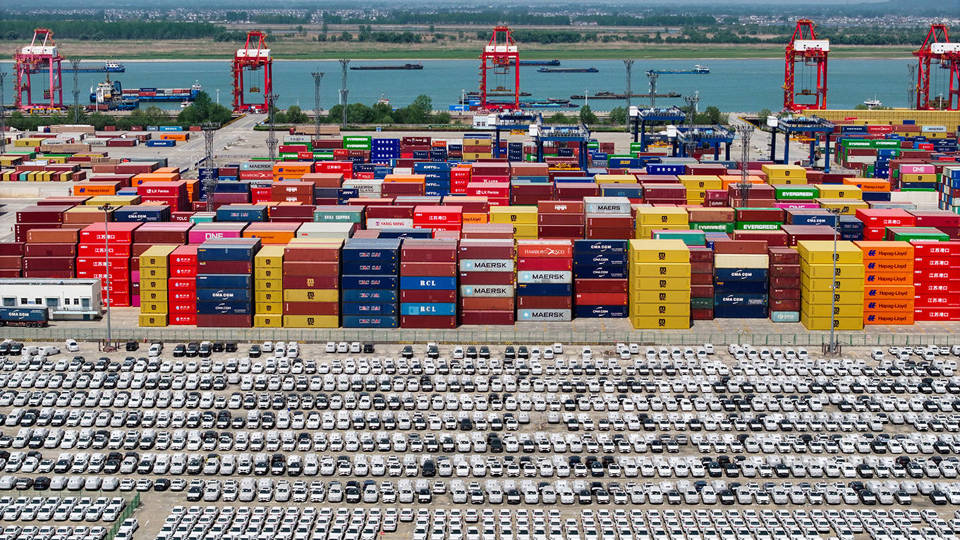
Illustration concept: A high-level conceptual vector illustration displaying cargo ships exiting a modern Asian port alongside economic trend lines depicting savings and export growth.
CSS / PCS revision
Key points, takeaways and exam-style Q&A formatted as a printable one-file study pack.
AI summary
According to an analysis published by Project Syndicate, a combination of industrial upgrading and weakening domestic absorption is fueling a new global trade shock from China. As real estate investments slump while national savings remain elevated, the resulting surplus is increasingly spilling into international markets as net exports.
Why this matters
The redirection of Chinese production capacity into international trade affects global manufacturing supply chains and competitive landscapes worldwide. For developing economies like Pakistan, navigating cheap Chinese imports presents both opportunities for lower input costs and severe challenges for local industrial competitiveness.
Key takeaways
- Structural trade imbalances in China stem from elevated national savings alongside a sluggish property investment landscape.
- Advancing industrial capacity combined with weak domestic absorption forces surplus production into global net exports.
- International markets face trade policy friction as surplus Chinese exports compete directly with local manufacturers.
- Developing economies, including Pakistan, must navigate the dual impact of cheaper capital imports and pressures on indigenous industries.
According to an analytical perspective published by Project Syndicate, global markets are confronting a fresh economic challenge originating from structural shifts within China. Rather than stemming purely from rapid output growth, this current iteration of global economic friction reflects a structural mismatch between advancing industrial capabilities and a subdued internal market unable to absorb domestic production.
At the root of this dynamic is China's internal absorption imbalance. The contraction in property investments and associated sectors has dragged down domestic demand. However, national saving rates have remained exceptionally high, creating a widening savings-investment gap that cannot be digested locally and consequently overflows into international commerce as net exports.
From an international trade perspective, this overflow presents complex trade-offs. Supporters of open commerce note that lower-priced goods and intermediate machinery help suppress global inflationary pressures and assist foreign firms with affordable inputs. Conversely, competing manufacturing sectors in partner nations warn that heavily supplied export channels threaten local industries, inviting protectionist tariffs and retaliatory trade policy friction.
For regional nations and developing economies such as Pakistan, the influx of Chinese industrial goods carries direct consequences. While access to competitively priced capital goods can support infrastructure development under bilateral partnerships, local manufacturing firms risk losing domestic market share to low-cost imports, complicating long-term economic diversification efforts.
In conclusion, addressing these spillover effects effectively will require structural reforms in China aimed at boosting household consumption and domestic absorption. Simultaneously, trading partners must balance maintaining productive bilateral economic relations with establishing calibrated safeguards to protect domestic industrial bases.
Frequently asked questions
- What is driving the latest global trade friction associated with China?
- Reports from Project Syndicate indicate that ongoing industrial modernization alongside weak internal consumer demand and high saving rates is propelling excess production into export markets.
- How does the downturn in China's real estate market affect its exports?
- A decline in real estate and associated construction investment reduces domestic demand, generating a national savings surplus that spills over into foreign trade as increased net exports.
- What are the key considerations for regional economies like Pakistan?
- Pakistan stands to benefit from lower capital goods costs for infrastructure projects, but faces potential risks if domestic manufacturing is displaced by an influx of low-cost imported products.
Source & transparency
- By:
- The Reviser Desk
- Source:
- Project Syndicate
- Original publication:
- Aug 11, 2026, 9:16 AM
- The Reviser publication:
- Aug 11, 2026, 9:16 AM
- Updated:
- Aug 11, 2026, 4:33 PM
This report was independently written by The Reviser editorial desk from verified source material. It is not original on-the-ground reporting by The Reviser.
Related stories

SOVEREIGN AI OVER COMPUTE POWER
Morocco AI Strategy Offers Sovereign Blueprint for Global South
AI summaryAccording to an analysis by Project Syndicate, Morocco is prioritizing data sovereignty, local talent, and targeted applications over the capital-intensive global race for raw computing power. This practical approach aims to foster domestic technological innovation while safeguarding national identity against overreliance on foreign artificial intelligence models.
POWER TRUST RISK RETURN
Resurgent Power Trusts Threaten Energy Market Stability
AI summaryA resurgence of debt-heavy mega-mergers in the power sector mirrors the utility monopolies of a century ago, according to commentary from Project Syndicate. This analytical piece examines the risks of utility consolidation, corporate leverage, and the strategic policy lessons for Pakistan’s energy governance.

FAIR DATA FOR AI
Why Collective Data Governance Is Key to AI Wealth Distribution
AI summaryAn analysis from Project Syndicate highlights the growing economic imbalance in artificial intelligence development, where millions contribute training data without receiving financial compensation. The publication proposes collective data governance models, such as data cooperatives, to help content creators and internet users negotiate fair terms with technology companies.

US GROWTH REAL OR FRAGILE
US Economic Resilience and Global Financial Vulnerabilities
AI summaryDespite experiencing unprecedented macroeconomic shocks, the United States economy continues to expand near its long-term potential rate. However, analysis indicates that underlying risks such as debt-fueled speculation and geopolitical volatility could undermine this apparent stability.