US to Screen Social Media of Foreign Journalists for Visas
Trump Administration Expands Social Media Vetting to Overseas Reporters
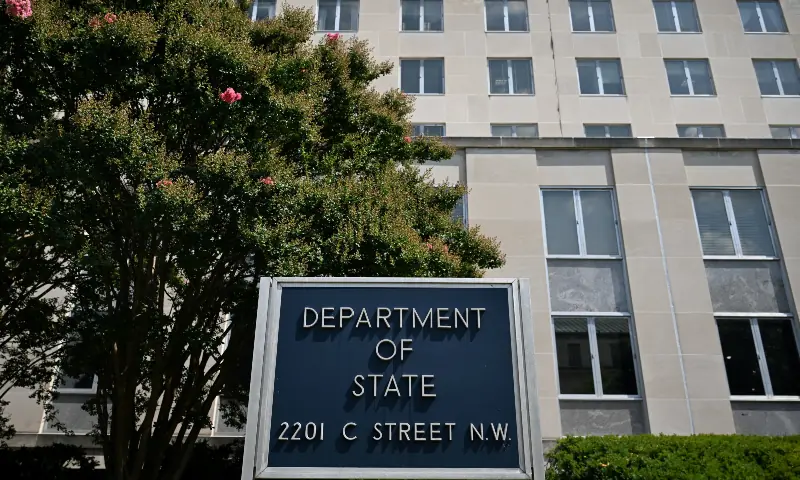
US VETS FOREIGN MEDIA VISAS
Illustration concept: A close-up shot of an international passport resting next to a laptop screen displaying abstract social media profile icons, with a blurred US Capitol building in the background.
AI summary
The United States is broadening its visa background checks to include the public online posts of foreign journalists seeking entry. While official government channels amplified reports of the policy shift, diplomatic officials declined to explicitly confirm internal documents.
Key takeaways
- The US is expanding visa background checks to examine foreign reporters' social media profiles.
- Enhanced digital screening will also cover Canadian and Mexican professional visa applicants.
- The policy details emerged from an internal document published by The Daily Signal.
- The State Department declined to confirm specific details despite official social media accounts sharing the report.
Overseas correspondents seeking to report from the United States may soon face stricter scrutiny of their online presence under a proposed expansion of diplomatic background checks. According to a recent report, federal officials plan to mandate that foreign media personnel expose their public social media feeds to government review before receiving entry authorization.
The policy shift, initially detailed by news outlet The Daily Signal, builds upon broader border security protocols introduced during President Donald Trump's administration. Previously, screening requirements applied predominantly to standard immigration categories, but the new directives appear set to encompass specialized press credentials as well as temporary employment authorizations for North American neighbors.
Beyond international reporters, the updated vetting procedures will reportedly target applicants utilizing specific employment pathways designated for cross-border professionals from Canada and Mexico. This expansion signals a heightened emphasis on digital monitoring across visa classes that had historically enjoyed relatively streamlined entry protocols.
Official responses to the development remain somewhat ambiguous. Although high-level government communication channels—including verified accounts for both the White House and the State Department on social platform X—shared links to the publication, formal spokespeople refrained from verifying the operational particulars.
When pressed for official confirmation, diplomatic representatives cited long-standing guidelines prohibiting comment on unverified internal correspondence. Nevertheless, the public amplification by administrative accounts suggests that tighter digital surveillance for foreign press corps members is actively moving through administrative pipelines.
Media rights organizations and legal experts frequently monitor such vetting changes due to concerns over freedom of expression and potential chill on critical international journalism, though federal authorities maintain that digital oversight remains essential for safeguarding national security.
Frequently asked questions
- Which visa applicants are affected by the expanded social media screening?
- The proposed expansion targets foreign journalists applying for media visas as well as certain temporary professional workers from Canada and Mexico.
- Has the US State Department officially confirmed the new policy?
- While the White House and State Department shared the report on social media, the State Department officially declined to verify specific details regarding internal documents.
- What does social media vetting involve for visa seekers?
- Applicants are typically required to make their public social media profiles accessible to officials for background screening prior to visa approval.
Source & transparency
- By:
- Mikle
- Source:
- Dawn World
- The Reviser publication:
- Aug 7, 2026, 11:44 AM
- Updated:
- Aug 8, 2026, 1:10 PM
This report was independently written by The Reviser editorial desk from verified source material. It is not original on-the-ground reporting by The Reviser.
Related articles
KURDISTAN REJECTS WAR INVOLVEMENT
Kurdish Iraq Seeks Neutrality Amid Regional Clashes
AI summaryKurdistan Regional Government Prime Minister Masrour Barzani stated that Iraqi Kurdistan intends to remain neutral in escalating Middle Eastern conflicts. Speaking to Al Jazeera, Barzani affirmed that no external pressure has been placed on the region to participate in hostilities concerning Iran, despite facing more than 1,000 attacks.

ASTRA DEVELOPMENT HALTED
OpenAI Halts Some Astra AI Work Over Cyber Risk Fears
AI summaryInternal development on OpenAI's next-generation model, Astra, has been partially suspended following fears it may possess advanced cyberattack capabilities. The precautionary measures were enacted under safety guidelines after concerns arose that the system could autonomously discover and exploit severe software vulnerabilities.
HORMUZ DEAL NEARLY CLOSED
Iran-Oman Strait of Hormuz Deal Nears But Reopening Delayed
AI summaryIran and Oman are closing in on an agreement regarding maritime routes through the Strait of Hormuz, though Tehran insists the waterway will remain restricted without US compensation. Meanwhile, fresh security incidents in the region highlight the lingering volatility threatening global energy supplies.
BLANCHE CONFIRMED AS US AG
Todd Blanche Confirmed as US Attorney General in Tight Vote
AI summaryThe United States Senate has narrowly confirmed Todd Blanche, Donald Trump's former defense lawyer, as the nation's top law enforcement official. The confirmation succeeded despite resistance from a small number of Republican senators.