UK Defends Shadow Fleet Interceptions After Putin Threats
UK Asserts Legal Right to Intercept Shadow Fleet Tankers
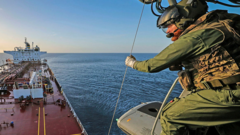
UK SEIZES SHADOW TANKER
Illustration concept: A dark oil tanker sailing through misty choppy ocean waters, with a dramatic cinematic sky and a distant naval patrol vessel monitoring it, photorealistic style.
AI summary
The British government has defended its actions against covert oil shipping, asserting that all enforcement measures operate strictly within legal frameworks. Official statements confirmed ongoing efforts to disrupt shadow fleet operations despite recent threats from Moscow.
Why this matters
Crackdowns on the shadow fleet target covert maritime networks used to circumvent international trade sanctions and price limits. Tensions over vessel interceptions highlight growing security and regulatory enforcement risks along global shipping lanes.
Key takeaways
- The UK government defended its legal authority to target shadow fleet oil tankers.
- Official statements follow recent warnings issued by Russian President Vladimir Putin.
- London stressed that enforcement operations aim to disrupt illicit maritime trade.
- Shadow fleet vessels often bypass safety protocols and international regulations.
British authorities have reaffirmed their commitment to targeting covert oil transport networks, stating that maritime enforcement operations are conducted in strict compliance with legal standards. According to reports from BBC World, the official response follows public threats issued by Russian President Vladimir Putin regarding the interception of shadow fleet tankers.
In a formal statement, the UK government emphasised its strategy of "disrupting and deterring shadow fleet vessels" that operate outside standard regulatory frameworks. Officials insisted that all enforcement actions taken by British authorities align with existing international laws and national mandates.
Shadow fleet vessels frequently utilize obscured ownership structures, flags of convenience, and deactivated tracking transponders to bypass international trade restrictions. Western governments have intensified oversight of these ships in an effort to restrict unauthorized petroleum transfers on the high seas.
Despite escalated rhetoric from Moscow, British ministers indicate that maritime monitoring and interception activities will continue. London maintains that strict enforcement remains essential for upholding international law and mitigating safety risks posed by unregulated vessels.
Frequently asked questions
- Why is the UK targeting shadow fleet tankers?
- The UK targets these vessels to disrupt covert trade networks that operate outside international regulations and trade sanctions.
- How did the UK respond to Russian threats?
- British officials stated that all actions against shadow fleet ships strictly adhere to international law and maritime regulations.
- What is a shadow fleet tanker?
- A shadow fleet tanker is a ship used to transport oil covertly, often using obscure ownership, falsified documentation, or turned-off transponders to evade regulatory oversight.
Source & transparency
- By:
- The Reviser Desk
- Source:
- BBC World
- Original publication:
- Aug 13, 2026, 3:05 PM
- The Reviser publication:
- Aug 13, 2026, 3:05 PM
- Updated:
- Aug 13, 2026, 3:19 PM
This report was independently written by The Reviser editorial desk from verified source material. It is not original on-the-ground reporting by The Reviser.
Related stories

PUTIN CANNOT CONQUER UKRAINE
Dmitry Muratov Tells BBC Putin Cannot Conquer Ukraine
AI summaryNobel Peace Prize laureate Dmitry Muratov stated in a BBC interview that Russian President Vladimir Putin can no longer claim victory in Ukraine. Muratov asserted that while Moscow retains the capacity to destroy Ukraine, it remains incapable of conquering the nation.
TOKYO REJECTS PUTIN VISIT
Tokyo Summons Russian Ambassador Following Putin Kuril Visit
AI summaryJapanese officials expressed strong disapproval following Russian President Vladimir Putin's inaugural trip to the contested Kuril Islands. In response, Tokyo summoned Russia's ambassador and reiterated its legal sovereignty over the territory seized during World War II.
TOKYO PROTESTS KURIL VISIT
Tokyo Rejects Russian President's First Trip to Kuril Islands
AI summaryTokyo has lodged a formal diplomatic protest after Russian state media confirmed the Russian president's inaugural visit to the contested Kuril Islands. The move highlights ongoing territorial friction between Russia and Japan over the island chain.

INCHEON TOPS GLOBAL RANKINGS
Incheon Airport Becomes World's Busiest International Hub
AI summarySouth Korea's main international gateway, Incheon Airport, recorded 38.39 million foreign travelers in the first half of 2026, making it the busiest airport globally for international traffic. The surge comes as ongoing military conflict in the Middle East forces commercial airlines to reroute long-haul flights away from traditional Gulf transit hubs.