Saudi Red Sea Oil Loadings Turn Dark Amid Houthi Threats
Red Sea Oil Tankers Switch Off Tracking to Evade Houthi Strikes
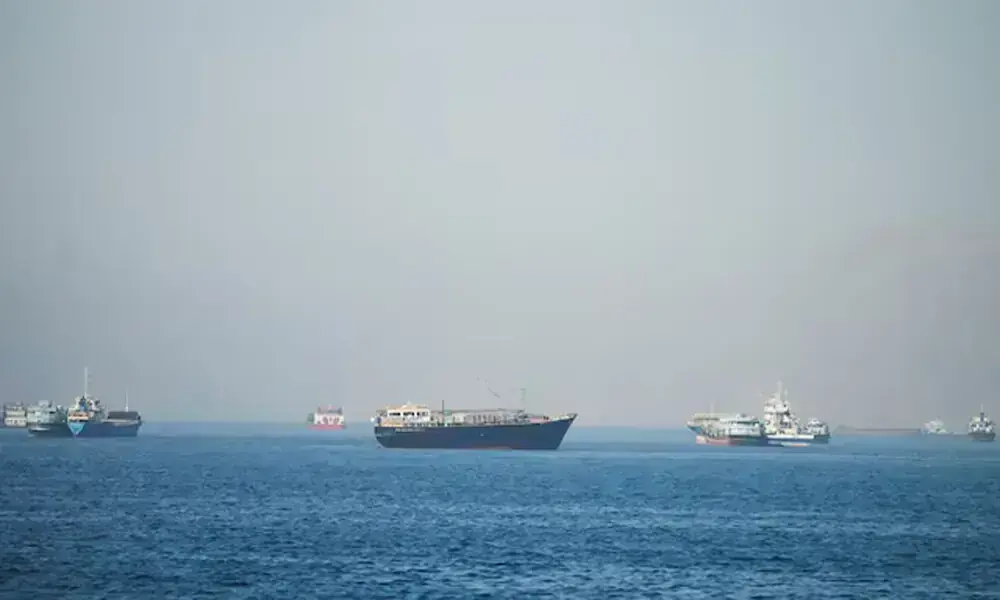
SAUDI OIL SHIPS GO DARK
Illustration concept: A sleek oil tanker moving through calm ocean waters at dusk with its bridge lights on, digital red tracking lines fading away on a high-tech naval map display, representing covert maritime shipping.
AI summary
Saudi crude exports moving through the Red Sea are increasingly being conducted without visible tracking data to protect vessels from ongoing Houthi attacks. These dark voyages have created significant discrepancies among ship-tracking estimates, complicating export monitoring for international energy bodies and market participants.
Why this matters
Disruption and opacity in Red Sea oil shipments obscure actual export volumes, leaving global energy markets vulnerable to supply uncertainty. Because major international bodies like OPEC and the International Energy Agency rely on vessel-tracking metrics, missing transponder data severely hampers accurate market forecasting.
Key takeaways
- Oil tankers loading crude at Saudi Arabia's Red Sea terminals are turning off tracking transponders to dodge Houthi maritime targeting.
- Recent crude shipments out of the primary Red Sea port of Yanbu have occurred entirely off public tracking systems.
- The Houthis instituted a sea embargo against Saudi targets on July 20, claiming attacks on tankers and facilities in Yanbu and Jazan.
- Conflicting data from vessel-tracking firms has created confusion for OPEC, the International Energy Agency, and global energy traders trying to measure true supply flows.
Growing security concerns in the Red Sea have prompted a surge in covert tanker operations, as crude vessels carrying Saudi oil routinely disable their transponders to evade maritime strikes by Yemen's Houthi rebels. According to market observers and ship-tracking data highlighted by Business Recorder, all recent crude oil loadings at the strategic Saudi port of Yanbu were completed off public tracking networks, effectively going dark.
The escalation follows a formal maritime embargo declared by the Houthi movement against Saudi Arabia on July 20, extending regional combat into critical commercial shipping channels. Since the announcement, the group has claimed responsibility for several targeted strikes against Saudi-affiliated oil tankers as well as onshore energy infrastructure, including processing facilities at Yanbu and the Jazan refinery along the Red Sea coast.
In response to the heightened risk environment, an increasing number of commercial vessel operators are opting to turn off their tracking signals while navigating regional waters. While intended to safeguard ships and crews against incoming strikes, this practice severely restricts visibility into export volumes originating from Saudi Arabia's western coastline.
The loss of reliable real-time transponder data has created significant discrepancies among maritime analytics firms attempting to monitor crude movements. Divergent export estimates are now complicating the work of global energy monitoring authorities, including the International Energy Agency and OPEC, both of which rely heavily on vessel tracking to gauge supply balances and market stability.
The persistent threat along regional trade corridors has already taken a deadly human toll, with ship attacks in the Red Sea and Gulf regions resulting in three fatalities, including two Pakistani nationals, according to maritime reports.
Frequently asked questions
- Why are Saudi oil tankers turning off tracking signals in the Red Sea?
- Tanker operators are switching off transponder signals to prevent Yemen's Houthi rebels from identifying and targeting vessels with anti-ship missiles and drones.
- Which Saudi oil facilities are affected by Houthi threats?
- Loadings at the major western port of Yanbu and facilities near the Jazan refinery on the Red Sea coast have faced declared attacks and covert shipping operations.
- How does dark shipping affect global energy markets?
- Dark voyages obscure accurate data regarding actual crude export volumes, making it difficult for organizations like OPEC and the International Energy Agency to assess global oil supply accurately.
Source & transparency
- By:
- The Reviser Desk
- Source:
- Business Recorder
- Original publication:
- Aug 12, 2026, 2:40 PM
- The Reviser publication:
- Aug 12, 2026, 2:40 PM
- Updated:
- Aug 12, 2026, 3:03 PM
This report was independently written by The Reviser editorial desk from verified source material. It is not original on-the-ground reporting by The Reviser.
Related stories

RED SEA SHIP ATTACK
Pakistan Enforces Red Sea Maritime Coalition After Sailor Deaths
AI summaryPakistan's Foreign Office announced that Islamabad will strictly honor its obligations under a recently formed Saudi-led multinational maritime alliance aimed at safeguarding energy and shipping lanes. The commitment follows the tragic deaths of three Pakistani crew members aboard a Saudi cargo vessel struck by Houthi forces in the Red Sea.

INDIAN BONDS HOLD STEADY
Indian Bond Yields Hold Steady as Markets Await US Inflation Data
AI summaryIndian government bond yields ended virtually unchanged on Wednesday as market participants shifted focus to impending US inflation data. Domestic retail inflation for July rose to 4.45%, coming in slightly lower than economists had projected.

GOLD RATES SURGE AGAIN
Pakistani Gold Rates Rise to Rs459,736 as Global Market Surges
AI summaryPrecious metal prices in Pakistan posted notable gains on Tuesday following an upward trajectory in international bullion markets. According to data released by the All-Pakistan Gems and Jewellers Sarafa Association, gold per tola increased by Rs2,400 to reach Rs459,736.

INDIAN BONDS SLIP ON CRUDE
Indian Bonds Fall as Crude Rally and US Yields Stir Inflation Fear
AI summaryIndian government bond prices declined on Tuesday following a surge in global crude prices and rising US Treasury yields. The market pressure comes as traders anticipate upcoming inflation data from both India and the United States.