Nigel Farage By-Election Win Highlights Reform UK Challenges
Analyzing Nigel Farage's By-Election Victory and Reform UK's Structural Hurdles

FARAGE WIN MASKS DEEPER RISKS
Illustration concept: A editorial illustration depicting the British Houses of Parliament in London under moody skies, with symbolic broken political party banners and a solitary podium standing on a chess-board floor, modern clean news artwork style.
CSS / PCS revision
Key points, takeaways and exam-style Q&A formatted as a printable one-file study pack.
AI summary
Nigel Farage secured a recent by-election victory for Reform UK, signaling continued voter dissatisfaction with traditional political parties. However, analysis indicates the triumph fails to address the party's deeper political and financial vulnerabilities.
Why this matters
This development illustrates the limits of right-wing populist insurgencies operating within established parliamentary systems. For international observers, shifting domestic political dynamics in the UK shape future immigration policy, trade frameworks, and diplomatic ties with Commonwealth states.
Key takeaways
- Localized by-election victories do not automatically address deep-seated organizational and financial vulnerabilities in insurgent political parties.
- Britain's first-past-the-post system presents severe institutional barriers for third parties relying primarily on charismatic leadership.
- British political realignments toward populist conservatism carry strategic implications for Commonwealth nations and South Asian diaspora policies.
The political landscape in the United Kingdom has witnessed another notable electoral shift following a recent by-election win by Reform UK leader Nigel Farage. While the electoral triumph signals persistent voter frustration with established mainstream political parties, reports from The Economist emphasize that the victory may ultimately prove Pyrrhic. Rather than resolving the party's underlying vulnerabilities, the result highlights systemic barriers that third-party insurgencies face within the British parliamentary framework.
From an organizational perspective, localized by-election successes often obscure deep-seated institutional challenges. According to analysis by The Economist, Reform UK continues to contend with significant political and financial constraints. Unlike traditional political machinery built upon entrenched grassroots networks and corporate backing, right-wing populist factions frequently rely on charismatic leadership rather than durable institutional funding. Without structural party building and sustainable financial models, isolated electoral gains rarely translate into broader parliamentary dominance under the UK's first-past-the-post system.
Proponents of populist movements argue that by-election victories demonstrate an irreversible realignment in Western democratic politics, where working-class electorate bases reject conventional Conservative and Labour platforms. Conversely, political analysts suggest that high-visibility single-seat wins risk distracting leadership from essential administrative and policy consolidation. In this view, temporary political momentum without organizational depth leaves political parties fragile and vulnerable during general election cycles when resource requirements multiply exponentially.
For international observers and civil service candidates evaluating global governance trends, the evolution of British right-wing politics carries broader implications. Changes in the UK political equilibrium directly influence Western immigration frameworks, global trade postures, and foreign assistance priorities. Furthermore, persistent political volatility in London impacts the strategic calculus of Commonwealth nations, including Pakistan, particularly regarding diaspora relations, visa protocols, and bilateral economic engagements in the post-Brexit era.
In conclusion, while Nigel Farage's recent by-election triumph underscores the continuing appeal of anti-establishment rhetoric in British governance, it leaves fundamental institutional dilemmas unanswered. For insurgent political movements, overcoming structural, financial, and electoral hurdles requires far more than tactical parliamentary wins; it demands sustained institutional maturity and broad-based policy credibility on the world stage.
Frequently asked questions
- What does a Pyrrhic victory mean in the context of Nigel Farage's by-election win?
- An analysis published by The Economist suggests the victory comes at a cost that does not resolve Reform UK's broader financial and organizational challenges.
- What are the main political hurdles facing Reform UK?
- The party faces structural limitations under the first-past-the-post electoral system, inadequate party infrastructure, and sustainable funding challenges despite temporary voter momentum.
- Why are British political shifts significant for Commonwealth nations?
- UK domestic policy realignments influence foreign trade strategies, immigration regulations affecting Commonwealth citizens, and global diplomatic posture towards developing partner nations.
Source & transparency
- By:
- The Reviser Desk
- Source:
- The Economist
- Original publication:
- Aug 14, 2026, 6:58 AM
- The Reviser publication:
- Aug 14, 2026, 6:58 AM
- Updated:
- Aug 14, 2026, 7:48 AM
This report was independently written by The Reviser editorial desk from verified source material. It is not original on-the-ground reporting by The Reviser.
Related stories
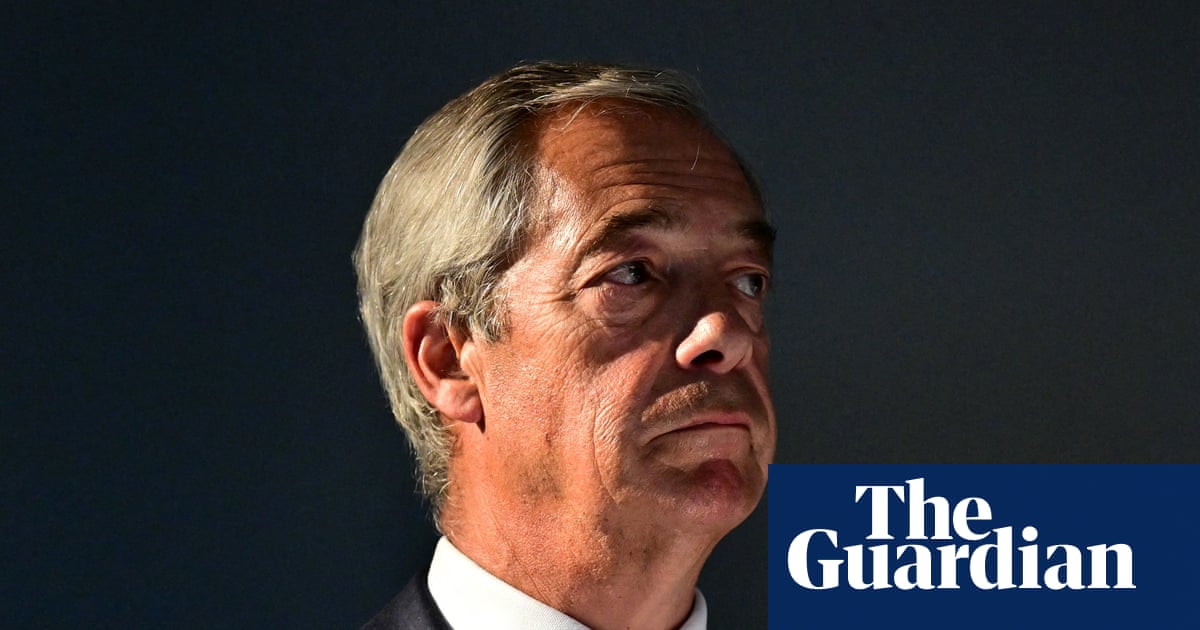
FARAGE INVESTIGATION RESUMES AGAIN
Nigel Farage Standards Probe Resumes Over Undeclared Gifts
AI summaryThe UK Parliamentary Commissioner for Standards has reactivated an inquiry into Reform UK leader Nigel Farage over allegations regarding undeclared financial gifts. The probe was originally paused after Farage resigned his parliamentary seat, but his subsequent victory in the Clacton byelection triggered its resumption.

FARAGE WINS CLACTON SEAT
Nigel Farage Wins Clacton Seat in UK By-Election Victory
AI summaryReform UK leader Nigel Farage has secured victory in the Clacton parliamentary by-election, garnering 22,239 votes. He defeated satirical opponent Count Binface, who received 9,455 votes in the contest.

NEW RULES FOR FEMALE LEADERS
Ocasio-Cortez and the Changing Rules for Female Candidates
AI summaryA recent NYT Opinion commentary explores how Representative Alexandria Ocasio-Cortez represents a fundamental shift in how female candidates navigate high-stakes electoral politics. Moving away from defensive traditional strategies, modern political figures are increasingly relying on authentic ideological branding and direct voter engagement.

POLITICAL GATEKEEPING AND POPULISM
Ideological Gatekeeping and Political Risks in Modern Populism
AI summaryIn a recent commentary, NYT Opinion examines how the political right's failure to police its extreme factions risks ideological instability and institutional degradation. The analysis highlights that a lack of gatekeeping can erode political coherence, drawing parallels to earlier critiques of left-wing dogmatism.