Indus River Flood Warning Issued as Heavy Rainfall Hits Pakistan
Rising Indus Water Levels Trigger Flood Alerts Across Pakistan Barrages
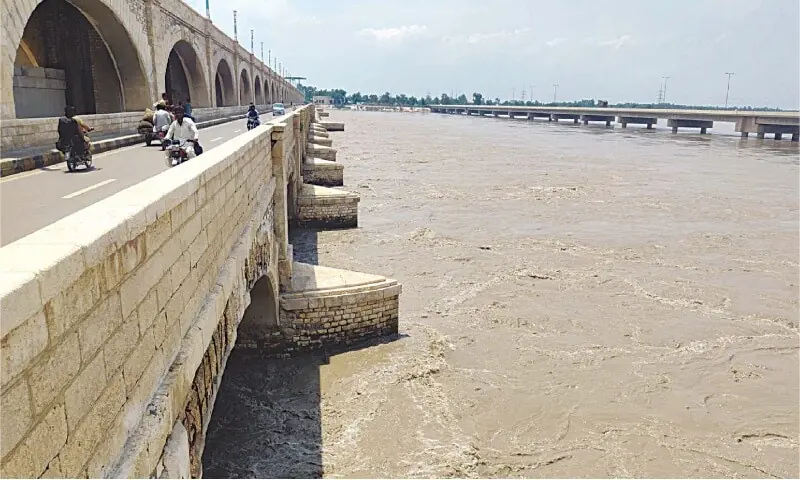
INDUS RIVER FLOOD WARNING
Illustration concept: An expansive aerial view of a wide barrage on a large muddy river in South Asia during overcast monsoon weather, featuring heavy water discharge through opened gates.
AI summary
Monsoon precipitation across northern and upper regions of Pakistan until August 17 is projected to escalate water discharge in the Indus River. According to the Pakistan Meteorological Department's flood monitoring unit, Guddu Barrage could face medium-level surging while several northern barrages maintain low-level flooding.
Why this matters
Rising river levels pose potential hazards to low-lying communities situated along the Indus basin in Punjab and Sindh provinces. Enhanced vigilance at critical headworks and barrages is necessary to manage surging inflows and protect surrounding agricultural land from inundation during peak monsoon periods.
Key takeaways
- Continuous rainfall until August 17 across northern regions is boosting water discharge into the Indus basin.
- Guddu Barrage is anticipated to elevate to a medium flood status within 24 hours.
- Low-level flood stages persist at Kalabagh, Chashma, and Taunsa, and are likely at Sukkur Barrage.
- Water flows along the Kabul, Jhelum, Chenab, Ravi, and Sutlej rivers remain generally stable.
Widespread precipitation forecasted across northern Pakistan through mid-August is expected to intensify discharge along the main stem of the Indus River, according to alerts released by water management authorities.
The Pakistan Meteorological Department's Flood Forecasting Division projects that a spell of rain lasting until August 17 over Islamabad, Khyber Pakhtunkhwa, Gilgit-Baltistan, Azad Kashmir, and upper Punjab will expand runoff into primary catchment areas, feeder streams, and seasonal rivulets.
Downstream hydraulic structures are already experiencing elevated volumes. Analysts note that Guddu Barrage in northern Sindh is anticipated to transition to a medium flood classification within 24 hours, having recently recorded outflows of 253,366 cusecs. Meanwhile, Sukkur Barrage is likely to reach a low flood stage.
Upstream installations along the river continue to handle substantial discharge. Low-grade flood conditions remain active at Kalabagh, Chashma, and Taunsa barrages, where recent water discharges reached 257,581 cusecs at Kalabagh and 295,570 cusecs at Taunsa.
In contrast to the rising trajectory along the Indus, hydrological gauges across the Kabul, Jhelum, Chenab, Ravi, and Sutlej rivers show steady inflows without immediate signs of major surging, as detailed in reports from Dawn Pakistan.
Frequently asked questions
- Which river structures face elevated flood risks?
- Guddu Barrage is expected to reach medium flood status within 24 hours, while Sukkur, Kalabagh, Chashma, and Taunsa barrages are experiencing or anticipating low-level flood stages.
- How long is the current rain forecast active?
- Monsoon rainfall is expected to persist through August 17 across upper Punjab, Islamabad, Khyber Pakhtunkhwa, Azad Kashmir, and Gilgit-Baltistan.
- Are other major Pakistani rivers affected by severe flooding?
- No significant surge in inflows has been observed along the Kabul, Jhelum, Chenab, Ravi, or Sutlej rivers during this reporting period.
Source & transparency
- By:
- The Reviser Desk
- Source:
- Dawn Pakistan
- Original publication:
- Aug 11, 2026, 4:47 AM
- The Reviser publication:
- Aug 11, 2026, 4:47 AM
- Updated:
- Aug 11, 2026, 6:31 AM
This report was independently written by The Reviser editorial desk from verified source material. It is not original on-the-ground reporting by The Reviser.
Related stories

JUDGES APPROVED BY PRESIDENT
President Zardari Assents to High Court Judicial Appointments
AI summaryPresident Asif Ali Zardari has formally approved the appointment and confirmation of judges across five high courts following a brief executive delay. The move finalizes recommendations put forward by the Judicial Commission of Pakistan in late July.

HONORING DR RUTH PFAU
Maryam Nawaz Honors Dr Ruth Pfau on Death Anniversary
AI summaryPunjab Chief Minister Maryam Nawaz Sharif has honored the memory of German-Pakistani physician Dr Ruth Pfau on her death anniversary. In an official message, the Chief Minister praised Dr Pfau's extraordinary dedication toward eradicating leprosy across Pakistan.

PAK CANADA DIPLOMATIC TALKS
Pakistan, Canada Foreign Ministers Review Makkah Defence Pact
AI summaryPakistani Deputy Prime Minister Ishaq Dar held telephone discussions with Canadian Foreign Minister Anita Anand regarding key international security developments. The leaders reviewed the trilateral Makkah Joint Defence Agreement alongside evolving regional dynamics in the Middle East.
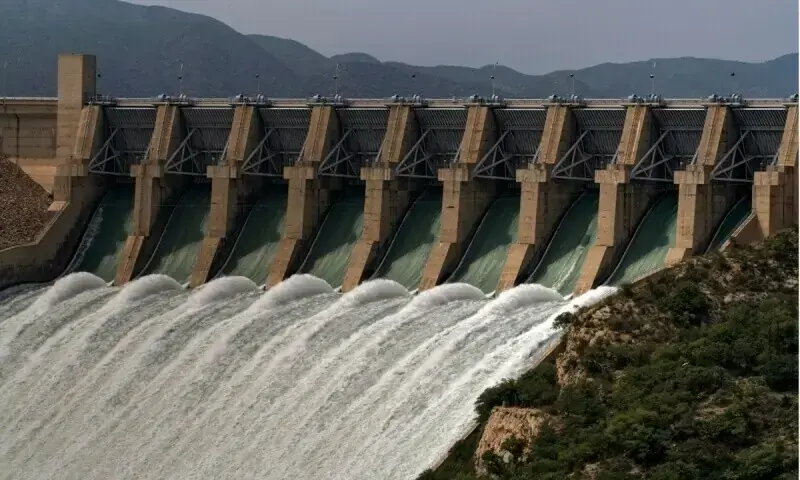
TARBELA DAM AT FULL CAPACITY
Tarbela Dam Reaches Maximum Water Storage Capacity
AI summaryPakistan's Tarbela Dam reached its full storage capacity of 1,550 feet on Sunday, boosted by high river inflows from rains and melting glaciers. Meanwhile, water storage at Mangla Dam also rose steadily, reaching 1,206.45 feet with a live storage of 4.621 MAF.