How Western Economies Can Reclaim Global Investment Capital
Global Capital Shift: How Western Economies Can Reclaim Investment
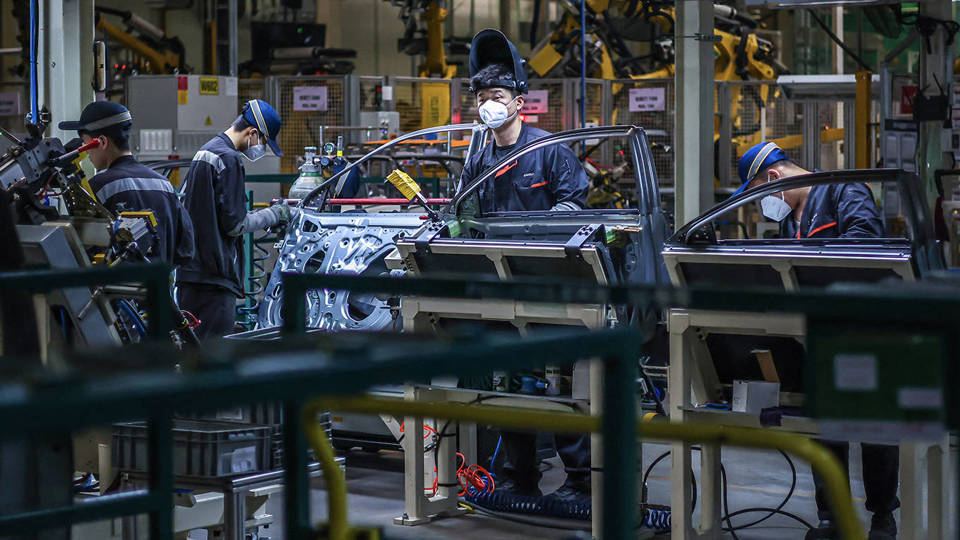
GLOBAL CAPITAL SHIFT TO CHINA
Illustration concept: A conceptual editorial illustration depicting a global map with glowing financial capital flows shifting toward East Asia, with architectural silhouettes of industrial factories and modern technological hubs, clean corporate aesthetic.
CSS / PCS revision
Key points, takeaways and exam-style Q&A formatted as a printable one-file study pack.
AI summary
Over the past three decades, China has emerged as the premier destination for productive investment capital worldwide. According to an analysis by Project Syndicate, Western economies can only close this gap by significantly lowering the operational, regulatory, and innovation costs of building domestically.
Why this matters
The concentration of industrial capital in East Asia reshapes global trade dynamics and supply chain security for decades to come. Understanding this shift helps emerging markets like Pakistan position themselves for potential supply chain relocation and foreign direct investment. For policymakers worldwide, it underscores the necessity of regulatory efficiency over simple protectionist subsidies.
Key takeaways
- Global Capital Realignment: Over three decades, productive capital has concentrated in China, establishing East Asia as the primary global manufacturing hub.
- Structural vs Protectionist Reform: Subsidies and tariffs alone are insufficient for Western economies without reducing regulatory friction and operational costs.
- Regional Impact on South Asia: Developing nations like Pakistan can leverage initiatives like CPEC for industrial relocation if internal business environments improve.
- Policy Imperative: Attracting foreign direct investment requires institutional agility, reliable infrastructure, and competitive cost structures over state interventions.
Over the past thirty years, the landscape of global capital flows has undergone a monumental shift, positioning China as the primary hub for foreign direct investment and industrial capital. According to an analysis published by Project Syndicate, this relocation of productive capacity highlights a deepening competitiveness divide between Western economies and East Asia.
In response, policymakers in the United States and Western Europe face growing pressure to revitalize domestic manufacturing and technological innovation. Proponents of Western industrial policy argue that state subsidies, friend-shoring, and targeted tariffs are essential to reduce reliance on Chinese supply chains and safeguard national security. However, critics caution that protectionist measures alone cannot offset high operational costs, complex regulatory hurdles, and sluggish infrastructure development across Western nations.
Project Syndicate highlights that closing this capital gap requires Western powers to focus on structural reforms rather than mere protectionism. To regain a competitive edge, Western governments must significantly reduce administrative friction, lower energy and production overheads, and streamline operational and innovation frameworks. Without making it cheaper and easier to build and scale enterprises locally, Western subsidy programs risk yielding inefficient, subsidized industries that remain globally uncompetitive.
For developing economies, particularly Pakistan and South Asia, this global realignment presents both strategic challenges and unique opportunities. As China consolidates its status as a manufacturing capital hub, initiatives like the China-Pakistan Economic Corridor position Pakistan to benefit from regional industrial relocations. However, to effectively absorb capital redirection and domestic production shifts, Pakistan must address internal governance challenges, simplify tax regimes, and improve ease of doing business to attract spillover investment.
Ultimately, global economic dominance is determined not by market size alone, but by regulatory agility and cost competitiveness. As Western nations attempt to recalibrate their economic strategies, developing countries must recognize that attracting productive capital requires robust institutional frameworks and low operational friction. Bridging the global investment divide will depend on structural efficiency rather than diplomatic posture.
Frequently asked questions
- Why has China become the leading destination for global capital?
- Over the last thirty years, China developed high regulatory agility, lower operational costs, and vast industrial infrastructure, making it attractive for foreign direct investment.
- How can Western nations regain economic competitiveness according to Project Syndicate?
- Western countries must reduce administrative hurdles and make it cheaper and easier to build, operate, and innovate domestically rather than relying solely on subsidies or tariffs.
- What are the implications of this investment shift for Pakistan?
- Pakistan can potentially attract industrial spillover through CPEC and regional supply chain adjustments, provided it improves domestic regulatory environments and ease of doing business.
Source & transparency
- By:
- The Reviser Desk
- Source:
- Project Syndicate
- Original publication:
- Aug 13, 2026, 2:42 PM
- The Reviser publication:
- Aug 13, 2026, 2:42 PM
- Updated:
- Aug 13, 2026, 3:02 PM
This report was independently written by The Reviser editorial desk from verified source material. It is not original on-the-ground reporting by The Reviser.
Related stories

VIETNAM RARE EARTH CHALLENGE
Vietnam Rare Earth Dilemma and China Plus One Strategy
AI summaryVietnam has gained significant economic ground as foreign firms seek to de-risk supply chains from Beijing under the China Plus One approach. However, an analysis by The Diplomat highlights that the country remains deeply constrained by its strategic reliance on Chinese critical rare earth inputs.

LESSONS FROM CEUTA
Why EU Migration Policies Fail: Lessons From Ceuta
AI summaryAccording to Project Syndicate, the European Union's increasingly restrictive migration measures are weakening internal solidarity while failing to stem border flows. The recent situation in Ceuta highlights the limitations of hardline security enforcement in addressing the underlying socioeconomic drivers of global displacement.
INCLUSION BEFORE TAX ENFORCEMENT
Rethinking Pakistan Shadow Economy Through Financial Inclusion
AI summaryPakistan's shadow economy comprises 35 to 40 percent of total economic activity, draining approximately 6 percent of GDP annually in unreported revenue. According to Business Recorder Opinion, policymakers must prioritize structural financial inclusion and public trust over aggressive tax enforcement to integrate the informal sector.

AI REALITY CHECK DEEP DIVE
AI Valuations and Economic Realities: Analyzing the Market Hype
AI summaryRecent market recalibrations, including a prominent hedge fund suffering a reported $35 billion loss tied to tech sector exposure, underscore the widening divide between artificial intelligence hype and commercial reality. According to commentary from NYT Opinion, these financial signals highlight the necessity of balancing technological optimism with rigorous economic fundamentals.