Gulf Markets Slip as Hormuz Deal Talks Face Iranian Demands
Gulf Bourses Trade Warily amid Complex Negotiations over Strait of Hormuz Reopening

GULF MARKETS SLIP ON HORMUZ
Illustration concept: A modern financial trading screen displaying Gulf stock market tickers against an overlay graphic of an oil tanker navigating maritime trade routes, dark professional aesthetic.
AI summary
Stock benchmarks across the Gulf region recorded modest declines on Monday as investors adopted a cautious stance amid diplomatic negotiations over the Strait of Hormuz. Reopening talks between Iran and Oman face complications over Tehran's demand for U.S. concessions, alongside fresh Houthi claims of an attack on Saudi Aramco infrastructure.
Why this matters
The Strait of Hormuz is a critical maritime artery that previously carried roughly twenty percent of global oil and liquefied natural gas shipments before being disrupted by recent military conflict. Continued market hesitation highlights how vulnerable energy infrastructure and regional bourses remain to geopolitical friction and trade corridor disruptions. Investors are closely monitoring whether diplomatic bargaining can restore free passage without further escalation.
Key takeaways
- Saudi Arabia's main index fell 0.1% while Dubai's primary stock benchmark slid 0.2% on Monday.
- Diplomatic progress between Iran and Oman to reopen the Strait of Hormuz hit hurdles due to Iranian demands for U.S. concessions.
- Houthi forces reported a strike on Aramco's Jazan refinery shortly after Riyadh finalized a defence pact with Ankara and Islamabad.
- Brent crude futures held nearly steady at $83.54 per barrel in early international trading.
Regional equities across the Gulf traded in narrow ranges on Monday, reflecting elevated investor anxiety over fragile negotiations to reopen the vital Strait of Hormuz. Market sentiment was caught between reports of progress toward an agreement and new security tensions in the Arabian Peninsula, according to market data reported by Business Recorder.
A United States official indicated that discussions brokered between Iran and Oman were moving toward a resolution to reopen the key waterway, which handled roughly a fifth of global liquefied natural gas and crude supplies prior to an Iranian blockade triggered by U.S.-Israeli strikes. However, negotiations have grown complicated as Tehran insists on diplomatic concessions from Washington, including financial reparations for damages sustained during recent military engagements on Iranian soil.
Adding to security concerns across regional financial markets, Iran-aligned Houthi militants claimed responsibility for a Sunday drone and missile strike targeting Saudi Aramco's refinery complex in Jazan. The incident occurred just two days after Saudi Arabia concluded a tripartite defence agreement with Turkey and Pakistan to bolster regional stability.
Equity indices reflected the prevailing geopolitical caution. Saudi Arabia's benchmark index slipped 0.1%, weighed down by a 0.4% drop in Al Rajhi Bank. Maharah Human Resources Co witnessed a sharp 8.4% sell-off following a significant contraction in its second-quarter earnings, whereas Saudi Aramco managed a modest gain of 0.3%.
In the United Arab Emirates, Dubai's main financial index retreated 0.2%, dragged lower by a 1.2% decline in real estate heavyweight Emaar Properties. International energy benchmarks remained largely static, with Brent crude futures ticking down by a single cent to $83.54 per barrel at 0643 GMT.
Frequently asked questions
- Why are Gulf stock markets trading cautiously?
- Investors are hesitant due to uncertainty surrounding talks to reopen the Strait of Hormuz and recent security threats against Saudi energy infrastructure.
- What conditions is Iran setting for reopening the Strait of Hormuz?
- Iran is demanding concessions from the United States, including compensation for military strikes conducted on its territory.
- How did crude oil prices react to the geopolitical developments?
- Brent crude futures remained almost unchanged, trading at $83.54 per barrel, down just 1 cent in early Monday trading.
Source & transparency
- By:
- The Reviser Desk
- Source:
- Business Recorder
- Original publication:
- Aug 10, 2026, 9:42 AM
- The Reviser publication:
- Aug 10, 2026, 9:42 AM
- Updated:
- Aug 10, 2026, 10:01 AM
This report was independently written by The Reviser editorial desk from verified source material. It is not original on-the-ground reporting by The Reviser.
Related stories
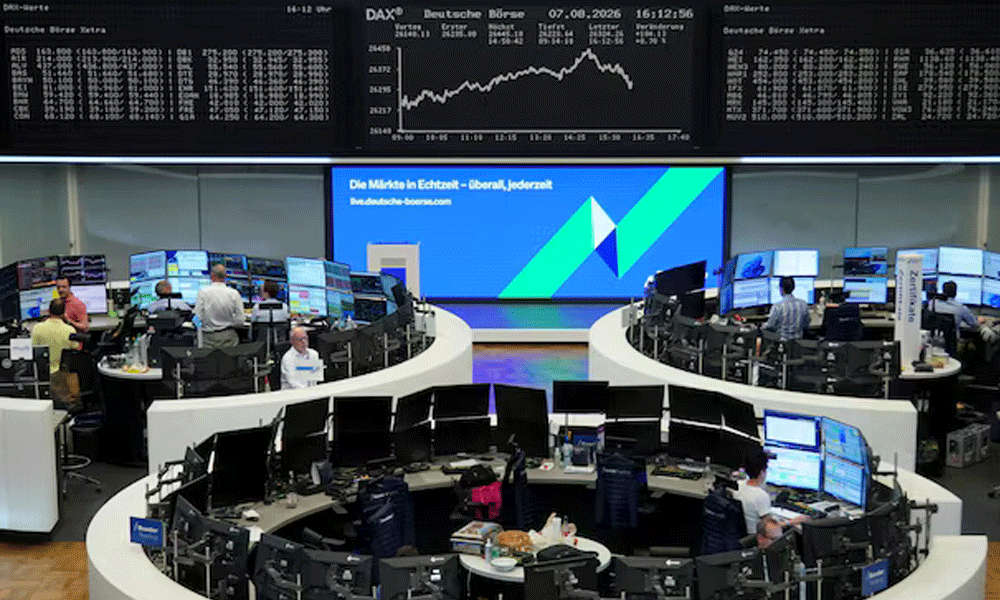
EUROPEAN STOCKS HOLD STEADY
European Stocks Pause Near Record Highs Amid Hormuz Oil Risks
AI summaryEuropean equity benchmarks held near record levels on Monday morning as markets balanced ongoing geopolitical risks in the Middle East with expectations for upcoming economic indicators. Gains in tech and energy shares helped offset caution stemming from restricted oil transport through the Strait of Hormuz.
INDIAN STOCKS EYE GAINS
Indian Shares Eye Higher Open After Soft US Jobs Data
AI summaryIndian equity markets are expected to start Monday's session on a positive note following gains across broader Asian stock indices. The rally comes as soft US employment figures reduced fears of impending Federal Reserve interest rate hikes, though rising oil prices and regulatory changes may cap further upside.
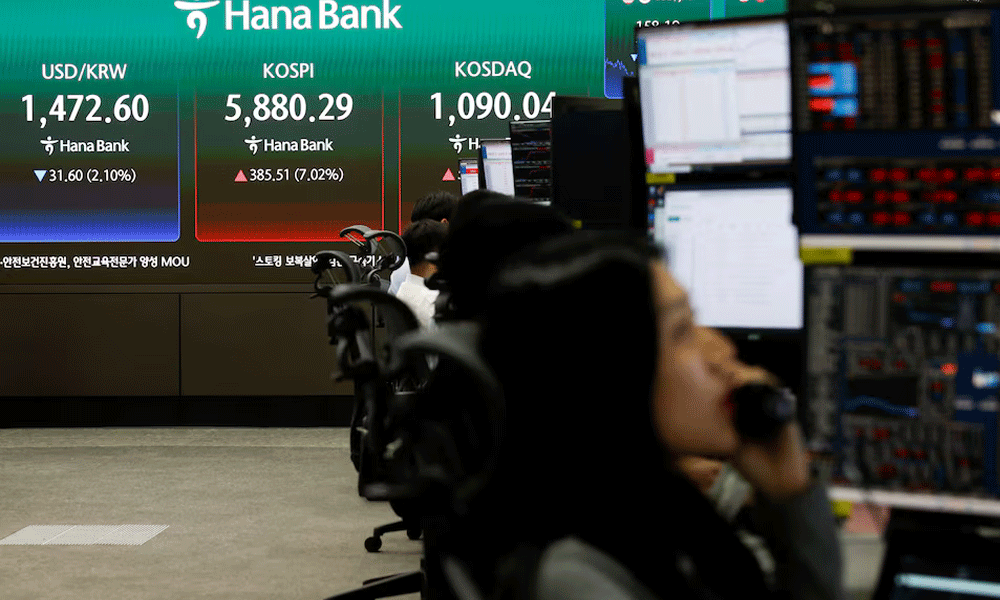
KOSPI BOUNCES BACK IN SEOUL
South Korea KOSPI Bounces Back as Chip Stocks Rally
AI summarySouth Korea's KOSPI index rebounded on Monday, gaining 0.80 percent to reach 6,308.74 after seven consecutive weeks of declines. The advance was spearheaded by semiconductor manufacturers following a record-setting session on Wall Street.

WESTPAC SLIDE DRAGS ASX
ASX 200 Slips as Westpac Earnings Drag Australian Banks
AI summaryAustralian stock markets dropped on Monday as disappointing quarterly earnings from Westpac sparked a sector-wide sell-off in major financial stocks. The pull-back came despite gains in mining equities as investors braced for the Reserve Bank of Australia's upcoming interest rate announcement.