Crypto and TradFi Volatility Drops Despite US-Iran Risks
Market Volatility Cools Across Crypto and TradFi Amid Geopolitical Tensions
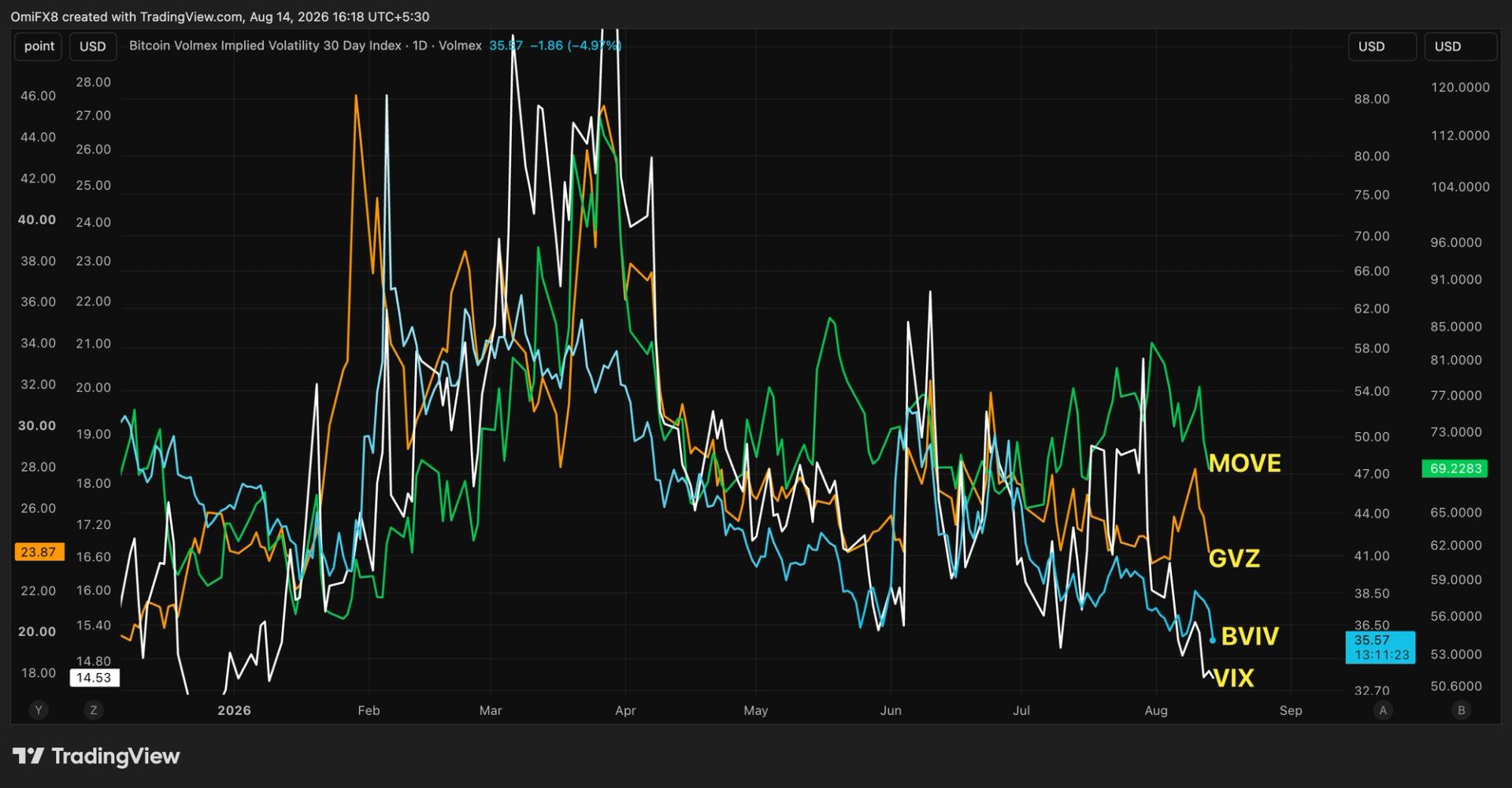
MARKET VOLATILITY DROPS CALM
Illustration concept: A professional financial concepts illustration showing side-by-side trading charts representing digital crypto assets and traditional stock markets with low fluctuation lines, subtle glowing globe in the background with fiscal debt graphs and diplomatic symbols, clean corporate editorial style.
AI summary
Market volatility across digital assets and traditional financial sectors has significantly decreased approaching mid-August 2026. However, investors continue to monitor underlying macroeconomic pressures, including escalating sovereign debt and ongoing tensions between the United States and Iran.
Why this matters
The sudden decline in market price fluctuations offers a temporary period of calm for traders navigating crypto and traditional asset classes. Nevertheless, lingering geopolitical friction and mounting government debt balances indicate that macroeconomic stability remains fragile.
Key takeaways
- Trading volatility has dropped across both cryptocurrency and traditional financial markets ahead of Aug. 14, 2026.
- Geopolitical friction between the United States and Iran continues to pose a persistent background risk for global assets.
- Sovereign debt levels remain on the rise, creating broader long-term macroeconomic pressure.
- Lower current volatility may reflect temporary calm rather than a total resolution of market risk factors.
Price fluctuations across cryptocurrency and traditional financial markets have significantly cooled down leading into Aug. 14, 2026, signalling a period of relative calm among global investors. Despite the reduced trading turbulence, broader economic and geopolitical headwinds continue to hover over international markets.
According to reporting by CoinDesk, the steadying of market price swings arrives against a backdrop of ongoing international tensions, particularly lingering geopolitical friction between the United States and Iran. Market participants remain vigilant as diplomatic and strategic developments in the Middle East retain the potential to disrupt global energy and risk assets.
Simultaneously, global financial systems are grappling with a steady accumulation of sovereign debt. Central banks and governments worldwide face growing fiscal burdens, which could influence long-term interest rate policies and liquidity across both legacy and blockchain-based asset ecosystems.
While short-term trading metrics indicate low volatility, analysts emphasize that subdued price movements do not necessarily eliminate underlying market risk. Investors are watching closely to see whether this quiet phase represents genuine market stabilization or a calm period prior to sudden shifts triggered by upcoming fiscal or geopolitical events.
Frequently asked questions
- What is happening to market volatility in August 2026?
- Price volatility in both cryptocurrency and traditional financial (TradFi) markets has receded, creating a quieter trading environment despite surrounding economic headwinds.
- Which geopolitical risks are currently affecting global markets?
- Ongoing tension and strategic risks involving the United States and Iran remain a major geopolitical concern for market participants.
- How does rising sovereign debt impact financial markets?
- Increasing government debt burdens can influence central bank interest rate decisions, global liquidity, and overall investor sentiment across digital and traditional assets.
Source & transparency
- By:
- The Reviser Desk
- Source:
- CoinDesk
- Original publication:
- Aug 14, 2026, 11:33 AM
- The Reviser publication:
- Aug 14, 2026, 11:33 AM
- Updated:
- Aug 14, 2026, 11:46 AM
This report was independently written by The Reviser editorial desk from verified source material. It is not original on-the-ground reporting by The Reviser.
Related stories

RESORT TOKEN LAUNCH DELAYED
World Liberty Financial Delays Maldives Resort Token Sale
AI summaryWorld Liberty Financial, backed by the Trump family, has put its planned Maldives resort token offering on hold. According to reports, ongoing conflict involving Iran has created severe travel disruptions across the region, prompting the decision.

CRYPTO ADVICE GAP EXAMINED
CoinDesk Briefing Examines Digital Asset Advice Gap
AI summaryCoinDesk delivers Crypto for Advisors, a weekly newsletter designed to assist wealth managers with digital assets. Published every Thursday, the resource addresses the expanding crypto advice gap within financial management.
REDOTPAY PAUSES US IPO
RedotPay Pauses $1 Billion US IPO Plan, Report Says
AI summaryStablecoin payment processor RedotPay has reportedly frozen plans for a $1 billion initial public offering in the United States. A company spokesperson declined to offer any comment regarding potential stock market listings.
BITCOIN DIPS NEAR $63.5K
Bitcoin Edges Toward $63,500 as Traders Eye Fed Catalysts
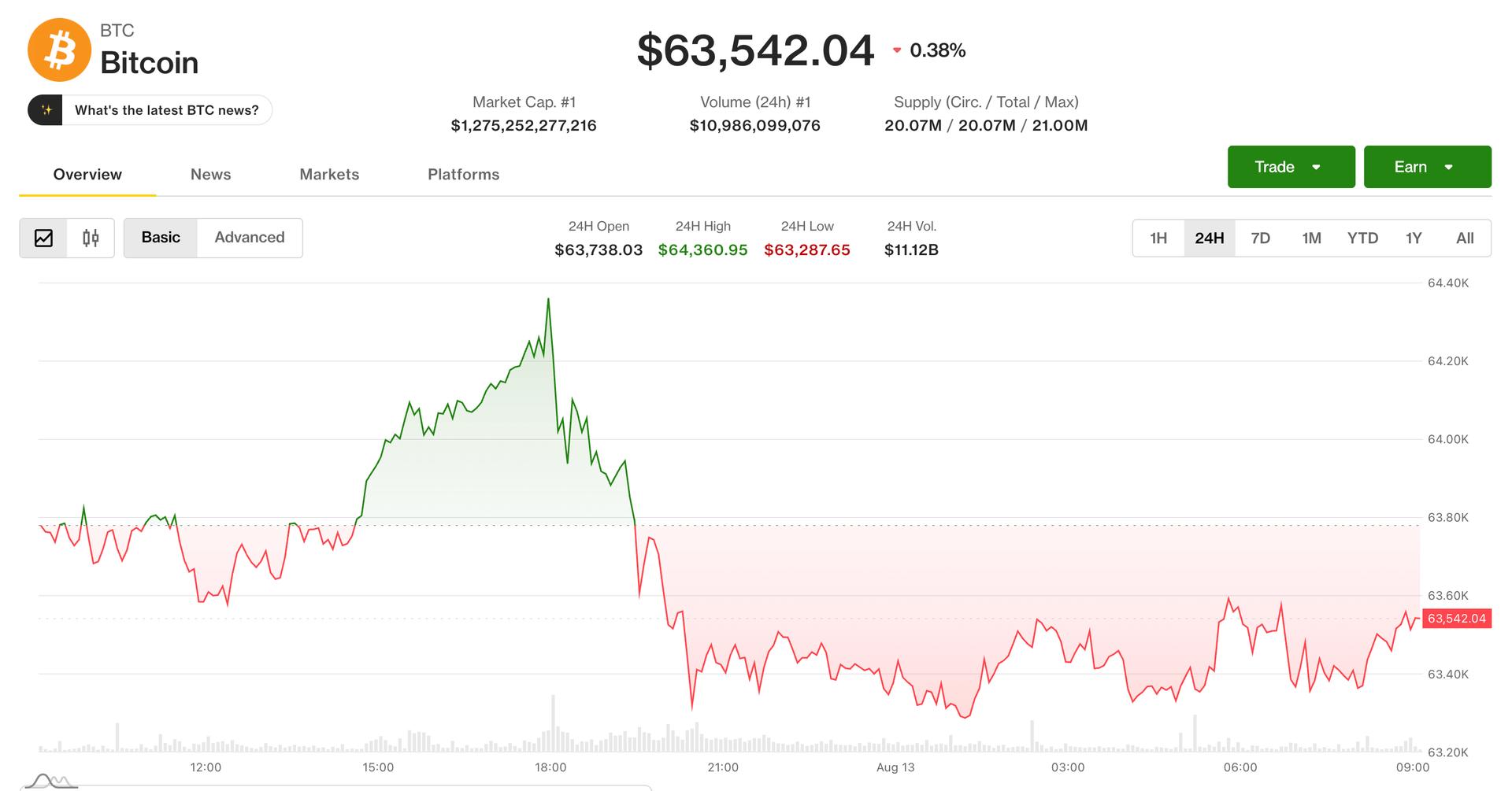
AI summaryBitcoin experienced a mild pull-back close to $63,500 as an inflation reading matching expectations failed to generate buying momentum. Crypto market participants are now turning their attention toward upcoming economic events, including Jackson Hole and employment data, for directional cues.