Chinese Equities Trade Mixed Following Easing July Inflation Data
Hong Kong Stocks Gain While Tech Drag Weighs Down China Blue Chips
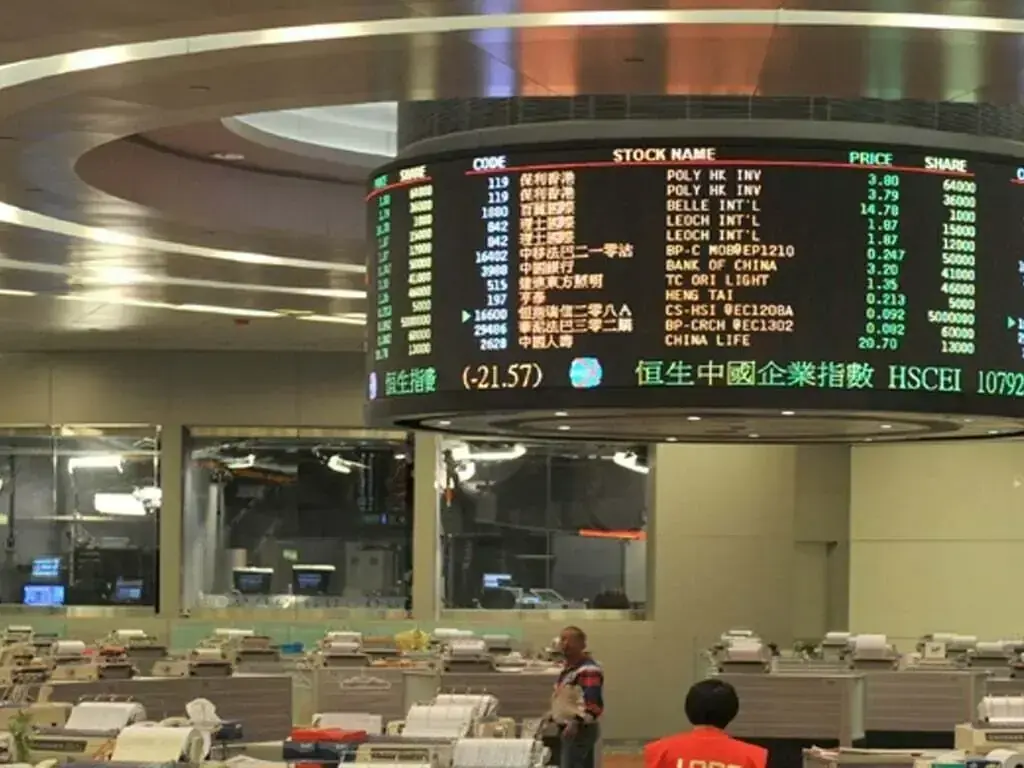
CHINA STOCKS MIXED AFTER DATA
Illustration concept: A modern financial trading floor display showing stock market indexes with rising and falling percentage figures over a stylized map of East Asia, professional digital aesthetic.
AI summary
Major stock benchmarks across mainland China and Hong Kong traded in contrasting directions on Monday following the release of subdued July inflation metrics. While the Hang Seng and Shanghai Composite recorded gains, technology sector drag pushed down China's CSI300 blue-chip index.
Why this matters
Cooling producer and consumer price figures underscore persistent domestic demand weakness in China, driven largely by an ongoing real estate downturn. How Beijing chooses to stimulate growth will directly influence global commodity markets, regional supply chains, and international investor sentiment.
Key takeaways
- Hong Kong's Hang Seng rose 0.7% and the Shanghai Composite gained 0.2%, while China's CSI300 blue-chip index slipped 0.5%.
- China's July producer price inflation dropped to a three-month low alongside broader consumer price cooling.
- Technology sector weakness offset gains made by consumer goods stocks on mainland exchanges.
- Nomura projects Beijing will rely on fiscal policy rather than interest rate cuts to stabilize economic growth this year.
Key stock market indexes across mainland China and Hong Kong posted contrasting results during Monday's morning trading as investors evaluated fresh economic indicators showing a slowdown in domestic inflation.
The Shanghai Composite Index advanced 0.2% by the midday interval, briefly reaching a three-week high during early trade. Hong Kong’s Hang Seng Index also rallied, gaining 0.7%. However, mainland blue chips lagged, with the CSI300 index shedding 0.5% as losses in technology equities outpaced advances among consumer goods stocks.
The market movements coincided with official statistics released on Sunday indicating a general easing in China's July price metrics. Producer price inflation decelerated beyond market expectations to hit its weakest pace in three months, while consumer price growth also moderated. The decline in inflationary momentum occurred as international energy costs pulled back, despite ongoing conflict involving the US, Israel, and Iran.
Analyzing the figures, investment firm Nomura noted that China's core inflation remains subdued despite global developments like artificial intelligence investment and energy market shocks. Nomura cited ongoing structural pressure from the domestic real estate sector as the principal driver keeping price growth constrained.
The firm added that it does not project central bank monetary easing for the remainder of the year. Instead, Nomura expects Chinese leadership to lean on fiscal policy interventions to bolster national economic expansion.
Frequently asked questions
- How did Chinese stock market indexes perform on Monday?
- Performance was divided: the Shanghai Composite climbed 0.2% and the Hang Seng rose 0.7%, whereas the CSI300 blue-chip index declined 0.5% by the midday break.
- What did the latest inflation data reveal about China's economy?
- Official figures released on Sunday showed July producer price inflation eased more than anticipated to a three-month low, alongside a slowdown in consumer price growth.
- Is China expected to cut interest rates later this year?
- According to analysis from Nomura, monetary policy easing is unlikely this year, with Beijing expected to rely primarily on fiscal measures to support growth.
Source & transparency
- By:
- The Reviser Desk
- Source:
- Business Recorder
- Original publication:
- Aug 10, 2026, 6:19 AM
- The Reviser publication:
- Aug 10, 2026, 6:19 AM
- Updated:
- Aug 10, 2026, 6:32 AM
This report was independently written by The Reviser editorial desk from verified source material. It is not original on-the-ground reporting by The Reviser.
Related stories
KOSPI BOUNCES BACK IN SEOUL
South Korea KOSPI Bounces Back as Chip Stocks Rally
AI summarySouth Korea's KOSPI index rebounded on Monday, gaining 0.80 percent to reach 6,308.74 after seven consecutive weeks of declines. The advance was spearheaded by semiconductor manufacturers following a record-setting session on Wall Street.

WESTPAC SLIDE DRAGS ASX
ASX 200 Slips as Westpac Earnings Drag Australian Banks
AI summaryAustralian stock markets dropped on Monday as disappointing quarterly earnings from Westpac sparked a sector-wide sell-off in major financial stocks. The pull-back came despite gains in mining equities as investors braced for the Reserve Bank of Australia's upcoming interest rate announcement.
PSX UP 400 POINTS
PSX KSE-100 Index Gains Over 400 Points in Early Monday Trade
AI summaryThe Pakistan Stock Exchange opened Monday on a positive trajectory as the benchmark KSE-100 Index climbed over 400 points early in the session. Broad-based buying across energy, banking, and cement sectors helped sustain momentum following last week's robust 3 percent weekly gain.

INDIAN STOCKS EYE GAINS
Indian Shares Eye Higher Open After Soft US Jobs Data
AI summaryIndian equity markets are expected to start Monday's session on a positive note following gains across broader Asian stock indices. The rally comes as soft US employment figures reduced fears of impending Federal Reserve interest rate hikes, though rising oil prices and regulatory changes may cap further upside.