AJK Assembly Elections: Governance and Electoral Challenges
AJK Elections Analysis: Political Lead Amid Electoral Integrity Concerns
AJK POLLS ANALYSIS
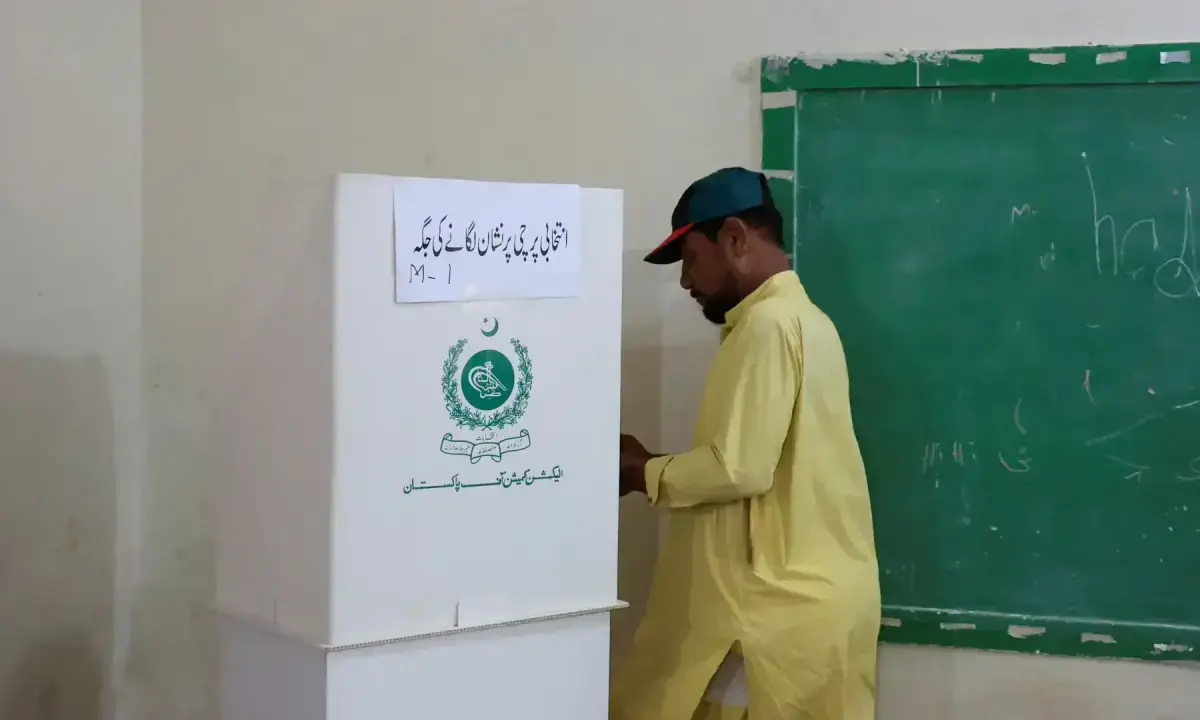
Illustration concept: An abstract, editorial depiction of a ballot box with a map outline of Azad Jammu and Kashmir in the background, styled with professional political news graphics.
CSS / PCS revision
Key points, takeaways and exam-style Q&A formatted as a printable one-file study pack.
AI summary
The Azad Jammu and Kashmir Legislative Assembly elections have entered their final phase, with the PML-N positioning itself to form the next regional government. However, the process faces significant controversy due to voting delays caused by violence in Poonch and rigging allegations raised by coalition partner PPP.
Why this matters
Electoral integrity and political stability in Azad Jammu and Kashmir are vital for effective governance and regional security administration. Staggered voting and political disputes between federal allies can impact public trust and administrative cohesion in the region.
Key takeaways
- PML-N leads the AJK Assembly race and is formulating regional governance strategies.
- Security concerns forced election deferrals in seven Poonch constituencies until late August.
- Rigging allegations by federal ally PPP highlight intra-coalition polarization during regional polls.
- Electoral volatility and security breakdowns jeopardize long-term governance stability in AJK.
The electoral process for the Azad Jammu and Kashmir (AJK) Legislative Assembly has reached its final phase, with the Pakistan Muslim League-Nawaz (PML-N) emerging in a dominant position to form the next regional government. According to an analysis published by Dawn Opinion, the party is already actively formulating a governance blueprint for the region. However, the staggered election process has been compromised by public unrest and significant electoral disputes, raising broader questions about institutional credibility.
electoral disruptions have necessitated localized re-polling and postponements across multiple areas. Re-polling was arranged for specific polling stations in Bagh, while voting across seven constituencies in the Poonch division was rescheduled for August 20 or 21 following a severe breakdown in law and order. Adding to the political strain, allegations of vote-rigging have been raised by the Pakistan Peoples Party (PPP), which notably serves as the PML-N's coalition partner in the federal government.
From a structural standpoint, the electoral friction in AJK highlights ongoing challenges in managing decentralized democratic processes in politically sensitive territories. Defenders of the electoral setup point out that conducting elections across volatile terrain demonstrates procedural resilience and ensures constitutional continuity. Conversely, analysts contend that recurring security compromises and persistent rigging allegations threaten to undermine the democratic mandate of the incoming legislative assembly.
The political fallout from disputed elections extends beyond party dynamics into local administration and regional governance. Unresolved political grievances and public unrest can hinder economic development, weaken local government institutions, and aggravate social tensions. Maintaining political stability in AJK remains central to sustaining administrative cohesion and policy continuity in the region.
As Dawn Opinion highlights, long-term stability in Azad Jammu and Kashmir requires addressing systemic flaws in electoral execution alongside governance reforms. Ensuring future electoral exercises are transparent, secure, and politically inclusive will be critical to strengthening public trust in regional democratic institutions.
Frequently asked questions
- Which political party is currently leading the AJK elections?
- The Pakistan Muslim League-Nawaz (PML-N) is reported to be in a commanding position to form the next government.
- Why were polls postponed in seven constituencies of Poonch?
- Polling in seven Poonch division constituencies was deferred to August 20 or 21 due to severe law and order disruptions.
- What grievances were raised by the PPP during the AJK elections?
- The PPP accused its central coalition partner, the PML-N, of election rigging during the voting process.
Source & transparency
- By:
- The Reviser Desk
- Source:
- Dawn Opinion
- Original publication:
- Aug 13, 2026, 2:15 AM
- The Reviser publication:
- Aug 13, 2026, 2:15 AM
- Updated:
- Aug 13, 2026, 2:31 AM
This report was independently written by The Reviser editorial desk from verified source material. It is not original on-the-ground reporting by The Reviser.
Related stories
EDUCATION GOVERNANCE CRISIS
Chicago School Math Proficiency Crisis and Union Governance
AI summaryA commentary in Washington Post Opinions highlighted severe educational deficits in Chicago, where over 50 public schools reported zero math proficiency. The issue underscores critical governance challenges regarding public sector union power and educational accountability.
WISCONSIN LESSONS FOR DEMOCRATS
Democratic Ideological Tensions and Wisconsin Elections
AI summaryCommentary from Washington Post Opinions highlights how moderate voters in swing states like Wisconsin act as a counterweight against far-left political trends within the Democratic Party. This dynamic underlines the imperative of electoral pragmatism over ideological purism in maintaining political coalitions.
MODERN GEOPOLITICAL ODYSSEY EXPLAINED
Navigating Political Odysseys in Contemporary Global Governance
AI summaryRecent editorial commentary from Washington Post Opinions highlights how classical literary themes, such as Homer's Odyssey, serve as vital metaphors for contemporary political leadership and crisis navigation. This analysis explores the strategic parallels between ancient allegorical journeys and modern geopolitical challenges facing developing nations.
ENERGY CLIMATE TECH POLICY
Energy Mergers and Climate Risks in Public Discourse
AI summaryRecent commentary published by Washington Post Opinions highlights reader perspectives on corporate energy consolidation, environmental vulnerabilities such as wildfire smoke, and technology integration in schools. The discourse reflects broader debates surrounding infrastructure resilience, environmental governance, and the socio-economic impacts of rapid technological adoption.